A sofa often determines whether a living room feels considered or merely furnished. The right modern sofas bring proportion, comfort and visual calm to a space, while the wrong one can make even a beautifully finished room feel crowded, flat or underused. For Canadian homes, where a living room may host quiet evenings, weekend guests, children and work-from-home breaks, choosing well means looking beyond a striking silhouette.
Contemporary European design has made this decision more interesting. Clean lines, low profiles and sculptural forms offer a refined alternative to traditional living-room suites, but modern design is not one look. A deep modular sectional, a tailored apartment sofa and a softly rounded curved design can all feel current. What matters is how the piece supports the room and the life happening around it.
Start With Scale, Not Style
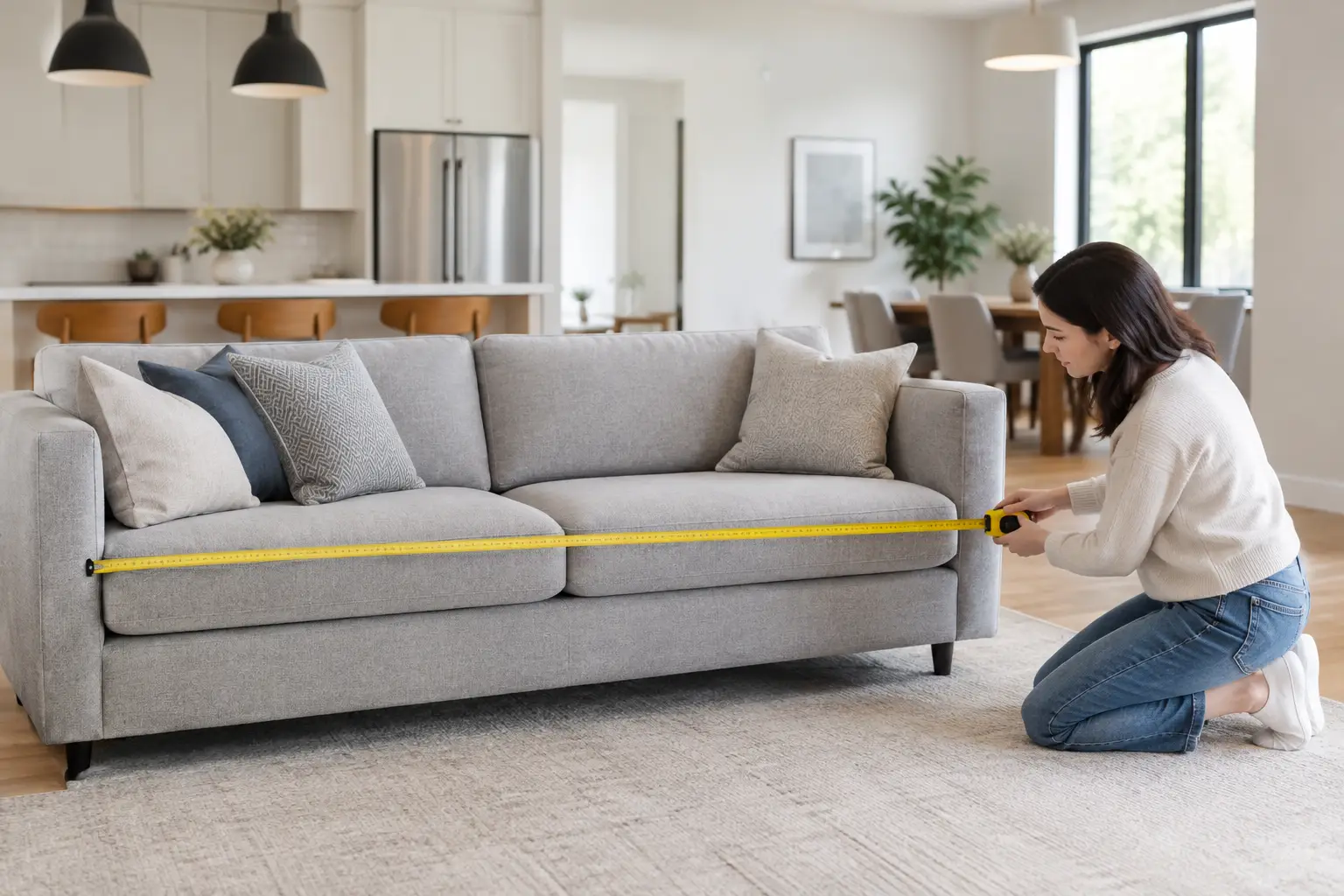
It is tempting to begin with colour or a favourite inspiration image. In practice, dimensions should come first. A sofa that appears airy in a large showroom can overwhelm a condo living room, while a compact frame can look tentative in an open-plan house with generous ceilings.
Measure the wall, but do not stop there. Account for walkways, coffee-table clearance, doors, elevators and the path from the entry to the final room. In most layouts, leaving roughly 76 to 91 centimetres of clear passage around key circulation routes makes the room more comfortable to move through. Between a sofa and coffee table, about 36 to 46 centimetres usually provides enough legroom without placing the table out of reach.
Seat depth deserves the same attention. A deep, lounge-oriented sofa creates a relaxed, enveloping experience, especially in a family room or media space. It may be less suitable for a formal sitting room, smaller condo, or anyone who prefers an upright posture. A shallower seat with supportive back cushions can feel more polished and easier to rise from. Neither is inherently better. The right choice depends on how you actually sit.
Consider the visual weight
Dimensions do not tell the full story. A sofa’s visual weight is shaped by its arms, base and height. Slim arms and raised legs allow more floor to remain visible, which can make smaller rooms feel more open. A low, fully upholstered base creates a grounded, architectural presence that suits larger rooms and contemporary interiors with generous negative space.
If your room already has substantial elements – a stone fireplace, dark millwork or a large media wall – a sofa with a lighter profile may restore balance. In a minimal white room, a fuller, softly contoured sofa can add the warmth and substance the architecture lacks.
Choose a Configuration for Real Life
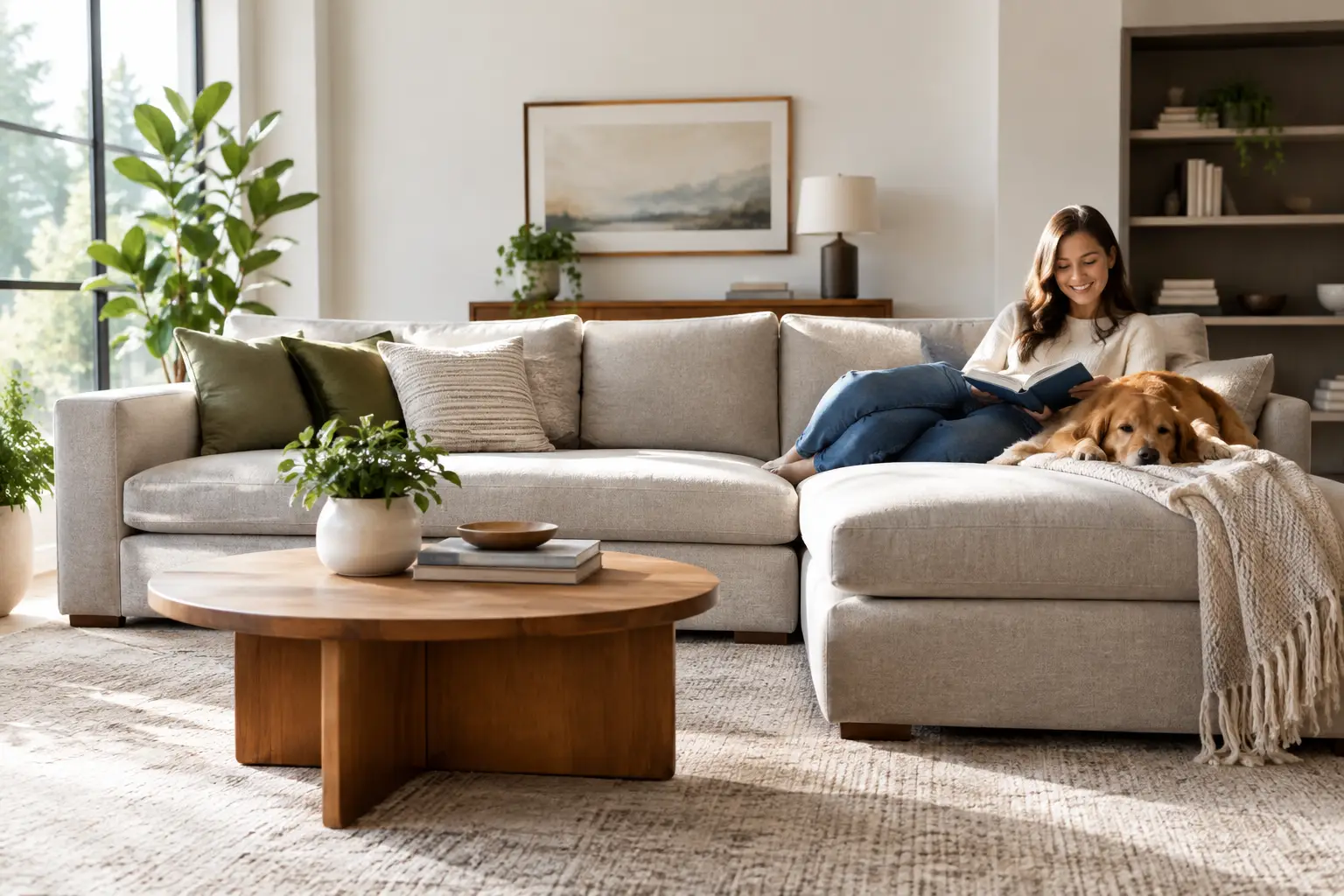
The best layout is not always the largest one. A sectional can offer exceptional comfort and define a seating zone in an open-concept home, but only when its orientation works with the room’s traffic flow. Before committing, decide which side needs the chaise when you are facing the sofa. This simple detail prevents the chaise from blocking a window, entry route or view.
A sofa with a chaise works well for couples and smaller households that want the ease of a sectional without filling the entire room. A larger L-shaped sectional suits families who gather in one place, while a modular design offers the greatest flexibility. Individual pieces can be rearranged as a household changes, moved more easily through condo corridors, or adapted to a new home later on.
For entertaining, two facing sofas create a more conversational arrangement than one oversized sectional. A tailored three-seat sofa paired with two lounge chairs can also feel lighter and more adaptable. This approach is particularly effective in living rooms where the television is present but should not dominate every interaction.
When modular design is worth it
Modular seating is an investment in flexibility, not a universal requirement. It is especially valuable in large or irregular rooms, for clients who move frequently, and for households that use their living room differently from season to season. The trade-off is that more joins can create a less continuous appearance than a single-frame sofa. High-quality modules should align cleanly and remain stable when people sit near the connections.
Comfort Is Built Below the Surface
A modern sofa can look beautifully restrained and still be deeply comfortable. That comfort begins with construction. A well-made frame, supportive suspension and resilient cushions will have a greater effect on daily use than decorative stitching or a trend-forward shape.
Ask how the seat is built and what is inside the cushions. Foam offers structure and can retain a crisp appearance, while feather or fibre wraps create a softer initial feel. Many premium sofas combine these materials, using a supportive core with a more luxurious outer layer. This balance gives the seat presence while avoiding the overly firm feel that can make a sofa visually elegant but difficult to enjoy.
Cushion maintenance is also part of the decision. Loose back cushions may need regular fluffing and rotation to maintain their shape. Fixed cushions often look neater and require less adjustment, though they offer less flexibility for cleaning. If the sofa will be used every day by a busy household, choose a construction that suits the level of care you are willing to give it.
Sit on the sofa for more than a moment when possible. Notice where your lower back lands, whether your feet reach the floor comfortably and how the arm height feels when you lean into it. A refined living room should not ask you to choose between appearance and ease.
Fabrics and Finishes Set the Mood
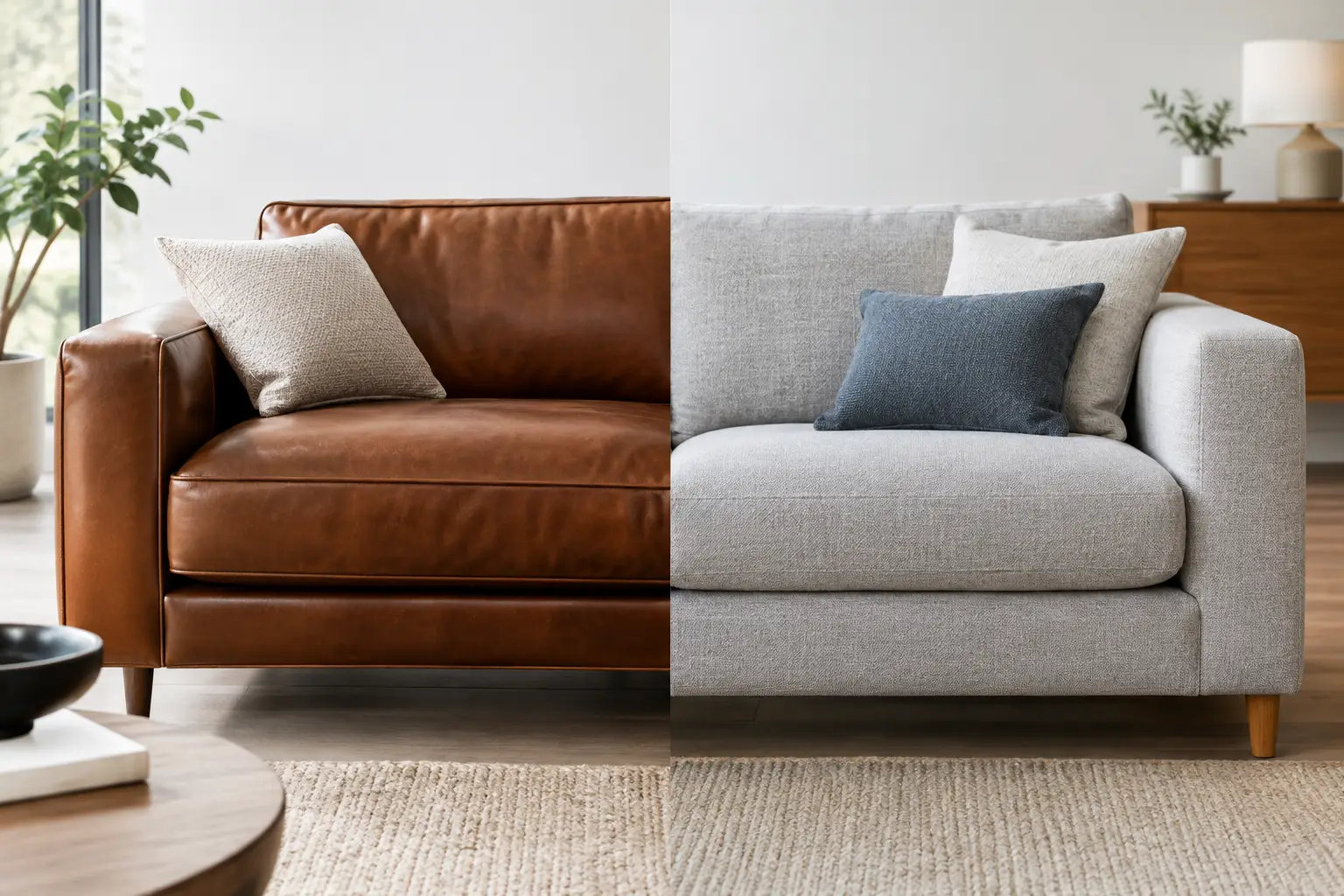
Upholstery changes the character of modern sofas more dramatically than most people expect. The same frame in ivory bouclé, charcoal wool blend or warm taupe leather can belong to three very different interiors.
Textured woven fabrics bring softness to clean-lined rooms and work well with natural oak, travertine and brushed-metal accents. Performance fabrics are a practical choice for family rooms, pets and light-coloured upholstery, offering greater resistance to spills and everyday wear without the stiff feel associated with earlier generations of durable textiles. Leather develops character over time and can be easy to maintain, though its temperature and tactile feel are more distinct than fabric. It is worth experiencing both in person.
Colour should be considered alongside the light in your home. Warm whites, mushroom, oatmeal and soft grey create a calm foundation, but they are not interchangeable. North-facing rooms often benefit from warmer undertones, while abundant southern light can carry cooler shades more easily. Deep green, tobacco, rust and ink blue can give a living room a more tailored identity, particularly when balanced with lighter rugs, curtains or walls.
Customization is especially useful when the right silhouette is available but the standard fabric does not belong in your space. Selecting a fabric, leg finish, configuration or dimension with the wider interior in mind creates a result that feels intentional rather than assembled room by room.
Make the Sofa Part of a Complete Room
A sofa does not need to match every surrounding piece, but it should establish a relationship with them. The coffee table should sit at a compatible visual height. Side tables should be easy to reach from the seats. A rug should be large enough to anchor at least the front legs of the sofa, rather than floating in the middle like a small island.
Layered lighting matters too. A floor lamp beside the sofa makes the seating area useful after dark, while wall lighting or a table lamp can soften the room’s atmosphere. Add cushions selectively. A few pieces with contrasting texture or restrained pattern will look more composed than a crowded row of identical pillows.
For condo interiors, consider dual-purpose pieces around the sofa rather than trying to make the sofa solve every need. A storage ottoman, compact side table or console can add function while keeping the seating area visually open. In a larger home, a generous sectional may benefit from an accent chair that breaks up the long horizontal line and gives the room a more collected feel.
See Modern Sofas in Person Before Deciding
Photographs are useful for understanding shape, but they cannot tell you how a fabric shifts in natural light, how a seat supports your body or whether a finish complements your flooring. This is where a showroom visit adds real value. Bring room measurements, photographs and, if possible, samples of your flooring, paint or drapery.
At Levida Furniture’s Markham showroom, comparing modern sofas in person makes it easier to assess scale, fabric texture and comfort across different European-inspired styles. A design consultation can also help clarify details that are easy to miss online, from sectional orientation to the practical difference between two similar neutral fabrics.
The most successful sofa is rarely the one that makes the loudest first impression. It is the piece that gives your room a clear centre, welcomes everyday use and still feels right when the rest of the home evolves around it.