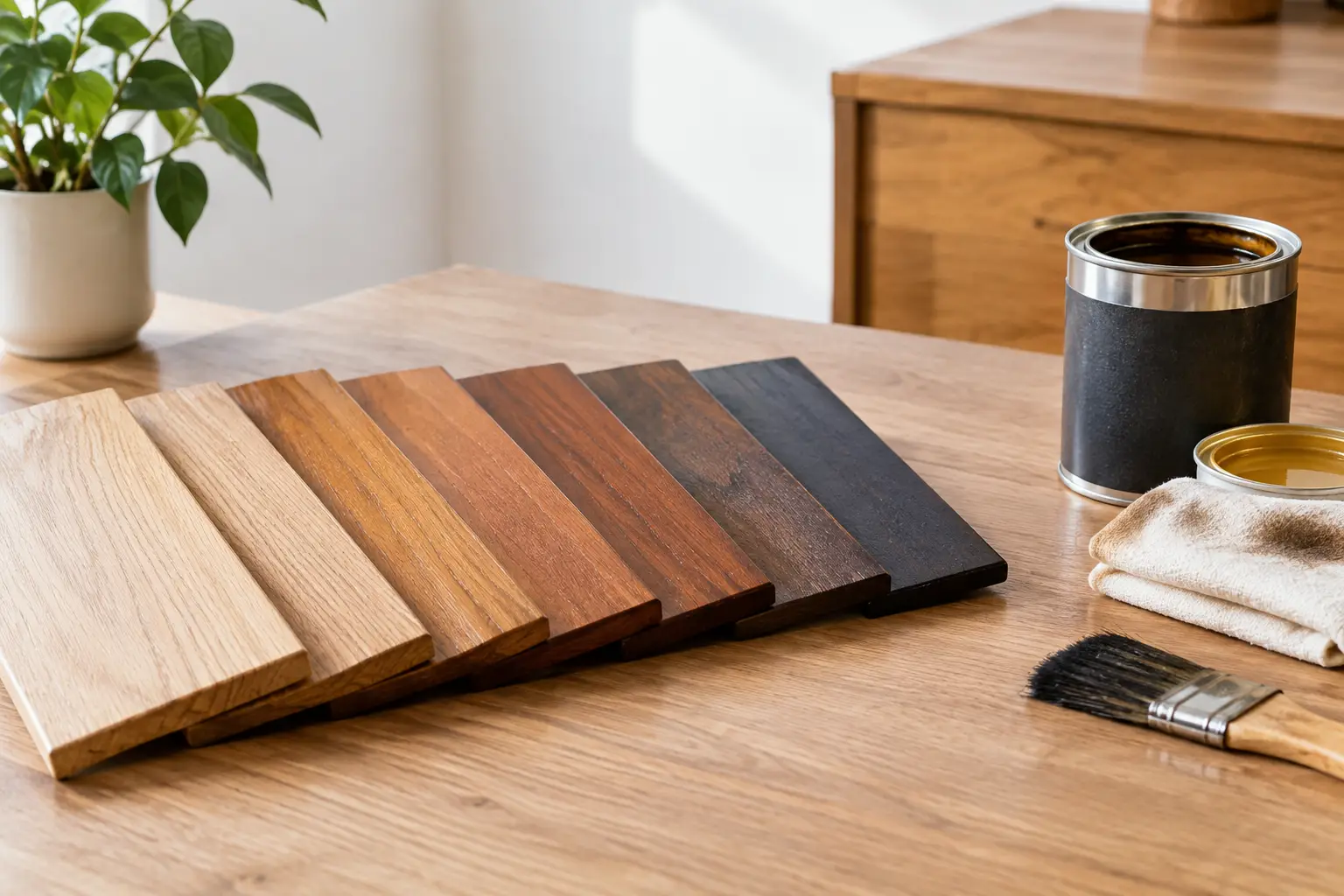
A custom dining table can have the right proportions, a beautifully considered base, and exceptional construction, yet still feel out of place once it arrives. Often, the difference comes down to the finish. This guide to custom furniture finishes is designed to help you choose materials, tones, and surface treatments that feel considered in your home, not merely attractive on a small sample.
For contemporary Canadian interiors, a finish has to do more than photograph well. It needs to respond to daylight, coordinate with existing flooring and millwork, and hold its character through daily use. The most successful choices balance visual refinement with how a household actually lives.
What a Furniture Finish Really Controls
The word “finish” is often used to describe colour alone, but it includes several decisions. On wood furniture, it may refer to the stain or pigment, the visibility of the grain, the level of sheen, and the protective topcoat. On lacquered or metal pieces, it can describe the surface colour, texture, reflectivity, and how the piece catches light.
This matters because two pieces labelled walnut can look entirely different. One may have a warm, open-pore appearance with visible natural variation, while another may be deep-toned, uniform, and satin sealed. Neither is inherently better. The right choice depends on the room, the desired level of contrast, and whether you want the furniture to feel architectural, soft, dramatic, or quietly integrated.
Custom finishes also make it possible to create continuity across rooms without making every surface identical. A dining sideboard might echo the warm undertone of an oak table, for example, while using a darker stain or a lacquered front to give the room more depth.
Start With the Fixed Elements in Your Home
Before selecting a furniture finish, look closely at what is not changing: flooring, kitchen cabinetry, stone, wall colour, interior doors, window frames, and large upholstered pieces. These elements establish the room’s visual temperature.
A common mistake is trying to match wood tones exactly. Exact matches are difficult across different species, veneers, and production batches, and can make an interior feel flat. Aim for harmony instead. If your floors have a warm honey oak cast, a natural oak dining table may work beautifully, while a grey-washed finish could feel disconnected. A smoked oak, walnut, or matte black base may provide intentional contrast.
Pay particular attention to undertones. Woods can lean golden, red, brown, taupe, or grey. White lacquer can be clean and cool, creamy, or subtly greyed. Even black is rarely neutral: some blacks read blue-black, others brown-black. Comparing samples beside your flooring and in the room where the piece will live reveals far more than comparing them under showroom lighting alone.
Consider daylight and evening light
Markham and GTA homes often receive very different light across the day, especially in condo settings with large windows or northern exposures. A pale oak can look airy in bright south-facing light but appear cooler and flatter in a shaded room. Dark finishes gain richness in warm evening light, yet may visually recede in a compact space with limited natural light.
If possible, view samples near a window and again under your actual evening lighting. LED bulb temperature can noticeably change the way a wood stain or lacquer reads. This simple step prevents many expensive surprises.
Choose the Right Material Before Choosing the Colour
Colour is only one part of the decision. The base material determines how the finish will wear, how much variation to expect, and the tactile quality of the piece.
Solid wood brings depth, natural grain, and individuality. It is well suited to dining tables, occasional tables, and pieces where the material itself should be part of the design. It may show small changes over time, particularly in direct sunlight, but many homeowners appreciate the patina this creates.
Wood veneer is a premium, practical choice for larger surfaces such as sideboards, wardrobes, and extendable tables. High-quality veneer offers the beauty of real wood while supporting stable, carefully engineered construction. It can also allow for striking grain placement that would be difficult to achieve in solid timber. The key is not to treat veneer as a compromise by default. In well-made European furniture, it is often selected for precision and performance.
Lacquered finishes create a cleaner, more contemporary plane. Matte lacquer feels understated and architectural, while high gloss reflects light and brings a more formal, sculptural presence. Lacquer works especially well on storage pieces, dining chairs, and modern bedroom furniture where a crisp silhouette matters. Be aware that very dark matte lacquers can show fingerprints, dust, or abrasion more readily than textured wood finishes.
Metal, ceramic, glass, and stone surfaces introduce another layer of contrast. A ceramic tabletop, for instance, can offer excellent resistance to heat and staining, while a wood base keeps the overall composition warm. These combinations are particularly useful in busy dining spaces where everyday practicality is as important as appearance.
Let Sheen Set the Mood
Sheen is one of the most underestimated finish decisions. It affects how formal a piece feels, how clearly it reflects light, and how easily everyday marks are noticed.
Matte and low-sheen finishes suit Scandinavian-inspired and contemporary interiors because they feel calm, tactile, and visually soft. They are especially effective with textured fabrics, natural stone, and warm woods. A satin finish offers a little more light play while remaining versatile enough for most homes. High-gloss finishes can be beautiful in the right setting, particularly when paired with streamlined forms and carefully controlled lighting, but they ask for more visual restraint around them.
For family homes, consider how the surface will be used rather than assuming matte is always the easiest option. A quality matte finish may minimize glare, but a pale matte tabletop can still show strongly coloured spills. A satin or subtly textured surface may be the more forgiving choice for frequent entertaining.
Balance Durability With the Look You Want
A finish should support your routines. Dining tables need a different level of resilience than a bedroom dresser, and an entry console encounters different risks than a media unit.
For a table used every day, ask about resistance to moisture, heat, staining, and scratching. If children, pets, or regular dinner parties are part of the picture, a ceramic, treated wood, or durable lacquered surface may be a more comfortable choice than a highly delicate finish. That does not mean choosing something visually utilitarian. It means choosing a material whose character will remain appealing after real use.
Natural wood is not maintenance-free, but it is often forgiving in another way: minor wear can become part of its lived-in character, and some surfaces can be renewed over time. A high-gloss lacquer may look pristine and polished, yet scratches can be more noticeable. Stone and ceramic are highly practical, although their visual effect can feel cooler unless balanced with wood, upholstery, or warm lighting.
Build Contrast Deliberately
A cohesive room needs variation. When every major piece shares the same wood tone and surface texture, the result can feel more like a furniture set than an interior with depth. Contrast can come through finish, scale, upholstery, or silhouette.
If your dining table is a warm, heavily grained oak, consider dining chairs with a slimmer metal frame, softly textured fabric, or a smooth lacquered detail. If a media unit has a dark smoked veneer, a lighter stone coffee table or bouclé lounge chair can prevent the living room from becoming too visually dense.
In smaller condos, contrast should be measured. One dark anchor piece, such as a walnut dining table or charcoal storage unit, can add sophistication without shrinking the room. Pair it with lighter upholstery, reflective accents, and legs that allow some visual openness beneath the furniture.
Ask for Samples and Compare Them Properly
Finish samples are most useful when you treat them as part of a larger composition. Place them beside floor samples, cabinet doors, paint swatches, and fabric selections. Look at them vertically as well as flat on a table, since light falls differently on a cabinet front than on a tabletop.
When comparing options, narrow the selection to two or three strong directions rather than collecting every possible swatch. Too many samples make subtle differences harder to judge. A warm natural oak, a medium smoked oak, and a deep walnut may tell you more about your preferences than eight nearly identical browns.
For a full-room project, it can help to create a simple finish plan. Identify the dominant wood, the secondary wood or painted finish, the metal accent, and the primary upholstery tone. This is particularly valuable when furnishing an open-concept condo, where dining, living, and kitchen elements are seen together.
A Guide to Custom Furniture Finishes for a Cohesive Home
The best custom finish is rarely the most dramatic option in isolation. It is the one that makes the proportions of the furniture feel right, complements the room’s fixed elements, and still looks composed after a busy week at home.
At Levida Furniture, seeing materials in person can make that decision far clearer. A visit to the Markham showroom allows you to compare wood, lacquer, stone, metal, and fabric combinations at full scale, while discussing dimensions and finishes in relation to your own space. Bring a flooring photo, paint sample, or cabinet swatch, then choose the finish that feels as comfortable in your everyday life as it looks in the room.