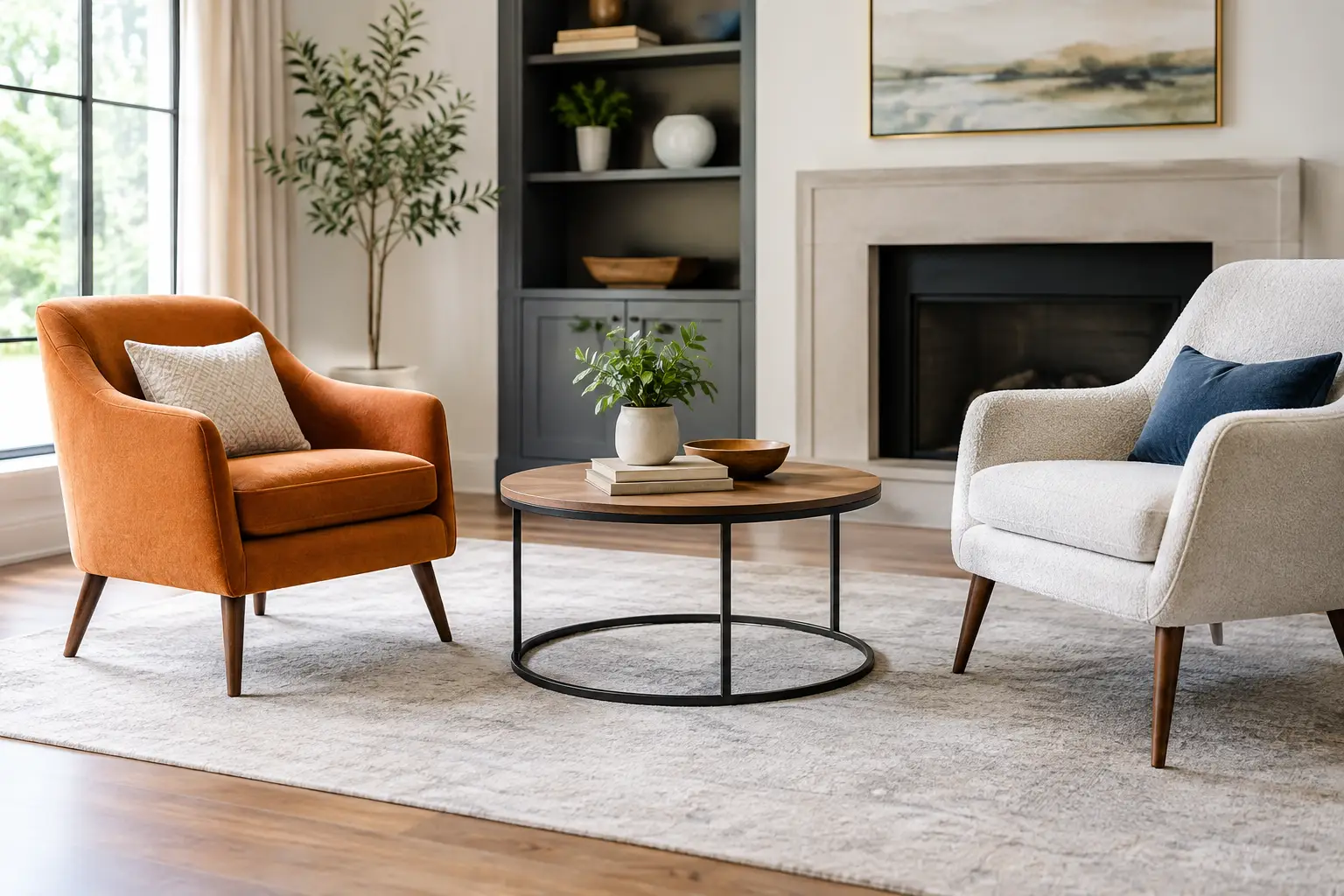
An accent chair can solve a room that feels finished but not quite lived in. It introduces a new silhouette, creates a destination for reading or conversation, and gives a living room the visual depth that a matching furniture set rarely achieves. Knowing how to choose accent chairs starts with treating them as both functional seating and an architectural element within the room.
The most successful choice is not necessarily the boldest one. It is the chair that balances proportion, comfort, material, and character with the way your home is actually used.
Start with the chair’s role in the room
Before considering colour or upholstery, decide what the chair needs to do. A sculptural lounge chair beside a fireplace has different requirements than a compact occasional chair in a condo bedroom. In a larger living room, a pair of chairs may define a conversation area opposite the sofa. In a smaller space, one well-proportioned chair can soften a corner without making the layout feel crowded.
Think about how often it will be used. A chair intended for daily reading, watching television, or entertaining should offer genuine support through the seat, back, and arm height. A more decorative chair can prioritize a distinctive profile, but it should still feel inviting enough that guests will want to sit in it.
Placement shapes the decision, too. A chair angled toward the sofa encourages conversation. One positioned beside a window may become a quiet retreat, especially with a floor lamp and a small side table. In an entry, bedroom, or dressing area, an accent chair can be more intimate and compact, adding a sense of completion without demanding the same level of lounging comfort.
Choose accent chair scale before style
Scale is where many otherwise beautiful rooms lose their balance. An oversized lounge chair can overwhelm a streamlined condo sofa, while a delicate occasional chair may look insubstantial beside a deep, generously sized sectional. Measure the available footprint, but also consider the chair’s visual weight.
Visual weight comes from more than dimensions. A low chair with broad arms, thick cushions, and a dark timber frame can feel substantial even when its measurements are modest. A chair on slender metal legs, with an open base or curved back, often appears lighter and can make a compact room feel more open.
Allow enough circulation around the chair so it does not become an obstacle. In most living areas, aim to preserve a clear path around the seating arrangement and leave practical reach to a side table. If the chair is part of a conversation grouping, it should feel connected to the sofa rather than pushed against a wall simply because there is space there.
Pay attention to seat height and depth
Seat height is an understated detail with a significant effect on comfort and cohesion. Chairs that sit dramatically lower or higher than the sofa can make a room feel disjointed, unless that contrast is intentional. A lower European-inspired lounge chair may be exactly right in a relaxed, contemporary interior, but it works best when the rest of the seating arrangement shares its easy, grounded feeling.
Seat depth matters just as much. Deep, relaxed seating suits longer lounging sessions, while a shallower seat tends to support a more upright posture for conversation. If possible, sit in the chair before deciding. Your feet should rest comfortably on the floor, and the back should support you without forcing an awkward position.
Build contrast without creating a mismatch
Accent chairs do not need to match the sofa. In fact, matching every piece can make a room feel flat. The goal is connection, not uniformity. A shared material, undertone, shape, or finish is often enough to make contrasting pieces feel considered.
If your sofa is soft and low-profile, consider introducing definition with a chair that has a tailored back, timber arms, or a more structured frame. If the sofa has clean, linear geometry, a rounded swivel chair or curved lounge chair can bring welcome softness. Scandinavian-inspired spaces often benefit from this interplay: pale oak, warm neutrals, textured upholstery, and a single expressive form create interest without clutter.
Colour should be approached with the same restraint. A chair can repeat a tone already present in artwork, rugs, or cushions, but it does not need to be identical. Mushroom, tobacco, olive, charcoal, and warm ivory are versatile choices because they add depth while remaining adaptable as accessories change. A stronger colour or patterned fabric can be exceptional in a quiet room, particularly when the chair is intended as a focal point.
Select upholstery for real Canadian living
Fabric is one of the most personal parts of choosing an accent chair. It affects how the chair looks in changing natural light, how it feels against the skin, and how well it ages in a busy home.
Bouclé and richly textured weaves lend softness and dimension to contemporary interiors. They are particularly effective on curved forms, where the fabric emphasizes the chair’s silhouette. Velvet offers depth and a subtle shift in tone throughout the day, making it a refined option for formal living rooms or bedrooms. Leather develops character over time and can bring warmth to modern spaces, though its feel and maintenance requirements should suit your household.
For homes with children, pets, or frequent entertaining, performance fabrics deserve serious consideration. They can provide the tailored appearance of premium upholstery while offering greater resilience to spills and everyday wear. Ask about abrasion ratings, cleanability, and whether a fabric’s pile, weave, or colour will show marks easily. A pale, heavily textured fabric may be beautiful, but a medium-toned weave can be the more forgiving choice for daily use.
Consider the frame and finish
An accent chair is also an opportunity to introduce a new finish at eye level. Natural wood brings warmth to rooms with stone, glass, or polished metal. Black-stained oak offers definition in pale interiors, while brushed metal can sharpen a more tailored scheme.
Rather than matching every wood tone precisely, look for compatible undertones. Warm walnut can sit beautifully with oak if both have a warm cast. Cooler grey woods, by contrast, may feel disconnected next to strongly golden finishes. The same principle applies to metals: a room can hold more than one, but repeating one finish elsewhere helps the chair feel anchored.
Use pairs thoughtfully
Two accent chairs can create immediate symmetry, especially opposite a sofa or on either side of a fireplace. They are a strong choice for entertaining because they give guests equally comfortable places to sit. In an open-concept home, a pair can also establish a living zone without adding a bulky divider.
That said, symmetry is not always necessary. One statement chair paired with a floor lamp can create a more relaxed, collected look. If you prefer two different chairs, connect them through height, upholstery tone, or a shared design language. The result should look intentional rather than like two separate purchases brought together by chance.
How to choose accent chairs in a showroom
Photographs are useful for narrowing preferences, but comfort, scale, and material quality are easier to judge in person. Sit in the chair for more than a moment. Notice the support beneath the cushions, the feel of the arms, the ease of getting in and out, and whether the back height suits the way you relax.
Bring room measurements, photos of your existing sofa and flooring, and samples of paint or drapery when possible. These practical details make it easier to compare fabric undertones and finishes under real conditions. For a customized piece, consider the complete composition: upholstery, leg finish, dimensions, and whether the chair needs to coordinate with furniture across an open plan.
At Levida Furniture’s Markham showroom, seeing European-made designs alongside fabric and finish options can make those decisions far more tangible. The right chair often becomes clear when you can experience its proportions and comfort rather than imagining them from a screen.
Choose the piece that gives your room a fresh point of view while still making daily life more comfortable. A well-chosen accent chair should feel distinctive on its own, then quietly make everything around it look more considered.