A sofa is where a carefully considered living room becomes a lived-in one. It hosts quiet mornings, visiting family, movie nights, and the occasional afternoon when the best plan is no plan at all. The decision between a leather versus fabric sofa therefore goes beyond appearance. It affects how the room feels, how the furniture wears, and how comfortably it supports everyday life.
For contemporary Canadian homes, there is no universal winner. Leather can bring polish, structure, and an appealing patina, while fabric offers tactile warmth, visual softness, and exceptional flexibility. The right choice depends on the architecture of your room, the way you use it, and the details that make a home feel personal.
Leather versus fabric sofa: the visual difference
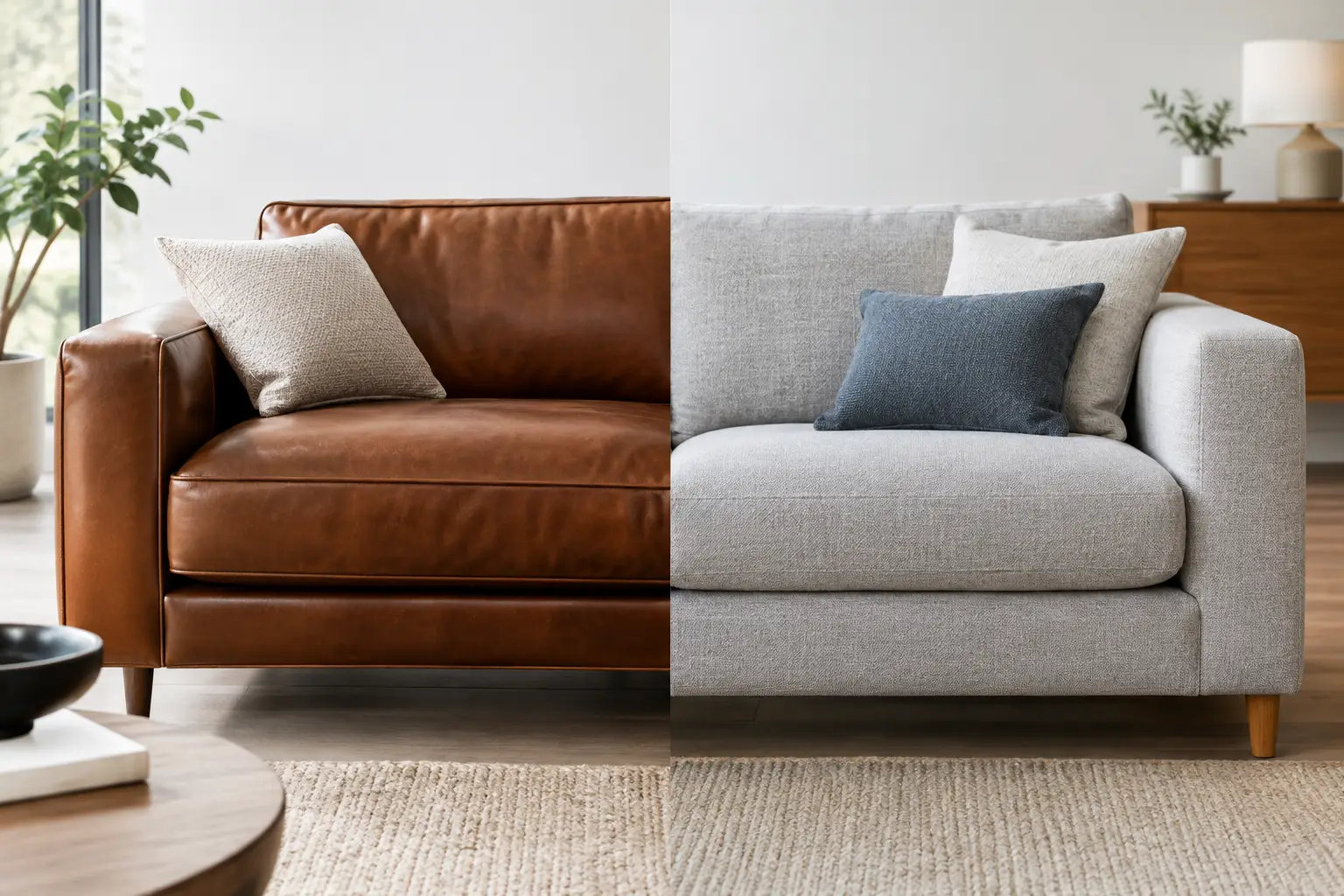
Leather has an immediate presence. Its smooth surface reflects light differently throughout the day, giving a sofa a tailored, dimensional quality. In a modern condo, a low-profile leather sectional can define an open living area without making it feel crowded. In a larger home, it can ground a room with rich texture and a sense of permanence.
Natural leather is not uniform, and that is part of its appeal. Fine grain variation, gentle creasing, and small markings contribute to a finish that feels individual rather than manufactured. Warm cognac, tobacco, deep espresso, soft taupe, and black are enduring options, but contemporary leather sofas are also available in lighter neutral tones that work beautifully with Scandinavian-inspired interiors.
Fabric creates a different kind of visual depth. Bouclé, velvet, textured weaves, wool blends, and performance fabrics can introduce softness that leather cannot replicate. A fabric sofa can disappear quietly into a tonal interior or become the room’s focal point through colour, texture, or an expressive silhouette. It is often the more adaptable choice when you want to layer rugs, drapery, cushions, and art without the seating feeling overly formal.
The scale of the sofa matters as much as the upholstery. A pale fabric may visually soften a substantial sectional, while a dark leather sofa can add welcome definition to an airy room. Consider the full composition, including flooring, natural light, wall colour, and the finishes on nearby tables and storage pieces.
Comfort changes with the season and the seat
Many people associate fabric with softness and leather with a firmer, cooler sit. That can be true, but upholstery is only one part of comfort. Seat depth, cushion fill, suspension, back angle, and arm design often have a greater effect on how a sofa feels after an hour of reading or an evening with guests.
Fabric generally feels welcoming from the first sit. It does not feel cold during a January morning in the GTA, and it tends to be less slippery when reclining. Textured upholstery also adds a relaxed, residential character that suits households where the living room is used daily.
Leather adapts to body temperature over time and can become exceptionally comfortable, particularly when paired with well-designed cushioning. It has a clean, supportive feel that many people prefer in a formal living room, a media space, or an open-concept home where the sofa needs to look composed from every angle. High-quality leather also becomes more supple with use.
A showroom visit is especially helpful here. Sitting on a sofa reveals whether the depth suits your height, whether the back support is right for your preferred posture, and whether the upholstery enhances the experience you expect. A beautiful silhouette should never ask you to compromise on comfort.
Durability is about material quality and daily habits
A quality leather sofa can last for many years, but not every leather is made to the same standard. Full-grain and top-grain leathers typically offer greater natural character and longevity than heavily corrected or bonded alternatives. They will develop signs of use, but this patina can add warmth and authenticity when the leather has been properly selected and cared for.
Leather is a particularly practical option for homes where spills are occasional but inevitable. Many fresh spills can be gently blotted before they soak in, although oils, ink, sharp objects, and pet claws require more caution. Direct sun and proximity to heat sources can also dry leather over time, so thoughtful placement and occasional conditioning are worthwhile.
Fabric durability depends on fibre content, weave, colour, and performance treatment. A premium upholstery fabric with a tight weave and high abrasion rating can be an excellent choice for family rooms and busy condo living. Performance fabrics have expanded the possibilities considerably, offering a refined hand feel alongside resistance to stains and easier cleaning.
For homes with young children or pets, the answer is not automatically leather. A smooth leather surface may be easier to wipe, but it can show scratches. A tightly woven, mid-tone performance fabric may camouflage daily life more gracefully than either cream linen or delicate leather. Ask to see samples in your home’s lighting and consider how the material responds to the realities of your household.
Maintenance: simple routines make the difference
Leather benefits from light, consistent care. Dust it with a soft dry cloth, clean spills promptly according to the manufacturer’s guidance, and use a suitable leather conditioner when recommended. Avoid harsh household cleaners, excessive water, and improvised products that can leave residue or alter the finish.
Fabric sofas need regular vacuuming with an upholstery attachment to prevent dust from settling into the weave. Cushions should be rotated where possible, and spills should be addressed quickly without aggressive rubbing. The correct cleaning method varies by fabric, so the care code and supplier guidance matter more than a one-size-fits-all remedy.
Removable covers can be useful, but they are not the only practical route. Many tailored sofas achieve their elegant lines through fixed upholstery, and a well-chosen performance fabric can offer confidence without sacrificing a polished look. Before ordering, ask about fabric cleaning codes, stain resistance, and whether replacement covers or additional yardage are available for future needs.
Customization makes the choice more personal
The strongest interiors rarely rely on a default option. Upholstery selection becomes more meaningful when it is considered alongside the sofa’s configuration, leg finish, seam detail, cushion style, and proportions. A modular fabric sectional might be ideal for a growing family room, while a compact leather sofa with slim arms can be the smarter fit for a downtown condominium.
Colour deserves time and attention. Cream and ivory fabrics feel luminous but require confidence in maintenance. Grey, mushroom, olive, and warm taupe provide a forgiving middle ground while preserving a calm, elevated palette. With leather, consider whether you want a finish that blends into the room or gains character as it ages. A cognac leather sofa can become more expressive over time, whereas charcoal or taupe leather often supports a quieter architectural scheme.
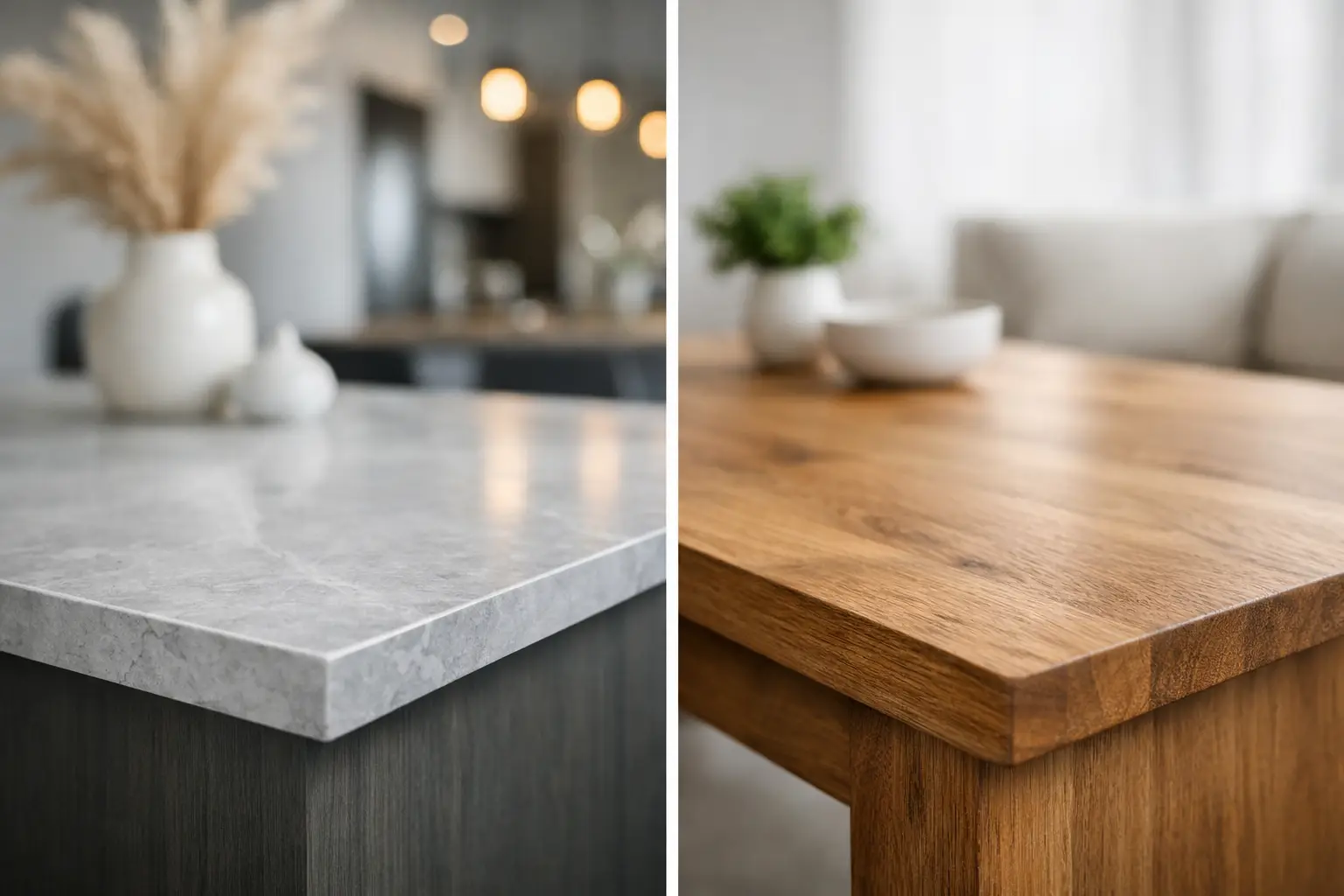
At Levida Furniture, comparing upholstery in person can make the decision far more intuitive. Seeing fabric swatches beside wood finishes, stone-inspired surfaces, and area rugs helps reveal whether the room needs softness, contrast, or a more sculptural focal point.
Choose based on the life of the room
Think of leather when you want a crisp, enduring material with a tailored look, straightforward day-to-day wipeability, and a finish that becomes more characterful over time. It is especially compelling in contemporary spaces with clean-lined cabinetry, natural wood, metal accents, or architectural lighting.
Choose fabric when touch, colour, and softness are central to your vision. Fabric is often the better fit for relaxed family rooms, layered neutral interiors, and anyone who wants more freedom to customize the mood of a space. It can feel intimate in a small room and quietly luxurious in a larger one.
The best sofa is not the one that wins a general debate. It is the one whose proportions welcome you in, whose upholstery suits your routines, and whose finish still feels right when the room is full of life. Bring photos, measurements, and a few honest notes about how you live when you compare materials – the most refined choice is usually the one that feels effortless at home.