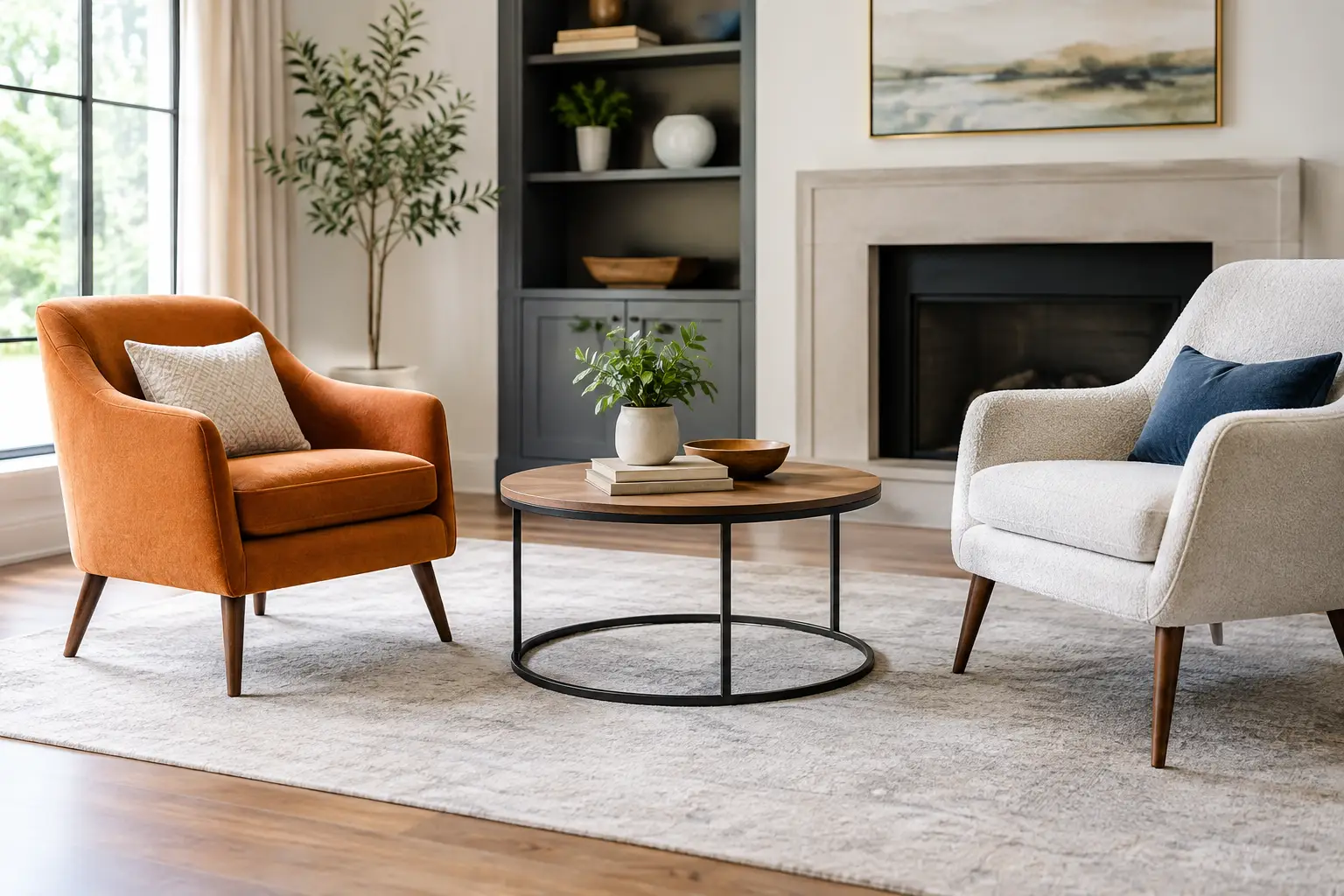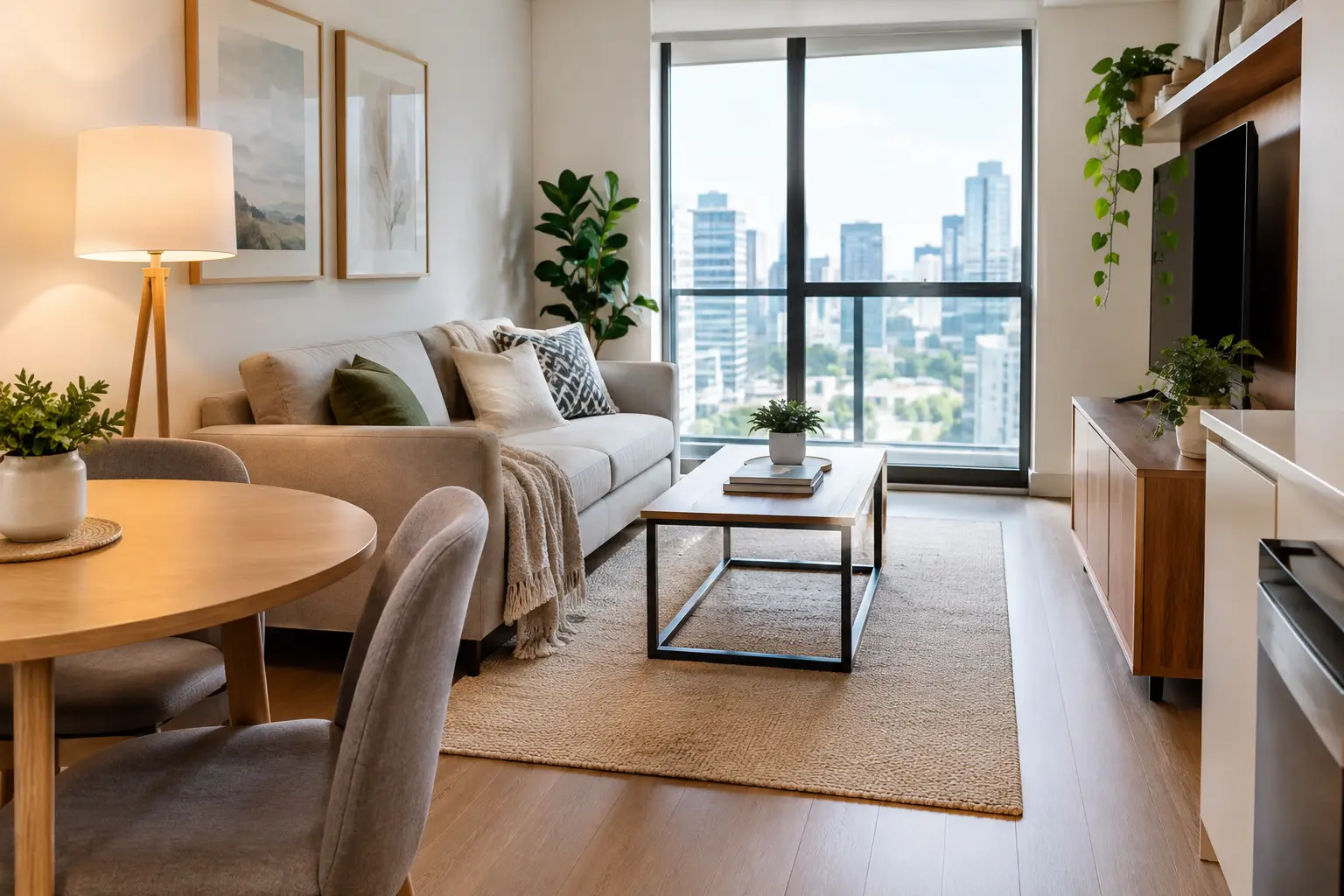
A well-furnished condo does not feel small because every piece is small. It feels composed because each piece has a clear purpose, the proportions are considered, and the room has enough visual breathing room to be comfortable. This condo furnishing guide is designed for Canadian urban homes where square footage is valuable, natural light may be limited, and furniture needs to look considered while working hard every day.
The most successful condo interiors are rarely built by filling every open area. They begin with a measured plan, a few substantial pieces, and a material palette that carries from room to room. Whether you are furnishing a first Toronto condo, updating a Markham pied-à-terre, or making a rental feel more personal, the goal is the same: create a home that is refined, practical, and genuinely pleasant to live in.
Start With Scale, Not a Shopping List
Before choosing a sofa or dining table, understand the room as it will actually be used. Measure wall lengths, window locations, door swings, vents, radiators, and the path from the elevator to your suite. In many newer condominiums, the delivery route is as relevant as the floor plan. A beautiful sectional that cannot clear a corridor, turn into the elevator, or pass through the entry is not the right choice.
Mark the footprint of key pieces on the floor with painter’s tape. This quickly reveals whether a sofa leaves enough room to walk, whether dining chairs can be pulled back comfortably, and whether a bed overwhelms the bedroom. As a general starting point, aim for clear circulation paths of about 76 to 91 centimetres where possible. Tighter spaces can work, but they need furniture with a lighter profile and fewer visual interruptions.
Scale is not only about width and depth. It is also about visual weight. A low sofa on slim legs can make a living room feel more open than a bulky piece of the same dimensions. A dining table with a refined base can keep sightlines clear, while a bed with an upholstered headboard may bring softness without demanding additional décor. The right proportions create calm before colour or accessories enter the picture.
Build the Layout Around Daily Living
Condo living often asks one space to perform several roles. The living room might be a lounge, a work zone, a dining area, and the place where friends gather on a Saturday night. Rather than treating this as a limitation, use it to make deliberate zones.
Start with the activity that matters most. If evenings on the sofa are central to your routine, orient the seating for comfort and conversation first, then determine where a dining table can sit. If you host regularly, a round or softly rounded dining table may improve movement around the room and make compact seating feel more inviting. Extendable tables are especially useful when everyday dining needs are modest but entertaining is part of your life.
Avoid placing every large piece against a wall by default. In an open-plan suite, floating a sofa slightly away from the dining area can establish a living zone and create a more finished arrangement. A slim console behind it can add a surface for lighting or books, provided the walkway remains generous. If the room is too narrow, a compact sofa with one sculptural lounge chair may be more elegant than forcing in a sectional.
Choose Fewer, Better Anchor Pieces
A condo benefits from restraint. Select one strong anchor for each zone: a sofa for the living room, a dining table for the eating area, and a bed for the bedroom. These are the pieces you touch and use most, so comfort, construction, and upholstery matter more than novelty.
For seating, pay attention to seat depth as well as overall length. Deep lounge sofas are appealing, but they can be impractical in a narrow room or for people who prefer more upright support. Modular seating offers flexibility, particularly when a chaise can be positioned on either side or reconfigured after a move. It depends on the plan: a modular sofa is not automatically better if its separate elements create unnecessary bulk.
In a compact dining area, a table should feel substantial enough to ground the room without making chairs feel trapped. Consider a pedestal base, softened corners, or a carefully proportioned rectangular table. Dining chairs with upholstered seats and slim silhouettes provide comfort while keeping the composition visually light.
This Condo Furnishing Guide Prioritizes Storage
Good storage should disappear into the design rather than announce itself. Condos often lack a dedicated linen closet, pantry, or entry storage, which means furniture must fill some of that gap gracefully.
A low media unit can conceal electronics, cables, and everyday items while grounding the living area. In the dining zone, a sideboard offers a home for serving pieces, glassware, and table linens. In a bedroom, a storage bed may be worthwhile if the lift mechanism is easy to use and the mattress remains well supported. Closed storage generally creates a calmer impression than open shelving, especially in rooms that serve multiple functions.
The entry deserves the same attention as the main living space. A narrow cabinet, wall mirror, bench, or upholstered stool can establish a welcoming arrival point without crowding the door. Choose only what the entry can accommodate. A single well-designed storage piece is more useful than several small objects competing for floor space.
Vertical space also has value. A tall cabinet or shelving unit can create storage without consuming the footprint needed for circulation. Keep upper shelves edited and intentional. Books, ceramics, and art can add character, but overfilled shelving reads as clutter quickly in a smaller home.
Use Materials to Add Depth Without Clutter
A restrained palette does not need to be flat. European-inspired contemporary interiors often feel warm because they combine texture: natural wood grain, matte lacquer, brushed metal, bouclé, wool, leather, stone, and softly reflective glass. In a condo, these materials add richness without requiring excessive pattern or ornament.
Begin with two or three leading finishes. For example, a warm oak dining table, a cream textured sofa, and bronze or black metal details can establish a sophisticated base. Repeat one finish in small ways across the space, perhaps through table legs, lighting, frames, or cabinet hardware. Repetition creates cohesion, particularly when the kitchen finishes cannot be changed.
Light-coloured upholstery can make a room feel open, but it is not the only sensible choice. A mid-tone grey, taupe, olive, or deeply saturated blue can be forgiving and grounding, especially with pets, children, or frequent guests. Performance fabrics are worth considering for high-use seating, while leather offers a tailored finish and develops character over time. Requesting fabric samples before committing is a practical step, since daylight can shift a colour dramatically from morning to evening.
Mirrors can amplify light, but placement matters. A large mirror opposite a window can brighten a darker room; one that reflects a television, cluttered kitchen counter, or blank hallway may add little. Similarly, glass tables can preserve sightlines, while stone or ceramic surfaces introduce a more substantial, architectural presence. Neither is universally right. The best choice depends on how much visual lightness the room needs and how the surface will be used.
Give Each Room One Moment of Character
Cohesion should not make every room identical. A sculptural pendant above the dining table, a distinctive occasional chair, a large-format artwork, or a textured headboard can give a space its own point of view. Choose one or two such moments rather than introducing competing statements in every corner.
Lighting is particularly influential in condominium interiors. Relying solely on overhead fixtures can make even carefully selected furniture feel impersonal. Layer ambient lighting with a floor lamp near seating, a table lamp on a console or nightstand, and focused illumination where you read or work. Warm bulbs usually make natural wood, upholstery, and textured finishes look more inviting in the evening.
Area rugs also help define zones, but they should be generously sized. In the living room, the front legs of the sofa and chairs should usually sit on the rug. A rug that is too small can make a thoughtfully furnished room feel fragmented. In the bedroom, it should extend beyond the sides of the bed so there is softness underfoot when you wake.
Consider Customization Before Compromise
Standard dimensions do not always suit condo layouts. A few centimetres can decide whether a table allows proper circulation or whether a sofa feels comfortably integrated. Where available, customization in size, configuration, fabric, colour, and finish allows you to solve for the room rather than settle for the nearest option.
This is particularly valuable for sectional seating, dining tables, storage units, and beds. The process does require more lead time and clearer decisions, but the result can feel far more intentional. Visiting a showroom also lets you assess comfort, fabric texture, wood tone, and craftsmanship in person. At Levida Furniture, clients can compare materials and proportions firsthand while receiving guidance tailored to the realities of their space.
A condo is not a temporary compromise on the way to a larger home. Furnish it with pieces that support the life you have now: a sofa you want to settle into, a table that welcomes guests, storage that restores order, and finishes that still feel good after a long day. When every choice earns its place, even a modest floor plan can feel quietly generous.