A condo living room can be beautifully finished and still feel awkward if the seating is one size too large, too visually heavy, or positioned without respect for the path from entry to kitchen. The best sofa configuration for condo living is rarely the biggest piece that fits on paper. It is the arrangement that gives the room a clear purpose, comfortable circulation, and enough visual breathing room to feel considered rather than compressed.
For many GTA condo owners, that balance starts with choosing fewer, better-proportioned pieces. A refined European sofa with thoughtful dimensions, supportive seating, and a tailored profile can make a compact home feel more generous than an oversized sectional ever could.
Start With the Room, Not the Sofa
Before selecting a style, measure the room’s true usable area. This is not simply wall-to-wall square footage. Account for doors that swing open, balcony access, kitchen islands, baseboard heaters, radiators, floor vents, and the route you take through the room every day.
A practical guideline is to preserve approximately 76 to 91 centimetres of clear walking space along the main circulation route. In a narrow condo living room, even a few extra centimetres of sofa depth can make the difference between an inviting layout and one that constantly interrupts movement.
Also consider the building itself. Elevator dimensions, hallway turns, and delivery access can limit what can physically reach your suite. Modular seating and sofas with removable legs may offer more flexibility, but it is worth confirming all access measurements before falling in love with a silhouette.
Use the rug as your footprint
In open-concept condos, an area rug is often the simplest way to define the living zone. Ideally, the front legs of the sofa sit on the rug, with a coffee table placed close enough to use comfortably. This creates an anchored composition without needing bulky furniture to establish the room.
If the living area is particularly compact, choose a rug large enough to connect the seating rather than a small rug that floats in the middle. A properly scaled rug makes even a simple two-piece configuration feel intentional.
Best Sofa Configurations for Condo Spaces
There is no single right answer because the ideal arrangement depends on room shape, household size, and how often you entertain. Still, several configurations consistently perform well in contemporary Canadian condos.
The apartment sofa and accent chair
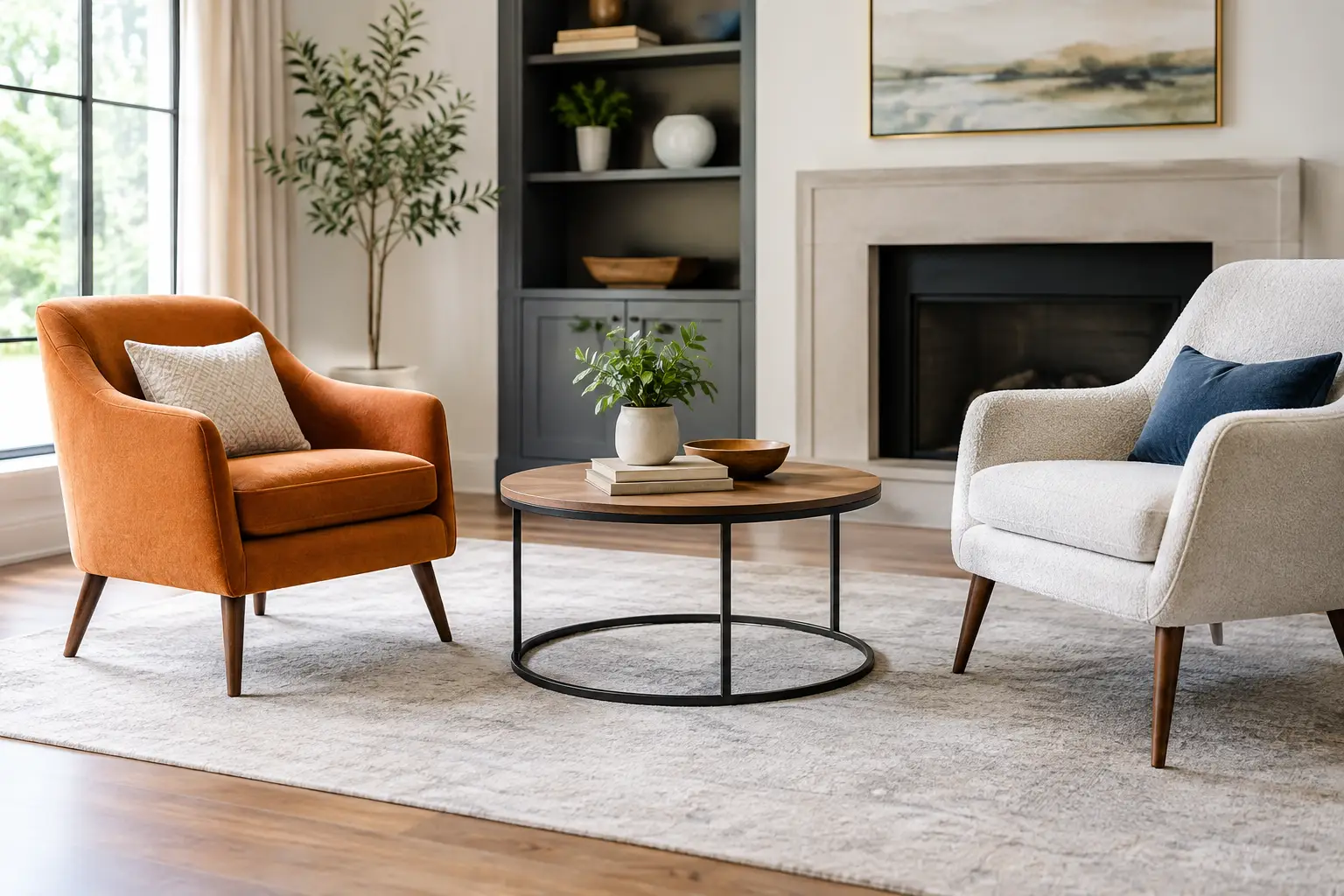
For a compact rectangular living room, a streamlined two- or three-seat sofa paired with one accent chair is often the most versatile choice. It provides enough seating for everyday life while keeping the room open from multiple angles.
Choose an accent chair with a lighter visual profile than the sofa. A curved back, exposed base, or swivel function can soften the linear geometry common in condo architecture. This arrangement also adapts easily if you move, redesign, or need to create a work-from-home corner later.
The trade-off is capacity. If you regularly host friends or have a growing family, a single sofa and chair may feel limited. In that case, a flexible ottoman can work as occasional seating without permanently crowding the room.
The compact chaise sectional
A chaise sectional is often the best sofa configuration for condo owners who want to lounge without adding a separate chair. It offers the relaxed comfort of a sectional while using one continuous footprint, particularly when the chaise runs along a window wall or the room’s shorter side.
Keep the configuration compact and avoid overly deep seats unless the room is genuinely wide. Look for a chaise that is open on one end rather than enclosed by a high arm, as this preserves sightlines and makes the room feel less boxed in.
Orientation matters. The chaise should extend into the part of the room with the least foot traffic, not across the route to the balcony, kitchen, or entry. If your layout may change, a reversible chaise or modular design provides welcome insurance.
The low-profile L-shaped sectional
A small L-shaped sectional works especially well when the living room has a clear corner and the sofa can face the television without blocking access. It can establish a generous, hospitality-inspired seating area in an open-plan suite, particularly for couples who enjoy movie nights or entertaining at home.
The risk is choosing a sectional that dominates the room. Select one with slim arms, elevated legs, and a restrained back height. These details allow light and flooring to remain visible, reducing the visual weight of the piece. A design with clean European lines can feel substantial without becoming imposing.
Two facing sofas for a wider room
Not every condo requires a sectional. In wider living rooms, two compact sofas facing one another create a polished conversation layout that is more balanced than a large corner unit. This configuration is particularly effective when the television is secondary to hosting, reading, or relaxed evenings with guests.
Keep both sofas narrow in depth and leave sufficient space between them for a coffee table and comfortable legroom. If the room is modest, a sofa paired with a matching loveseat can achieve a similar effect with less density.
Choose Proportions That Feel Light, Not Temporary
Small-scale furniture does not need to look undersized or casual. The goal is proportion, not compromise. A sofa around 203 to 221 centimetres wide can suit many condo living rooms, but depth and arm thickness may matter even more than width. A 91-centimetre-deep sofa with refined arms can feel far more appropriate than a 107-centimetre-deep model that projects into the room.
Look for visual cues that create lightness: raised legs, a low or medium back, tailored upholstery, and arms that do not consume unnecessary width. Avoid selecting every piece at the same height or in the same boxy shape. A sofa with a lower profile beside a more sculptural chair creates dimension without adding clutter.
Coffee tables deserve equal attention. In a tight layout, an oval or round table improves circulation around sharp corners. Nesting tables are useful when you need extra surface area only occasionally, while an upholstered ottoman can introduce softness and serve several roles with a tray on top.
Fabric, Colour, and Comfort for Real Condo Life
Condo furniture is seen from close range. In an open plan, your sofa may sit within view of the kitchen, dining table, and entry, so fabric and colour must work across the entire interior rather than as an isolated decision.
Textured neutrals such as warm grey, oatmeal, taupe, soft stone, and mushroom create a calm foundation while still showing material depth. Performance fabrics are a thoughtful choice for pets, children, or frequent entertaining, but they should still feel luxurious to the touch. A durable textile does not have to look overly casual.
Lighter upholstery can make a compact room feel brighter, especially in condos with limited natural light. Darker fabrics can be equally sophisticated when balanced with pale flooring, reflective surfaces, or a lighter rug. What matters most is contrast: if the sofa, flooring, walls, and rug are all similar in tone, use texture and accent materials to prevent the room from feeling flat.
Comfort should be tested, not assumed. Seat depth, cushion support, back angle, and arm height affect how a sofa feels after an hour, not just how it photographs. This is where a showroom visit is valuable. At Levida Furniture, clients can compare dimensions, fabrics, and seating comfort in person while considering how each option will relate to their complete condo interior.
Make the Layout Work Beyond the Living Room
The most successful condo seating plans acknowledge the adjacent dining and kitchen areas. A sofa back can help define the living room, but it should not create a visual barricade. In many open layouts, placing the sofa with its back toward the dining area works well when there is enough clearance for dining chairs to move freely behind it.
If the suite has a dramatic window view, resist the urge to block it with a high-backed sectional. Float lower furniture where possible, and let the view remain part of the composition. Conversely, when the television wall is the natural focal point, build the seating arrangement around it and use artwork, lighting, and textiles to bring warmth elsewhere.
Storage is another consideration. A sofa with a raised base makes it easier to clean beneath and keeps the room feeling orderly. Pair it with a low media unit, a storage ottoman, or a slender sideboard rather than filling every open wall with furniture.
A Better Way to Decide
Before committing, mark the sofa footprint on your floor with painter’s tape. Walk around it with the dining chairs pulled out. Open the balcony door. Sit where the chaise would land and imagine where guests will place a drink. This simple exercise reveals more than a floor plan alone.
The right condo sofa configuration should make daily life easier while giving the room a composed, welcoming presence. Choose the arrangement that leaves space for movement, conversation, and the small rituals that make a condo feel distinctly your own.