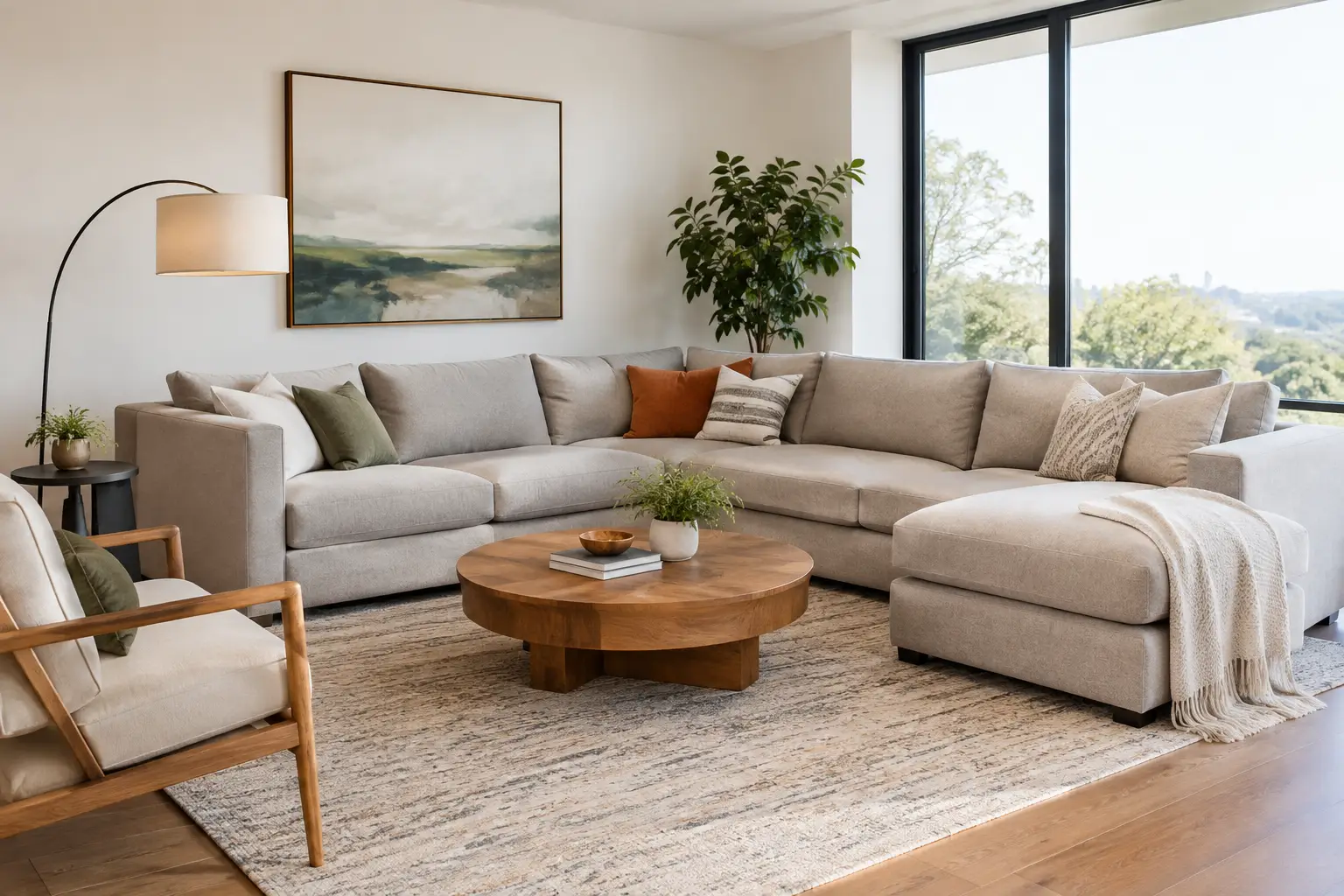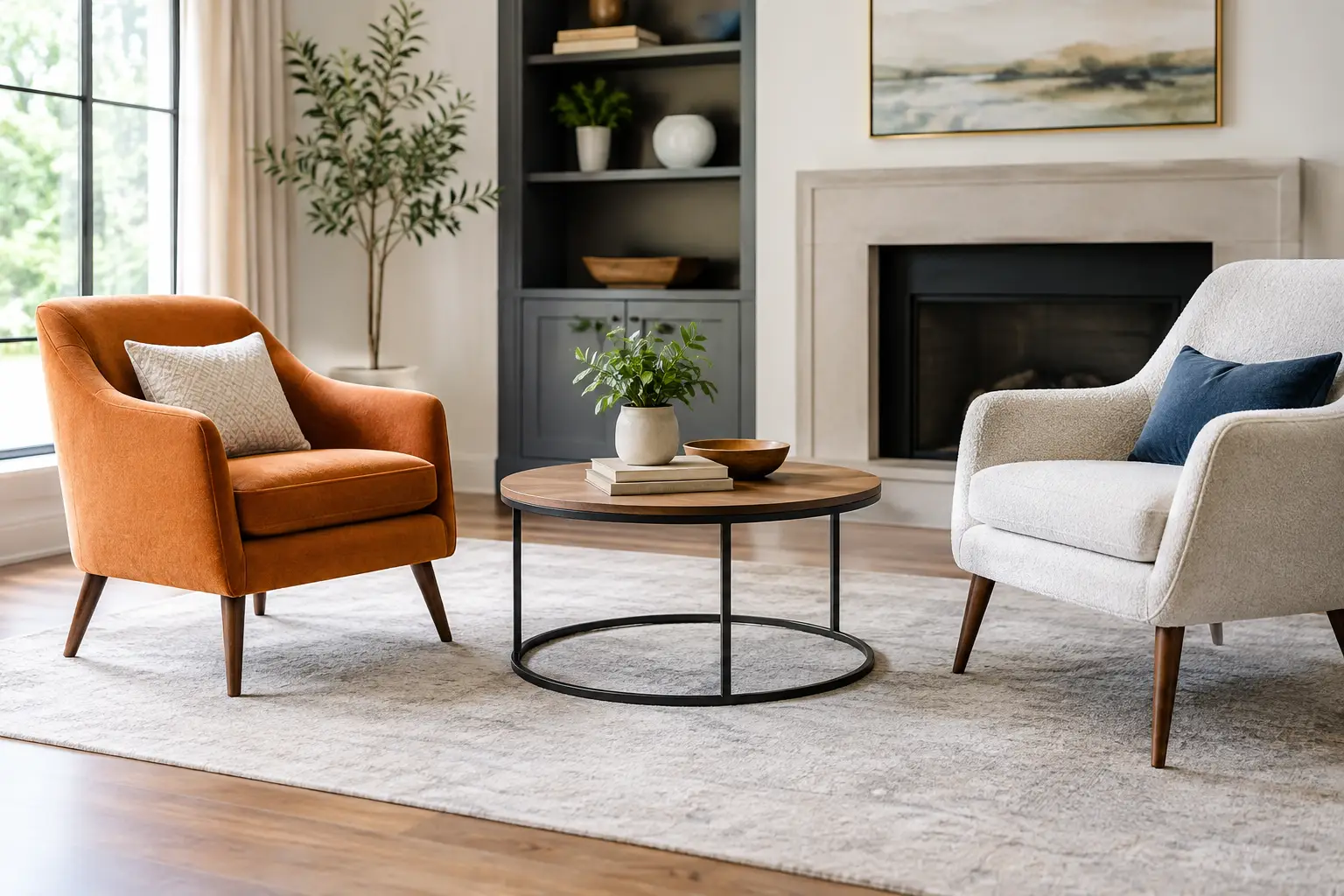
A family sofa has to do more than look beautiful under showroom lighting. It becomes the setting for weeknight films, early-morning coffee, children’s snacks, visiting friends, and the occasional pet nap. The best fabrics for family sofas make room for all of that life while preserving the calm, considered character of a contemporary interior.
The right choice is rarely about finding an indestructible material. Every upholstery has a trade-off between texture, softness, cleanability, colour depth, and long-term wear. The goal is to select a fabric that suits how your household actually lives, then choose a weave and colour that continue to feel refined after years of use.
Best Fabrics for Family Sofas: Start With Performance
For many active Canadian households, performance upholstery is the most balanced choice. This category includes finely woven textiles engineered to resist staining, moisture, fading, and everyday abrasion. They are often made with polyester, olefin, acrylic, or blended fibres, but their performance comes from the construction and finish as much as the fibre itself.
Modern performance fabrics no longer need to look overly technical or casual. Many have the tailored appearance of wool, the softness of chenille, or the subtle irregularity of linen. That makes them especially well suited to contemporary living rooms where a sofa needs to feel elevated without becoming precious.
A tightly woven performance fabric is a sensible choice for families with young children, pets, or frequent guests. Spills can often be addressed quickly with a clean cloth, water, and a gentle upholstery cleaner approved by the manufacturer. Still, stain resistance is not the same as stain proof. Tomato sauce, ink, oils, and deeply coloured drinks should be treated promptly, and care instructions should always guide the cleaning method.
Look beyond the word “performance” when comparing swatches. Run your hand over the surface. A heavily textured weave can conceal small marks well, but may catch pet claws more easily than a smooth, dense fabric. A low-pile chenille feels inviting and forgiving, while a very plush version may show shading where the pile has been brushed in different directions.
Polyester and Blended Performance Weaves
Polyester is common in family-friendly upholstery for good reason. It is colourfast, durable, and versatile enough to take on many visual personalities, from crisp bouclé-inspired weaves to soft, matte textures. When blended with other fibres, it can add resilience without making the sofa feel synthetic.
For a polished, low-maintenance look, consider a medium-scale woven texture in a warm grey, taupe, mushroom, soft olive, or muted blue. These shades offer more depth than pale beige yet are less visually demanding than charcoal or black, which can reveal lint, dust, and pet hair. A tonal weave with two or three closely related yarn colours is particularly practical because it disguises the small signs of daily life without looking busy.
Olefin and Acrylic for Sunlit Rooms
Olefin and acrylic-based textiles are worth considering when your sofa sits near expansive windows or in a bright condo living room. Both are valued for their resistance to fading, and olefin also handles moisture well. Their hand feel varies considerably, so this is a category where seeing full-size upholstery samples matters.
These fabrics can be excellent for a family room with strong afternoon light, but a softer performance polyester blend may be preferable if comfort and a more luxurious touch are your first priorities. Fabric selection should support the room, not simply answer one concern in isolation.
Leather Brings a Different Kind of Durability
Quality leather is one of the best materials for a family sofa when you appreciate the way natural materials age. It does not absorb pet hair, is easy to wipe after most spills, and develops a lived-in patina over time. For households with older children, leather can be an exceptionally practical and sophisticated option.
Its limitations are equally worth understanding. Leather can be scratched by sharp claws, may feel cool on winter mornings, and is more sensitive to body oils than many people expect. Aniline and semi-aniline leathers offer beautiful natural character but show marks and variation more readily. Protected leather has a more consistent finish and is generally easier to maintain, making it a stronger candidate for high-traffic seating.
A mid-tone leather in cognac, tobacco, warm brown, or softened charcoal works beautifully in modern Canadian homes. It can add warmth to Scandinavian-inspired interiors with pale oak and textured rugs, or bring depth to a more architectural space with stone, glass, and black metal details. Avoid selecting leather solely for easy cleaning if you prefer a perfectly uniform surface. Its appeal lies in its character, not in looking untouched forever.
Consider Wool Blends for a Tailored, Quiet Look
Wool upholstery has a depth and tactility that synthetic fabrics often imitate but rarely duplicate. It is naturally resilient, breathable, and well suited to sofas with clean European lines. A wool blend can be an excellent option for a design-conscious household that wants a tailored, tactile finish and is prepared to take sensible care of it.
Pure wool and high-wool-content fabrics are not always the most carefree choice for a home with toddlers, muddy paws, or regular food-on-the-sofa evenings. They may require professional cleaning for significant stains, and some weaves can pill or attract lint. A wool blend that includes performance fibres can offer a more practical middle ground while keeping the richness of a natural-looking textile.
Choose a low-contrast, tightly woven wool blend for the most versatile result. It complements streamlined sofas, generous modular seating, and sculptural lounge chairs without overwhelming a room. In smaller condos, its visual softness can also make a substantial sofa feel less heavy.
Velvet, Linen, and Bouclé: Beautiful With Conditions
Some of the most desirable upholstery textures require a more deliberate decision. They are not automatically unsuitable for family life, but the quality of the material and the household routine matter.
Performance velvet is often more family-friendly than expected. A dense, low-pile version can resist spills well and brings remarkable colour richness to a sofa. It does, however, show pressure marks and directional shading, particularly in lighter tones. That variation is part of velvet’s character. If it will bother you, choose a woven performance textile instead.
Linen has a relaxed, airy beauty that suits light-filled interiors, but it wrinkles, absorbs spills, and can wear unevenly on heavily used cushions. Linen blends are more practical than pure linen, especially where synthetic fibres add strength and easier care. They are best for households that value an informal, natural finish and do not expect the fabric to remain perfectly crisp.
Bouclé adds softness and visual interest, yet its loops can be vulnerable to snags from jewellery, rough play, and pet claws. A tightly constructed bouclé-inspired weave is often the wiser route for a family sofa. It retains the textural appeal while being less delicate than an open-loop fabric.
Match the Fabric to the Way You Use the Sofa
Before settling on a colour or texture, think through the sofa’s real role. A formal living room used mainly for entertaining can support more delicate wool, linen, or bouclé. The sectional in the main family room needs a different standard, particularly if it is where everyone eats, lounges, and gathers daily.
Cushion construction matters too. Removable cushion covers make cleaning easier, but not every cover is machine washable. Fixed upholstery can create a cleaner silhouette and may better suit certain European-designed sofas, provided you are comfortable with spot cleaning and professional care when needed. Ask how the specific fabric performs on seats, arms, and backs, since these areas experience different types of wear.
Colour deserves the same practical attention as fibre. Very pale ivory can be beautiful, but it asks more of a busy household. Very dark navy and black may expose lint, crumbs, or light-coloured pet hair. Mid-tones, heathered neutrals, and layered textures tend to offer the most forgiving balance. If you love a lighter sofa, a washable throw and thoughtfully chosen accent cushions can protect the areas that see the most use without compromising the overall design.
Test Samples in Your Own Light
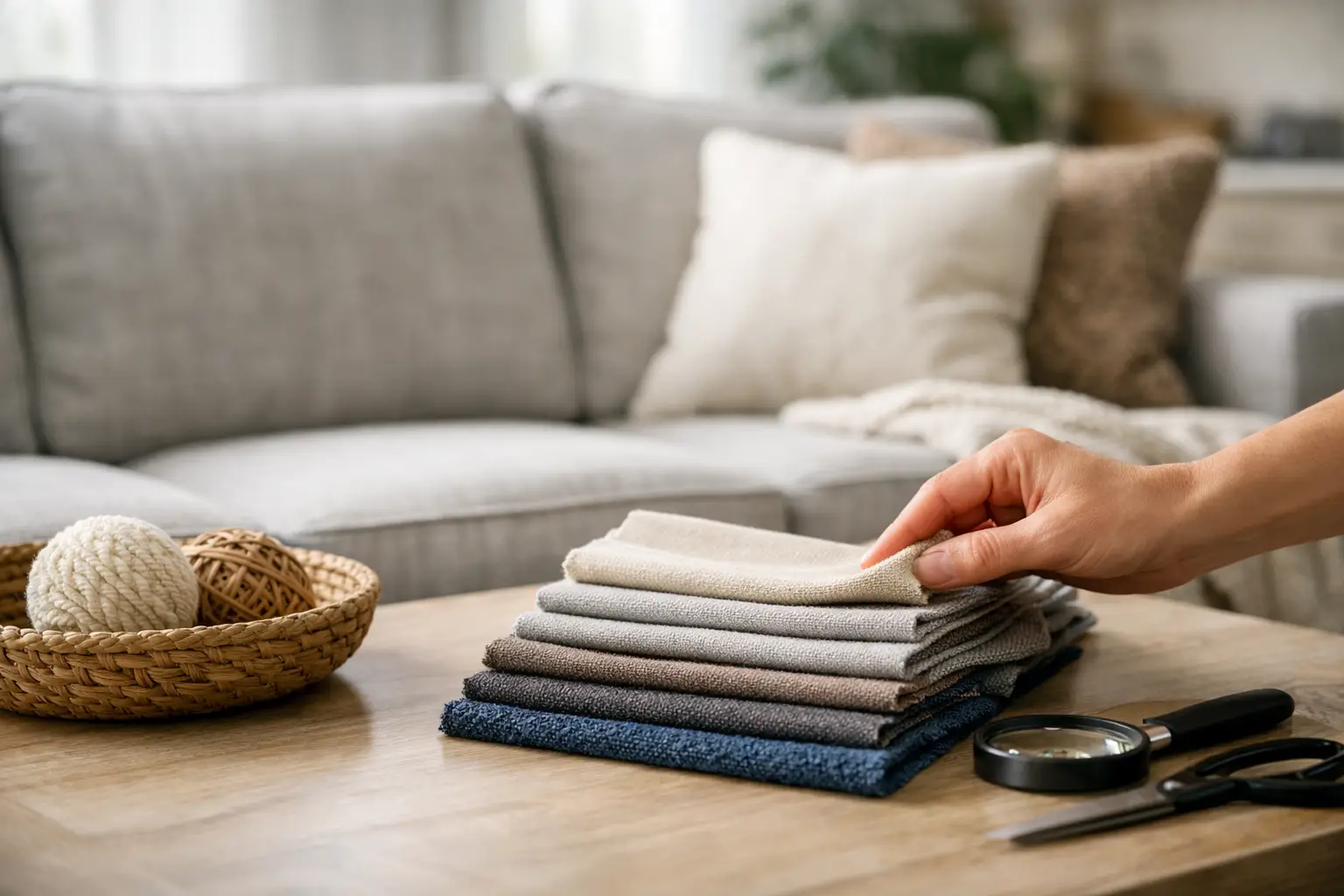
A fabric swatch is a starting point, not the final answer. Take samples near windows, under evening lighting, beside your flooring, and next to the finishes that will remain in the room. A warm beige can turn yellow beside cool grey flooring; a charcoal weave may read softer and warmer against oak than it does in a showroom.
It is also useful to fold, rub, and lightly stretch the sample. Notice whether its texture feels pleasant against bare skin, whether the weave appears likely to snag, and whether the colour has enough variation to conceal everyday wear. For customized upholstery, this hands-on process is one of the clearest ways to make a confident choice.
At Levida Furniture’s Markham showroom, comparing fabrics against sofa frames, wood finishes, and room-scale pieces can make those decisions easier. The best family sofa is not simply the one with the toughest label. It is the one whose material, comfort, and proportions let your home look composed while still inviting everyone to settle in.