A dining table is asked to do more than look beautiful. It hosts weeknight dinners, laptop sessions, birthday cakes, school projects, and the occasional hurried coffee before work. Ceramic dining tables are particularly well suited to that rhythm: visually composed enough for a considered interior, yet reassuringly practical when real life is happening around them.
For contemporary Canadian homes, their appeal lies in the balance. A ceramic top can echo the quiet movement of natural stone, concrete, or marble while offering a surface that is generally far easier to live with than the materials it references. The right table still depends on proportion, construction, finish, and the way your household uses the room. Material alone cannot make a table right for the space.
Why ceramic dining tables feel right now
Ceramic has a restrained, architectural quality. Its matte surfaces and mineral-like patterns sit naturally beside oak, walnut, smoked glass, brushed metal, and textured upholstery – materials often found in modern European and Scandinavian-inspired interiors. Rather than becoming the loudest element in a room, a well-chosen ceramic table gives the dining area depth and presence.
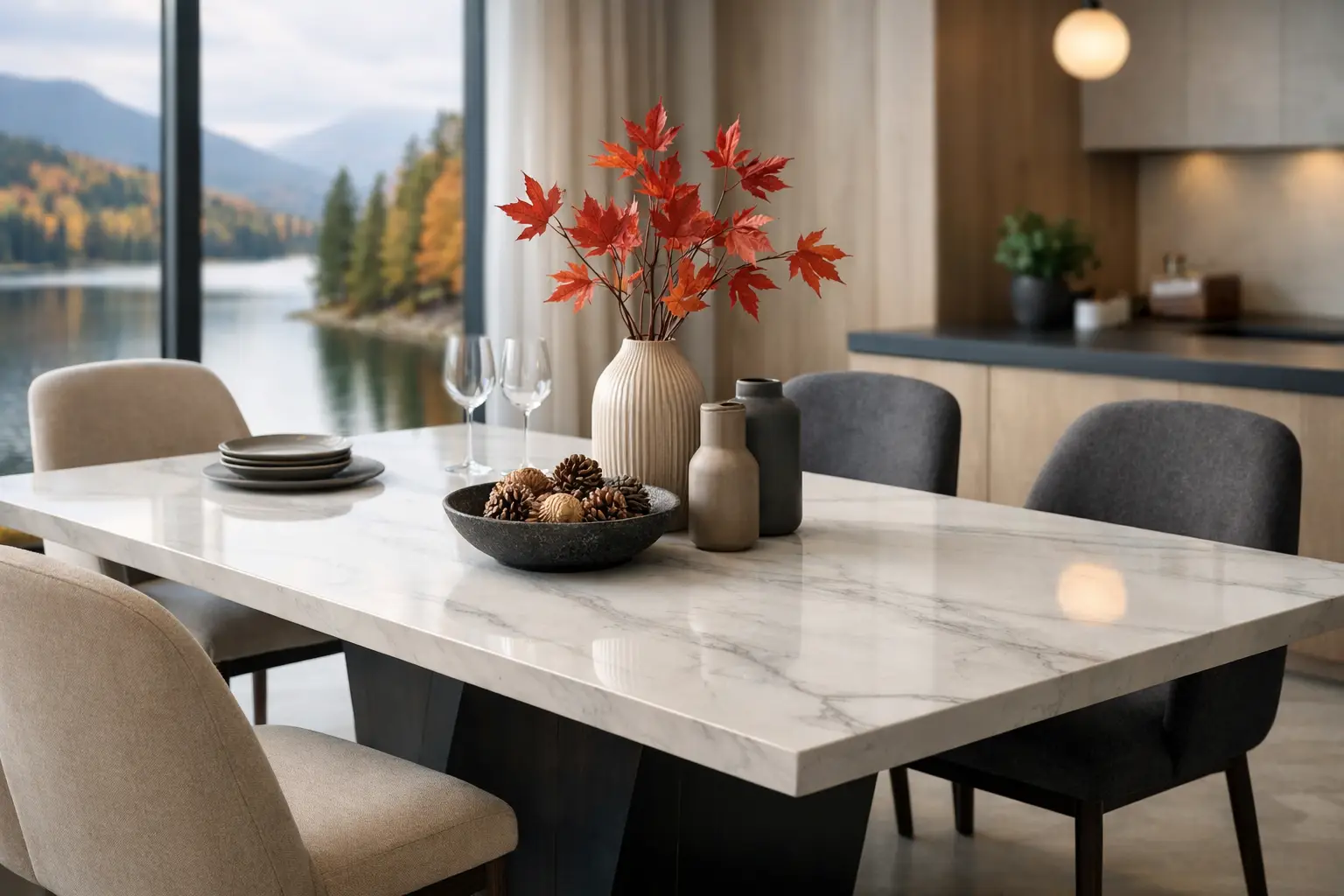
It is also a compelling option for open-concept homes and condos, where the dining table is visible from the kitchen and living room. A pale travertine-look ceramic can soften a room with dark cabinetry, while charcoal, warm grey, or veined stone finishes can ground lighter spaces. Because the material is available in refined, consistent finishes, it can help connect a dining area to surrounding flooring, millwork, and accent furniture without looking overly matched.
The practical benefit is equally persuasive. Quality ceramic surfaces are typically resistant to heat, scratching, staining, and fading. That means less anxiety around serving dishes, red wine, citrus, or a child’s art project. They are not indestructible, but they offer a more relaxed ownership experience than many natural stone tables, which may require more vigilant sealing and care.
Start with scale, not the finish
A dramatic finish can make the first impression, but scale decides whether a table feels effortless in the room. Before comparing ceramic dining tables, measure the full dining zone rather than only the footprint where the table will sit. You need enough clearance to pull chairs back, pass behind seated guests, and move between the dining area and adjacent kitchen or living space.
As a useful starting point, allow about 91 cm to 107 cm of clearance from the table edge to a wall, sideboard, or other fixed obstruction. A more compact condo may call for a tighter plan, but anything less should be tested carefully with the actual chairs in mind. Chairs with deep seats, arms, or a pronounced reclining angle require more room than their visual footprint suggests.
Rectangular, round, or oval?
A rectangular table is the natural choice for a long room and remains the most efficient shape for seating a larger group. It can also create a clear visual axis in an open-plan space. If the room is narrow, choose a base that lets chairs tuck in easily rather than a design with corner legs that compete with every seat.
Round ceramic tables suit square rooms, breakfast areas, and compact condo layouts. Their lack of corners improves circulation, and every guest faces into the conversation. The trade-off is capacity: once the diameter becomes large enough to seat six comfortably, a round table can occupy more visual and physical space than expected.
An oval top offers a considered middle ground. It has the length of a rectangular table with gentler movement around its ends, making it especially appealing where a walkway passes close to the dining area. This shape also pairs beautifully with sculptural pedestal bases, which create a lighter, less crowded feel beneath the table.
Look beyond the surface
Not every ceramic table is made the same way, and the supporting structure matters as much as the top. Ceramic is a hard, dense material, so manufacturers often bond a thin ceramic slab to a glass, metal, or engineered support layer. This construction can keep the tabletop refined in profile while providing the stability required for daily use.
Ask how the top is supported, how the edges are finished, and what the table’s base is made from. A substantial ceramic top deserves a base with appropriate weight, levelling capability, and carefully engineered connections. On an uneven floor, a table without adjustable glides can wobble, regardless of how beautiful its finish may be.
Edge detailing changes the character of the piece. A slim straight edge feels crisp and contemporary; a mitred edge gives the impression of a thicker stone slab; a softly rounded profile can make a mineral finish feel warmer and more approachable. In homes with young children, a rounded profile may also be worth considering, although no table edge replaces thoughtful supervision.
Ceramic is highly resistant to everyday wear, but sharp impact remains its vulnerability. Avoid striking the edge with heavy cookware or dropping dense objects onto the surface. Small chips are uncommon with careful use, yet they can be difficult to disguise. This is where craftsmanship, delivery handling, and professional installation are especially valuable.
Choose a finish that belongs to the room
The best ceramic finish rarely competes with every other finish in the home. Consider it as part of a material conversation. If your kitchen already features expressive veining in the counters or backsplash, a quieter solid or lightly textured dining top can bring balance. If the kitchen is clean and minimal, a stone-look ceramic table can introduce visual richness without adding clutter.
Warm off-whites, sand, taupe, and clay tones are especially versatile in Canadian interiors, where long winters can make a room with too much cool grey feel distant. They work easily with natural oak, cream bouclé, caramel leather, and bronze-toned lighting. Cooler greys and black ceramic finishes, meanwhile, create a sharper contemporary statement beside walnut, blackened metal, or deep green upholstery.
Matte finishes tend to feel calm and tactile, and they are often forgiving of fingerprints. Polished finishes reflect more light and can lend a formal, glamorous quality, particularly in a dining room with glass, mirrors, or statement pendants. Neither is universally better. The decision should follow the atmosphere you want after the table is fully styled with chairs, lighting, and surrounding furniture.
Seating, bases, and everyday comfort
A table can be technically large enough for six people and still feel cramped if the base interrupts legroom. Pedestal bases offer excellent flexibility because chairs can shift around the perimeter without meeting table legs. They are particularly useful with round and oval tables, or when you want to add an extra guest at either end.
A four-leg table provides a more familiar, grounded profile, but check where the legs fall in relation to each seat. For a rectangular table, the distance between the base elements matters more than the overall length. A beautifully proportioned top is frustrating if a guest is forced to sit with a table leg directly in front of their knees.
Pair the table with dining chairs that suit both the aesthetic and the height. Most dining tables are approximately 76 cm high, and a seat height near 46 cm is often comfortable, though upholstery and seat cushioning can affect the final feel. Leave enough room between the chair arm and the underside of the table, and sit in the pairing when possible. Comfort is not an accessory to design; it is what makes guests stay at the table.
Extension tables deserve a closer look
For many GTA households, an extension table is the most intelligent answer to limited square footage and frequent entertaining. Ceramic extension dining tables can offer a compact everyday footprint while accommodating family gatherings without storing a separate table leaf elsewhere. Their mechanisms vary considerably, however, and this is a detail worth experiencing in person.
Look at how easily the top opens, whether the extension leaf is integrated, and how the pattern aligns when expanded. On veined or strongly patterned ceramic, a thoughtful continuation of the surface can make a meaningful difference. Also consider the table’s expanded length in the room – an extension is only useful if guests can still sit and move comfortably once it is open.
Care that preserves the finish
Daily care is refreshingly simple. Wipe the tabletop with a soft cloth, warm water, and a mild pH-neutral cleaner, then dry it to prevent residue. Avoid abrasive pads, harsh scouring powders, and cleaners that leave a waxy film. Although ceramic tolerates heat well, using trivets for exceptionally hot cookware remains a sensible habit, particularly to protect the table’s joins and surrounding furnishings.
For a table that will anchor your home for years, seeing the material at full scale is invaluable. At Levida Furniture’s Markham showroom, comparing ceramic samples alongside dining chairs, wood finishes, and lighting-inspired finishes can clarify whether a surface feels warm, balanced, and right for your room. Bring your measurements, a few photos of the space, and a realistic picture of how you gather – the most enduring table is the one that makes everyday living feel considered.