A recliner no longer needs to announce itself with oversized padding, visible mechanisms, or a silhouette that belongs in a separate room. The best modern recliner chairs offer a more considered proposition: genuine support for reading, resting, and unwinding, expressed through clean lines, refined upholstery, and proportions that belong in a contemporary Canadian home.
For a condo living room in downtown Toronto, a family space in Markham, or a quiet primary bedroom, the right recliner should feel like part of the interior rather than an exception to it. Choosing well comes down to more than colour. Scale, motion, materials, seating posture, and placement all shape whether the chair will remain a favourite for years.
What Defines Modern Recliner Chairs?
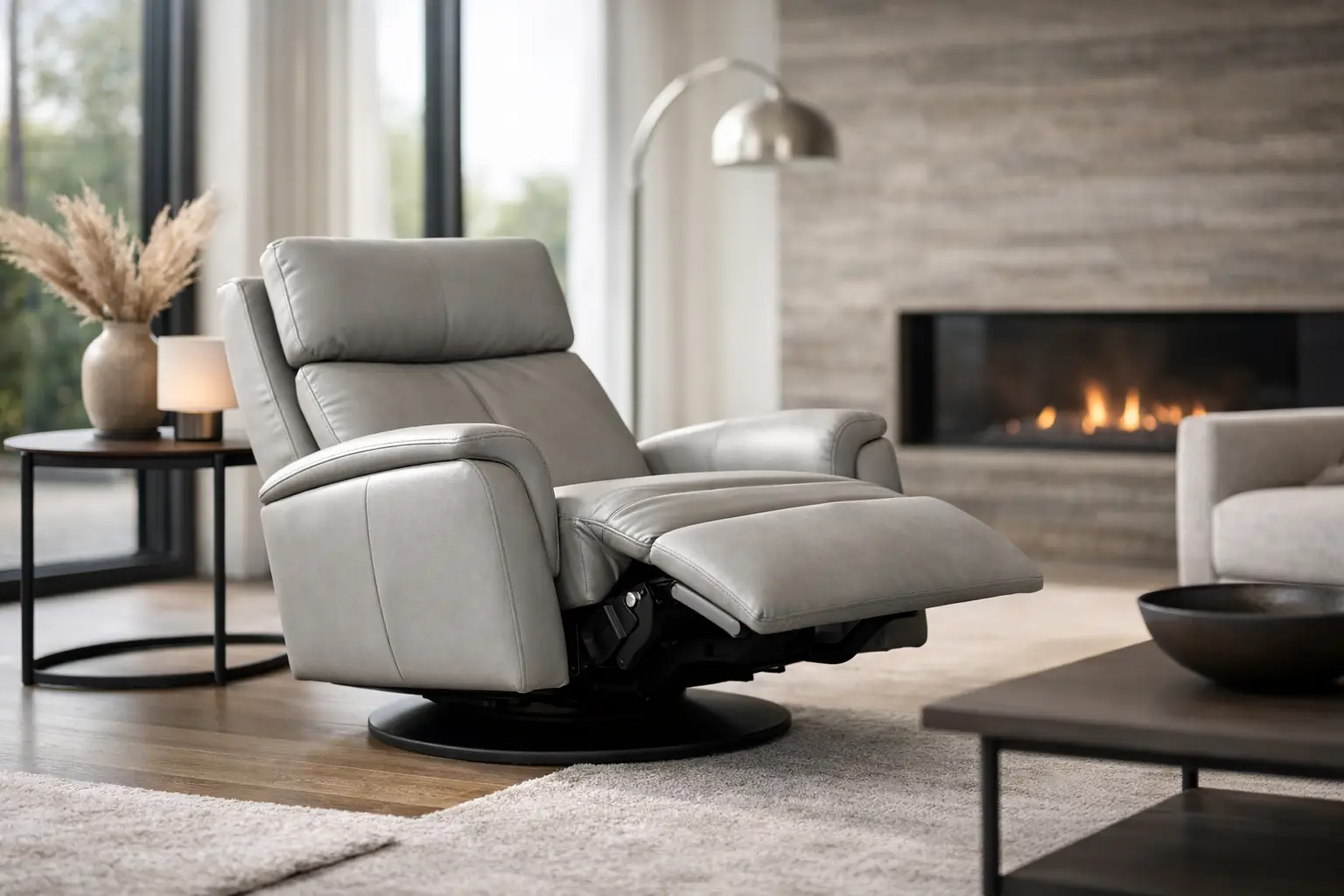
Modern recliner chairs are designed around restraint. Their arms tend to be slimmer, their profiles lower or more sculptural, and their bases more visually deliberate than traditional recliners. Some conceal the reclining action entirely, while others use a discreet lever, touch control, or motorized function integrated into the side of the seat.
This quieter design language does not mean sacrificing comfort. A well-made contemporary recliner can provide supportive cushioning at the lumbar area, an elevated footrest, an adjustable headrest, and smooth reclining movement without the bulk often associated with the category. The difference is that these elements are resolved within a silhouette that works alongside a streamlined sofa, stone coffee table, or tailored area rug.
European-inspired models often excel here. Their emphasis on balanced proportions and precise upholstery creates a chair that looks composed from every angle, including the back. That matters in open-concept rooms, where a recliner may be visible from the dining area or kitchen rather than placed against a wall.
Start With How You Actually Relax
Before comparing fabrics or finishes, consider what the chair needs to do. A recliner used for a nightly film or long reading sessions should prioritize ergonomic support and a generous range of motion. One intended as an occasional accent chair may place greater emphasis on its form, footprint, and relationship to the rest of the room.
The most comfortable seat is personal. Taller users may need a deeper seat, a higher back, and a longer footrest. Petite users may find that a deep chair places unwanted pressure behind the knees or makes the headrest feel out of reach. The ideal fit allows your back to rest naturally against the cushion, your feet to sit comfortably on the floor when upright, and your neck to remain supported when reclined.
There is also a meaningful distinction between a chair that reclines and a chair that supports. Soft, deep cushioning can feel inviting in a showroom, but it may not offer the structure wanted for regular use. Conversely, a firmer European-style seat can feel more supportive over time and retain its tailored appearance more effectively. Neither approach is universally better. The right choice depends on how long you sit, how you prefer to lounge, and the overall comfort level of the room.
Manual or power recline?
Manual recliners are often beautifully simple. They can have a lighter visual presence, require no nearby outlet, and suit rooms where a straightforward reclining position is all that is needed. Their mechanisms should move smoothly and lock confidently without requiring force.
Power recliners bring more precise control. They are especially useful when separate adjustment of the back and footrest is important, or when a power headrest supports reading and television viewing. For clients planning a media room, a primary suite, or a favourite corner for daily relaxation, that control can make a noticeable difference.
The trade-off is planning. A motorized chair needs power access, and its cable should be accommodated thoughtfully. In an open room, a floor outlet or a placement near the wall may preserve the clean, uncluttered look that drew you to the chair in the first place.
Measure the Reclined Footprint, Not Just the Chair
One of the most common errors is selecting a recliner based only on its upright dimensions. A chair can appear perfectly scaled on the showroom floor, then require more clearance than expected once the back moves and the footrest extends.
Measure the width, depth, and height of the intended location, then ask for the full depth in its reclined position. Leave practical space behind the chair and in front of the footrest, particularly where people need to walk through the room. The required clearance varies by mechanism. Wall-hugger designs are useful in narrower rooms because they recline with less space behind them, while swivel recliners need enough room to turn freely without contacting a side table or sofa.
In a compact condo, a single well-proportioned recliner can be more effective than a large sectional with a chaise. Positioned near a window with a slim table and floor lamp, it creates a defined retreat without consuming the entire living area. In a larger family room, a matching pair can frame a fireplace or face a sofa to create a more conversational layout.
Do not overlook visual clearance either. Even if the chair physically fits, an overstuffed form can make a small room feel compressed. Raised legs, a swivel pedestal, or a more open base can reduce visual weight and let flooring remain visible beneath the chair.
Choose Upholstery for Light, Use, and Texture
Upholstery influences both the chair’s character and its day-to-day practicality. Leather offers a polished, durable finish and is often especially suited to sculptural recliners. It can develop a handsome patina, is easy to wipe clean, and lends definition to slim seams and tailored panels. In a room with abundant natural light, however, consider how the leather colour will age and avoid placing the chair directly in prolonged sun where possible.
Fabric brings softness and a broader range of texture. Bouclé, textured weaves, and wool-blend looks can add warmth to minimalist interiors, while a tightly woven performance fabric may better suit households with children, pets, or frequent entertaining. Ask about abrasion resistance, cleaning guidance, and whether a particular fabric has a directional pile or subtle colour variation. These details affect how the upholstery will look from different angles and under evening lighting.
For a calm, cohesive interior, take cues from the larger materials already present. A warm taupe leather can relate to oak flooring and brushed brass lighting. A pale grey fabric may complement a soft stone palette, but it can feel flat beside cool grey floors unless it has enough texture or warmth. Fabric and leather samples are invaluable because colour shifts considerably between a bright showroom, a north-facing condo, and a room lit primarily at night.
Consider the chair from every view
A refined recliner should be attractive in profile, from the front, and from behind. This is particularly relevant in open-plan homes, where the rear upholstery may become part of the view from a dining table. Look for clean stitching, carefully resolved seams, and a base or back panel that feels intentional rather than purely functional.
A contrast piping detail, a polished metal swivel base, or a wood accent can add character, but restraint usually has more longevity. The chair should complement the room’s existing focal points rather than compete with them.
Build a Complete Seating Moment
A recliner is most successful when it is supported by its surroundings. Give it a surface for a book or drink, light that reaches the page without glare, and a rug large enough to anchor the chair within the room. A compact C-table can work in tight spaces, while a small round side table softens the angular lines of a more architectural chair.
If the chair is part of the main living room, repeat one of its materials elsewhere. That could be a leather detail in an ottoman, a matching metal finish in the lighting, or a cushion that draws from the recliner’s fabric tone. This does not require a matching furniture set. It simply gives the room a visual conversation.
An ottoman can also be worth considering. For clients who prefer a lighter accent-chair profile but still want to elevate their feet, a lounge chair and ottoman may provide the desired comfort without a reclining mechanism. It is not a substitute for adjustable back support, but it can be the better answer in a formal sitting room or very compact space.
Why Trying a Recliner in Person Matters
Photographs can communicate shape, but they cannot tell you how a seat supports your lower back, where the headrest meets your shoulders, or whether the reclining motion feels natural. These are highly individual responses. Testing a chair also reveals the quality of its mechanism, the resilience of the cushions, and the texture of the upholstery in a way a screen cannot replicate.
At a showroom, bring room measurements, photos of your existing finishes, and a sense of how the chair will be used. Comparing dimensions, fabrics, base options, and motion functions in person makes it easier to see whether a particular design will suit a compact condo, a generous living room, or a bedroom retreat. At Levida Furniture, that hands-on process can also help narrow customization choices into a chair that feels personal while remaining cohesive with the wider interior.
A well-chosen recliner earns its place through repetition: the morning coffee, the chapter before bed, the quiet pause after a long day. Select a design that supports those rituals beautifully, and comfort becomes one of the most elegant elements in the room.