A sofa can have the right silhouette, scale and configuration, then feel entirely wrong because of its upholstery. A pale boucle may soften a quiet condo living room beautifully, while the same fabric can become a source of worry in a home with a large dog, young children or frequent weekend guests. Knowing how to choose sofa fabric means looking beyond the swatch and considering how the material will live in your home.
The best choice is rarely the most delicate or the most hard-wearing fabric in isolation. It is the one that brings the right balance of texture, comfort, colour and maintenance to the way you actually use your space.
Start With the Life Your Sofa Will Lead
Before comparing linen, velvet or performance upholstery, decide what the sofa needs to handle. A formal sitting room used a few times each month can accommodate more delicate natural fibres and lighter shades. A family-room sectional, by contrast, should be selected with daily lounging, snacks, pets and the occasional spill in mind.
Think about who uses the sofa, how often it is used and where it sits. A sofa beside a sunny window needs better fade resistance than one in a shaded den. A compact condo living room may benefit from a fabric that looks refined from every angle, since the sofa is visible from the kitchen and entry. In an open-concept home, the upholstery also needs to relate to dining chairs, area rugs, window coverings and adjacent finishes.
This is where a fabric’s appearance and its performance need to work together. A beautiful material that makes you hesitant to sit down is not always a luxurious choice. Ease is part of comfort.
How to Choose Sofa Fabric by Fibre Type
Fabric names can describe a fibre, a weave or a finish, so it helps to understand the broad characteristics of each material. The quality of the upholstery itself matters as much as the category. A well-made wool blend and a lower-grade wool blend will not wear in the same way.
Natural fibres: character and softness
Linen has an airy, relaxed elegance that works especially well with Scandinavian-inspired and contemporary European interiors. It has a subtle irregularity and a beautiful matte finish, but it can wrinkle, may be less forgiving around spills and can fade in strong sunlight. Linen blends often offer a more practical alternative while keeping the same natural look.
Cotton is soft, breathable and familiar, with a broad range of textures and colours. It is often blended with synthetic fibres to improve resilience and reduce wrinkling. On its own, cotton may be more vulnerable to staining and wear than a purpose-designed upholstery blend.
Wool offers warmth, depth and impressive natural resilience. It resists crushing better than many fibres, making it a considered option for sofas with tailored upholstery. Wool is often blended with other fibres to improve cleanability and manage cost, and its tactile quality can make a neutral sofa feel notably more elevated.
Synthetic and performance fibres: practical polish
Polyester, acrylic and nylon are common in contemporary upholstery because they hold colour well, improve abrasion resistance and can make fabrics easier to care for. They are often part of high-quality blends rather than a compromise. A refined woven fabric may combine natural fibres for softness with synthetics for durability.
Performance fabrics are designed to make everyday living less stressful. Depending on the specific textile, they may resist stains, repel moisture, clean more easily or withstand heavy use. They are particularly well suited to family homes, pet-friendly spaces and high-traffic entertaining areas. Do not assume every performance fabric feels technical or looks casual. Many now come in sophisticated weaves, boucles, velvets and soft, tailored textures.
The trade-off is that some stain-resistant finishes can change the hand feel of a fabric slightly. Always touch the sample rather than choosing based on a photograph alone.
Let Texture Set the Mood
Texture changes how a sofa reads in a room. It affects light, perceived colour and the level of formality, even when the upholstery is a simple neutral.
A smooth, tightly woven fabric feels clean and architectural. It works well on low-profile sofas with crisp lines and is generally easier to maintain because there are fewer raised fibres to catch lint or pet hair. Tweeds and textured weaves introduce depth and can disguise minor day-to-day marks, making them a practical choice for active homes without looking utilitarian.
Boucle has become a favourite in soft contemporary interiors for good reason: it gives sculptural forms warmth and dimension. However, its looped surface may be less suitable for homes with cats that scratch or climb furniture. It can also collect debris more readily than a flat weave.
Velvet offers a richer, more formal effect, especially in deep mineral tones, warm neutrals and sophisticated jewel shades. Its pile reflects light differently depending on the direction of the nap, so subtle shading is normal. Quality velvet can be durable, but it will show pressure marks and needs thoughtful care. For a sofa that is used constantly, choose an upholstery-grade velvet rather than a decorative fabric intended for occasional pieces.
Consider Durability, but Read the Details
Durability is not just about choosing the thickest fabric. Look for information about the fabric’s abrasion rating, often expressed as double rubs. This test indicates how well a textile may withstand surface wear. Higher ratings generally suit more frequent use, although they should be considered alongside weave construction, fibre content and the manufacturer’s care recommendations.
A tightly woven fabric is usually more resistant to snagging and pilling than a loose, open weave. If pets are part of the household, avoid prominent loops and loosely woven textures that can catch claws. For children, washable or easily spot-cleaned options offer valuable peace of mind.
Also ask how the fabric is treated and what cleaning method it requires. Some materials can be cleaned with water-based solutions, while others require solvent-based products or professional care. The right fabric is one whose maintenance requirements fit your routine. A white sofa is possible in a busy household, but it should be chosen in a high-performing, cleanable textile and with realistic expectations.
Choose Colour in the Room, Not at the Swatch Wall
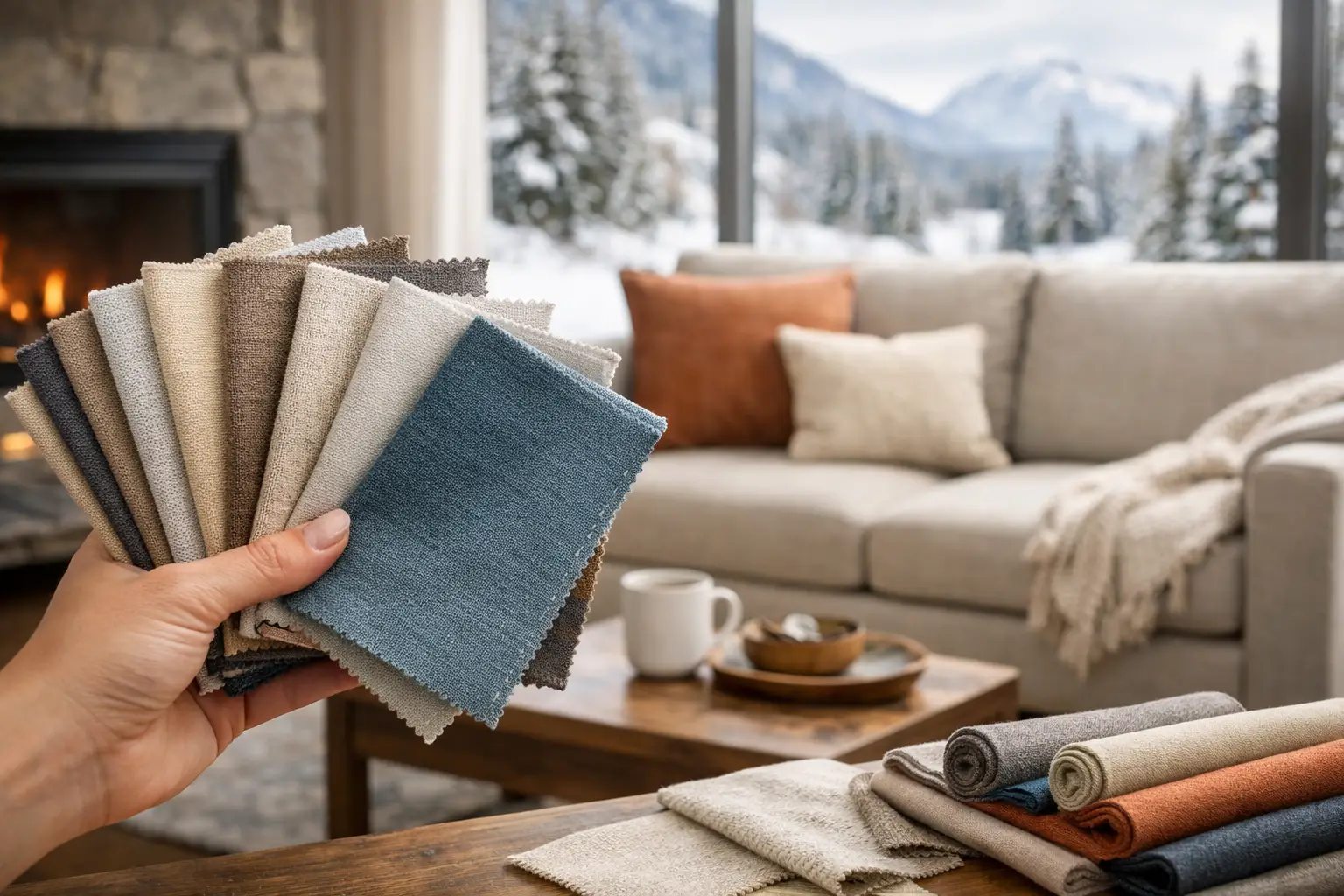
A fabric sample can look warmer, cooler, lighter or darker once it reaches your home. Natural daylight, evening lighting, wall paint, flooring and nearby materials all influence the result. Take samples home whenever possible and place them beside your rug, drapery and wood finishes. View them in the morning, afternoon and after dark.
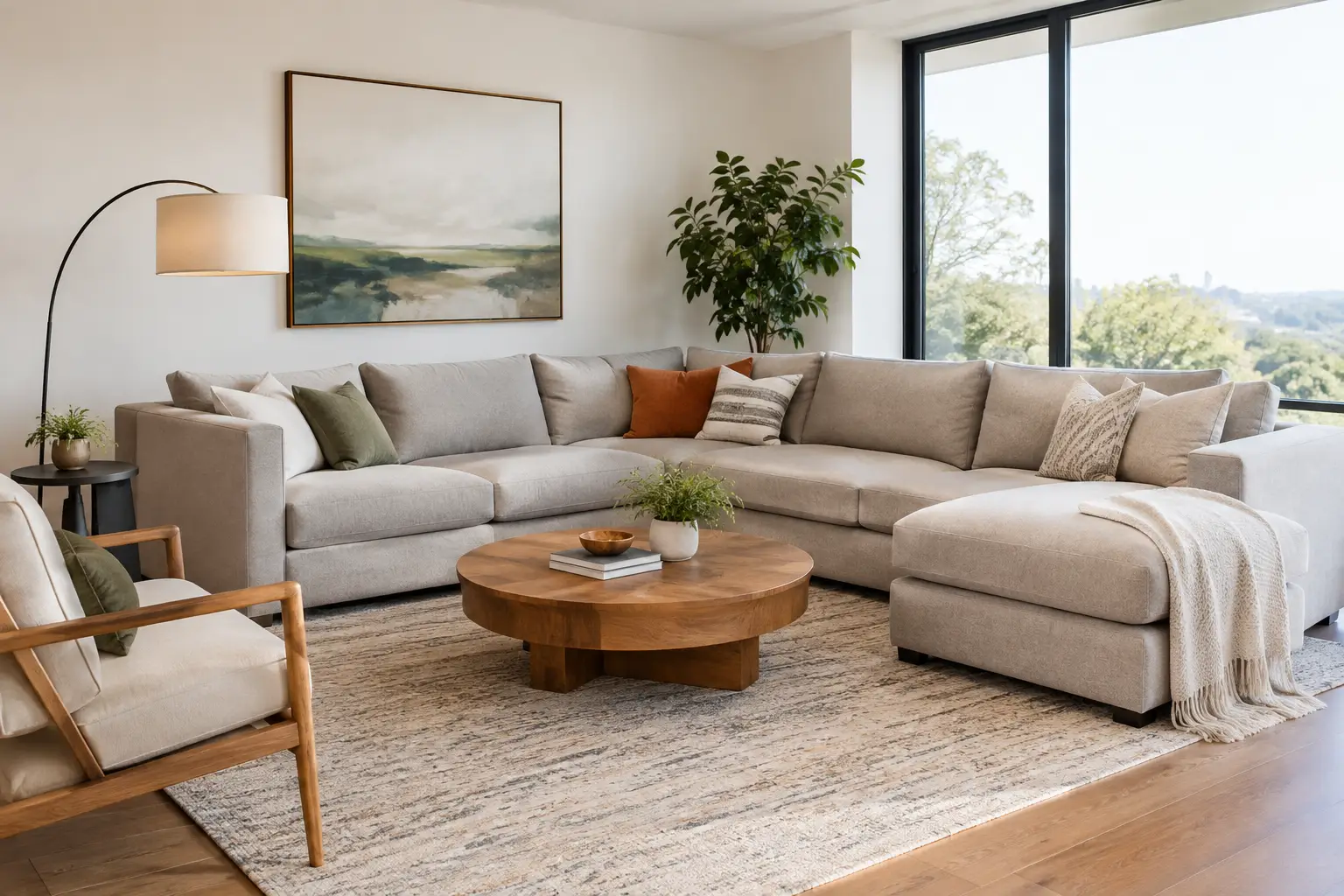
For smaller condos, pale stone, warm grey, oat and soft taupe can create a calm, spacious feeling without the starkness of bright white. Mid-tones are often the most forgiving for everyday use. They conceal light dust, denim transfer and minor marks more effectively than very pale or very dark upholstery.
Darker fabrics can anchor an airy room and lend a sofa visual presence, but they may show lint or pet hair. Deep navy, olive, charcoal and chocolate can feel luxurious when balanced with lighter walls, reflective accents or a textural rug. If you prefer a lighter sofa but want more visual variation, a flecked weave or tonal texture is often easier to live with than a solid cream.
Pattern deserves consideration too. A subtle herringbone, micro-check or softly variegated weave adds movement without overpowering a room. Larger patterns are more directional and need to be scaled carefully, particularly on a sectional or a sofa with multiple cushions where pattern matching becomes visible.
Do Not Separate Fabric From Sofa Construction
The same upholstery can look and perform differently depending on the sofa beneath it. A deeply cushioned, relaxed sofa will create more natural creasing than a tailored design with firmer seat cushions. This is not necessarily a defect. It is part of the intended look and should be expected when selecting supple fabrics and comfort-forward seating.
Consider the relationship between the fabric and the form. Boucle emphasizes rounded silhouettes. Fine wool or a smooth woven upholstery suits refined, structured frames. Leather may be ideal for a sleek modular sofa, but a soft textured textile can make the same configuration feel more inviting in a family space.
Ask to see the fabric on a larger upholstered surface, not just as a small cutting. A sample reveals colour and texture, while a full sofa shows how the material drapes, reflects light and responds to cushions, seams and curves.
Make the Decision in Person When You Can
For a custom sofa, fabric is too significant to select only from a screen. Visiting a showroom gives you the chance to compare textures side by side, sit on different cushion constructions and see how colours behave under real lighting. At Levida Furniture, this process can also help bring the sofa into conversation with the dining, bedroom and accent pieces that shape a cohesive interior.
Bring photos of your room, approximate dimensions, flooring samples and a few images that capture the atmosphere you want. A knowledgeable consultant can help narrow a large fabric library to options that suit your layout, lifestyle and preferred level of maintenance.
Choose the fabric that invites you to use your sofa fully. When the material feels good, suits the room and can meet the demands of daily life, it becomes part of a home that is both considered and comfortably lived in.