A compact room rarely needs more decoration. It needs better visual balance. The right wall mirrors for small rooms can shift the entire feeling of a condo bedroom, narrow entry, apartment dining area, or modest living room by carrying light farther and giving the eye a more generous view of the space.
This is not simply a matter of hanging the largest mirror that fits. Scale, reflection, frame depth, and placement all determine whether a mirror makes a room feel composed or merely busy. Chosen thoughtfully, it becomes an architectural element: practical in daily life, but also quietly transformative.
Start With What the Mirror Will Reflect
A mirror doubles what sits in front of it, including the parts of a room you may prefer to soften. Before selecting a shape or finish, stand where the mirror will hang and look directly across the room. A window, a sculptural pendant, textured drapery, an artwork wall, or the clean silhouette of a well-proportioned sofa are all worthwhile reflections.
Avoid positioning a mirror where it will repeatedly reflect visual clutter, an open storage unit, or the most crowded angle of the room. In smaller interiors, every repeated element carries more weight. A mirror should extend a considered view, not amplify unfinished corners.
For rooms with limited natural light, placing a mirror opposite or adjacent to a window can be especially effective. Opposite placement creates the strongest reflection of daylight, while an adjacent wall offers a softer distribution of light and can reduce glare. The better option depends on the window’s orientation, the view outside, and how much direct sun the room receives.
Choose Scale Before Style
Small rooms do not always require small mirrors. In fact, a mirror that is too petite can read as an afterthought against a larger wall. A generously scaled piece often creates a calmer result because it makes one clear visual statement rather than several competing ones.
Above a console, sideboard, or low dresser, aim for a mirror that is roughly two-thirds to three-quarters the width of the furniture below it. This creates a relationship between the pieces without making the wall feel top-heavy. Leave enough breathing room at either side so the composition feels intentional.
In a slim entry or a bedroom where dressing space is limited, a full-length mirror can be more useful than several decorative accents. A vertical profile draws the eye upward and emphasizes ceiling height. It is particularly well suited to newer GTA condos, where rooms may have efficient footprints but benefit from a stronger sense of vertical proportion.
A wide horizontal mirror can work beautifully over a sofa or dining credenza, especially when the room feels narrow. It visually stretches the wall and reinforces the room’s width. The trade-off is that horizontal mirrors tend to reflect more of the room at eye level, so their placement should be especially deliberate.
Measure the wall, not just the furniture
Furniture dimensions offer a useful guide, but the surrounding negative space matters just as much. Consider the height of the ceiling, nearby door frames, wall sconces, and the distance between the mirror and adjacent pieces. In a small room, even a few inches can make the difference between an airy composition and one that feels compressed.
If you are considering a leaning floor mirror, allow for both its physical footprint and the visual space it needs. A large mirror angled casually against a wall can feel relaxed in a spacious bedroom, but in a tight circulation zone it may appear accidental and create a practical obstruction. Wall mounting usually delivers a cleaner, more integrated result in compact interiors.
The Best Shapes for Wall Mirrors in Small Rooms
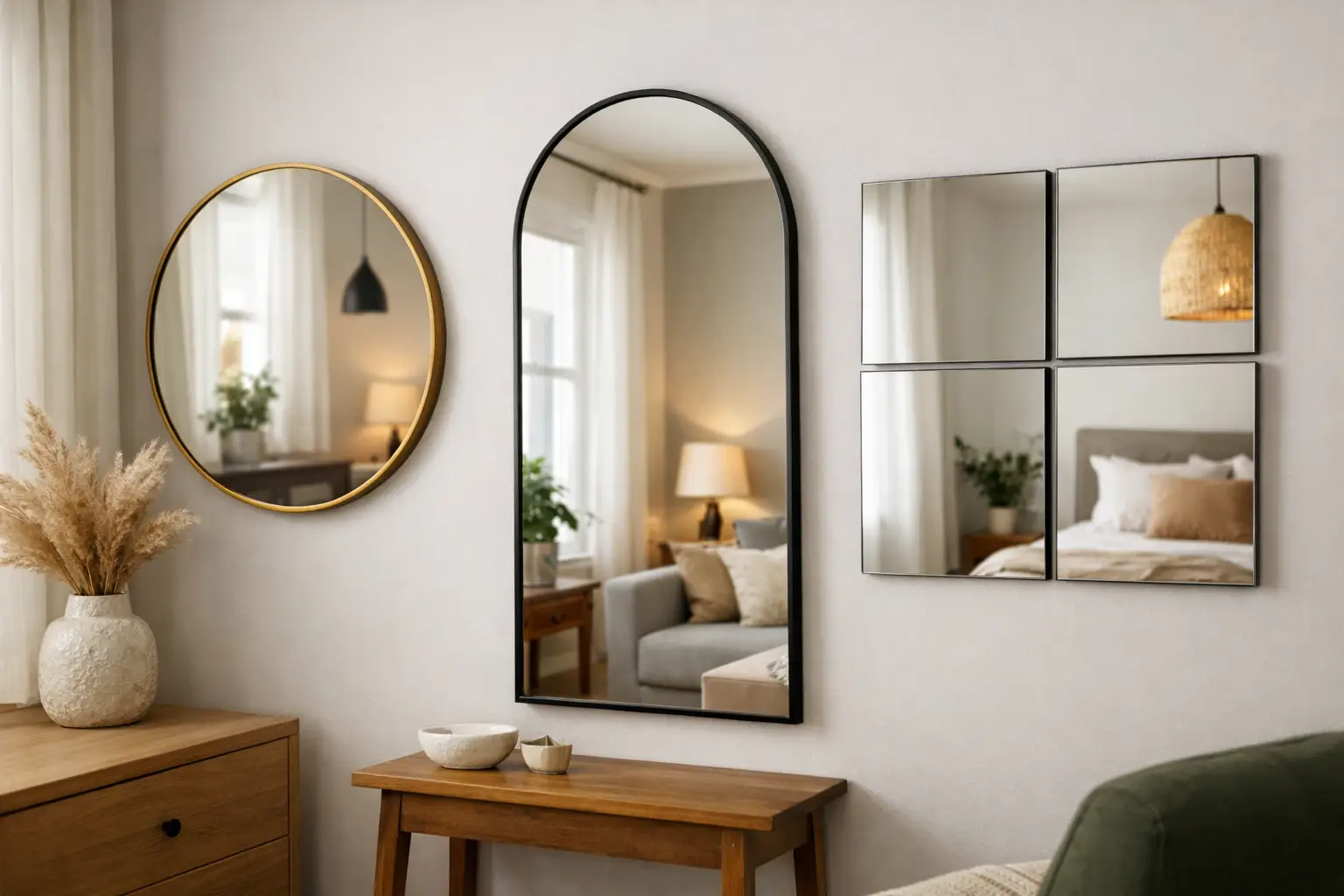
Shape sets the mood before finish or frame ever enters the conversation. Rectangular mirrors are versatile and architectural, making them a natural choice for contemporary rooms with clean-lined furniture. They can be oriented vertically to enhance height or horizontally to broaden a wall.
Round and softly arched mirrors introduce welcome relief where a room is dominated by straight edges: a rectangular dining table, modular sofa, cabinetry, or angular wall art. Their curved silhouette can make a small living room feel less rigid without adding visual noise. A simple arch is often a strong fit for European-inspired interiors because it feels current while remaining timeless.
Organic shapes bring a more expressive, sculptural quality. They work best when the rest of the room is restrained. If a room already includes patterned upholstery, dramatic stone, complex lighting, or several decorative objects, a crisp rectangle or subtle oval will likely create greater balance.
Select a Frame That Supports the Room
A mirror frame should connect to the room’s materials rather than compete with every finish already present. In a small space, bulky or highly ornamented frames can consume valuable visual area. That does not mean the frame must disappear. It means its weight should be appropriate to the room.
Slim black metal frames suit contemporary condos, especially where they echo dark window mullions, lighting details, or dining chair legs. They provide definition without adding much physical or visual depth. Warm wood frames can make a modern interior feel more grounded, particularly alongside pale oak, natural textiles, and Scandinavian-inspired furnishings.
Brass, bronze, and champagne-toned metal frames bring warmth to rooms with cool grey, white, or stone finishes. Choose an understated profile if there are already multiple metallic elements nearby. A single polished accent feels refined; several competing metal tones can quickly make a compact room feel unsettled.
Frameless mirrors are often ideal when the goal is lightness. Their minimal edge allows the reflection to take centre stage, making them useful in small bathrooms, narrow halls, and interiors where the existing furnishings already have strong profiles. Be mindful, however, that frameless designs can feel less substantial above a large sideboard or sofa unless paired with a carefully considered lighting arrangement.
Place Mirrors Where They Improve Daily Living
The most successful mirror placements do more than make a room look larger. They support how the space is used. In an entryway, a full-length or generously sized vertical mirror offers a final check before leaving home while brightening a typically enclosed area. Above a narrow console, it can establish an elegant arrival moment without requiring extra furniture.
In a dining room, a mirror above a sideboard can reflect candlelight, pendant lighting, and table settings, making evening gatherings feel more layered. Keep enough distance between the mirror and the tabletop so the arrangement does not feel crowded. If the dining room is open to the living area, choose a frame finish that relates to both zones for a more cohesive interior.
A bedroom mirror can soften the visual weight of a bed wall when placed opposite it, but only if the reflected view remains restful. Some homeowners prefer not to face a mirror directly from bed. In that case, place it near a dressing area, beside a wardrobe, or on a perpendicular wall where it still catches light without becoming the room’s focal point.
Consider mounting height and lighting
For a mirror above furniture, the lower edge commonly sits about 10 to 20 centimetres above the piece below. The exact height depends on the mirror’s scale and the furniture’s proportions. A mirror hung too high disconnects from the composition, while one hung too low can appear crowded.
Lighting changes the result significantly. A mirror can amplify the glow of a table lamp or wall sconce, but it can also expose harsh overhead lighting. In rooms with limited daylight, layered lighting is usually more flattering than relying on one central fixture. Soft illumination near a mirror gives the reflection depth after sunset, when small rooms often need it most.
Build a Cohesive Look Rather Than a Gallery of Reflections
One statement mirror is often enough in a compact room. Multiple mirrors can be effective in a long corridor or on a deliberately designed feature wall, but they require restraint. Repeated reflections may create movement and sparkle, yet they can also make a home feel visually fragmented.
When combining mirrors with art, treat them as part of the same composition. Consider the frame finish, spacing, and overall visual weight. A large round mirror above a console may need only a lamp and one sculptural object nearby. A smaller mirror can sit within a gallery arrangement, provided the art has enough open wall space to retain its impact.
For homeowners refining a complete room, seeing mirror finishes beside upholstery, wood, stone, and lighting materials is invaluable. A visit to the Levida Furniture showroom can help bring those relationships into focus, particularly when selecting pieces for a condo or a coordinated multi-room interior.
The best mirror will not simply make a small room appear larger. It will make the room feel more deliberate: brighter at the right moments, calmer from the right angle, and more closely aligned with the way you want to live in it.