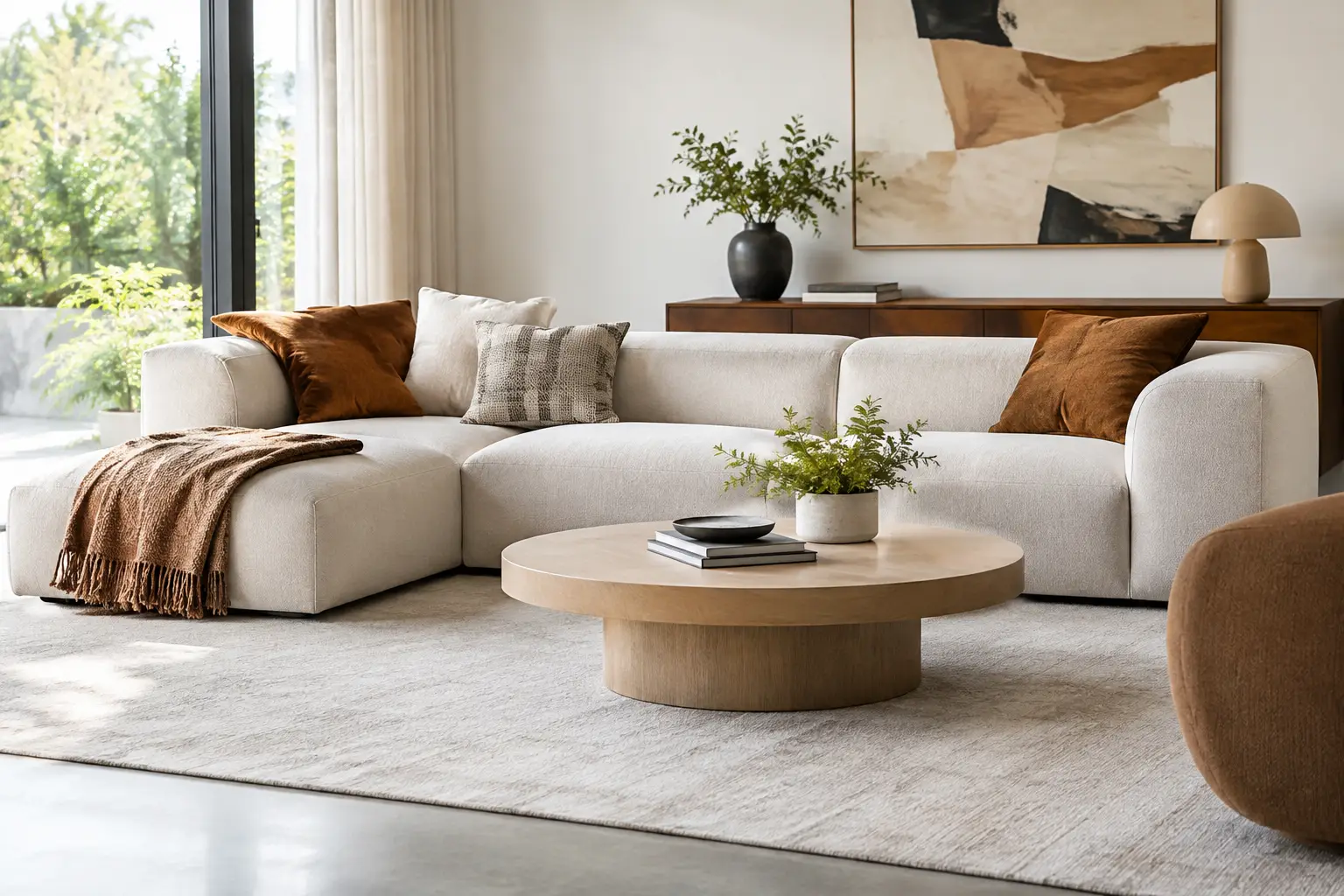
A chaise sectional can make a living room feel immediately more generous – but only when its proportions, orientation, and upholstery suit the way you actually live. This sectional chaise comparison looks beyond the familiar question of left-facing versus right-facing to help you choose a configuration with lasting comfort, visual balance, and a natural place in a contemporary Canadian home.
For a downtown condo, the right chaise can define a lounge zone without filling the entire room. For a family room, it may be the seat everyone claims for movie night. The difference is in the planning: a beautiful sectional should support circulation, conversation, and everyday use as confidently as it supports the room’s design.
Sectional Chaise Comparison: Start With the Room
A chaise sectional is essentially a sofa with one extended seat, creating a relaxed place to stretch out without adding a separate ottoman or lounge chair. Compared with a standard sofa, it offers more casual comfort in one cohesive silhouette. Compared with a full L-shaped sectional, it generally has a lighter footprint and requires less floor area.
That makes it an especially considered choice for condos and narrower living rooms. The chaise creates the feeling of an L-shaped seating arrangement while retaining an open side of the room. It can also make a compact space feel more composed, particularly when the long side of the sofa is aligned with the room’s strongest architectural line.
The trade-off is flexibility. A chaise is not always the best choice when you regularly host larger groups who need upright, equal seating. In that case, a sofa paired with two lounge chairs, or a true sectional with multiple full seats, may serve the room better. A chaise sectional is at its best when relaxed lounging matters as much as formal entertaining.
Measure circulation, not just the wall
Many sectional decisions go wrong because the wall is measured, but the room is not. Record the full sofa width and chaise projection, then map those dimensions on the floor with painter’s tape. This gives a much clearer sense of how the piece will sit within the room.
Leave enough space to pass comfortably in front of the chaise and between the sofa and a coffee table. In most layouts, roughly 40 to 45 cm between the coffee table and upholstery provides an easy reach without crowding the knees. Main walkways deserve more room, especially in open-concept homes where the living area is also a route to the kitchen, balcony, or dining space.
Consider the visual weight as well. A low-profile European sectional with slim arms and raised legs can feel surprisingly light, even at a generous scale. A deep, fully upholstered design with broad arms creates a more enveloping effect and may be better suited to a larger room with breathing room around it.
Left-Facing or Right-Facing Chaise?
This is the practical decision that deserves the most attention. Retailers can describe orientation differently, so confirm it carefully: usually, a left-facing or right-facing chaise is determined while you are standing in front of the sectional and looking at it. Because conventions can vary, a showroom consultant should confirm the exact configuration with a plan or product drawing before an order is finalized.
The correct side is the one that protects the room’s natural pathway. If people enter the living space from the right, placing the chaise on the left may keep the entrance open. If the sectional faces a television or fireplace, consider which side allows the most graceful route around the coffee table without forcing guests to step around the extended portion.
A chaise should not feel like an obstacle placed across the room. It should lead the eye into the seating area, framing the view rather than blocking a doorway, window, or balcony access. In a compact condo, this may matter more than gaining an extra few centimetres of lounging surface.
For households that move often, or for rooms likely to be rearranged, a reversible chaise or modular sectional can be worthwhile. The compromise is that reversible designs sometimes have a more casual construction or a less tailored appearance than a fixed, premium sectional. A modular European system offers a more refined answer, allowing pieces to be reconfigured while maintaining consistent upholstery, seat height, and detailing.
Comfort Is More Than Seat Depth
Two chaise sectionals can look nearly identical online and feel entirely different in person. Seat depth, back height, cushion construction, arm profile, and suspension all influence whether the sofa feels supportive, relaxed, or too large for daily use.
A deeper seat is inviting for long evenings and informal lounging. It suits taller individuals and rooms where the sofa is the primary place to relax. Yet extra depth can be less comfortable for shorter users who prefer to sit upright with their feet on the floor. In a more formal living room, a moderate seat depth often feels better for conversation and creates a neater profile.
Back cushions matter just as much. Loose, plush cushions create a softened, lived-in look, but they may need regular fluffing and adjustment. Structured backs keep a cleaner line and can provide more dependable support, particularly in a space used for reading, working, or entertaining. Neither approach is inherently better; the right choice depends on how the room is used.
The chaise itself should be tested as a lounge surface, not treated as an oversized seat. Sit upright on it, recline fully, and check whether the back cushions remain supportive. Notice where your legs land and whether the arm, if present, feels comfortable beside your shoulder. This is where an in-person showroom visit adds real value: comfort cannot be accurately assessed from dimensions alone.
Upholstery for Real Canadian Living
The upholstery should express the room’s character while standing up to the pace of the household. A pale bouclé or textured woven fabric brings depth and softness to a Scandinavian-inspired interior. It can look beautifully tailored in a low, sculptural sectional, though households with young children or pets may prefer a tighter, more forgiving weave in a mid-tone shade.
Performance fabrics are a sensible option for active homes, but performance is not one single standard. Ask how the fabric handles spills, abrasion, pilling, and cleaning. Requesting fabric samples makes it easier to see the undertones beside existing flooring, rugs, paint, and natural light. The same warm grey can read taupe in one room and cool stone in another.
Leather offers a different kind of practicality. Quality leather develops character over time and can be easy to wipe clean, making it appealing for some family rooms and hospitality settings. It also reflects light differently from fabric, often giving a sectional a more architectural presence. However, leather can feel cooler on first contact and may show scratches or natural variation more visibly – part of its appeal for some homeowners, less so for others.
For a polished, layered interior, avoid selecting upholstery in isolation. The sectional is usually the largest textile surface in the room. Its colour and texture should work with the rug, window treatments, accent chairs, and wood or metal finishes nearby.
When a Chaise Sectional Is the Right Choice
Choose a chaise sectional when the room needs one primary, generous place to relax and the layout has a clear side for the extension. It is particularly effective for couples, small families, and condo owners who want the comfort of a larger seating arrangement without introducing several separate pieces.
Choose a standard sofa and chairs when the space is used often for conversation, when seating needs to face multiple directions, or when rearrangement is a priority. Consider a larger modular sectional when a family room regularly accommodates several people at once and the room can support its scale.
At Levida Furniture, viewing sectional options in the Markham showroom allows you to compare seat comfort, material textures, proportions, and customization possibilities in a more meaningful way than a screen can offer. Bring room measurements, photos, and a floor plan if available. A well-chosen chaise sectional should not simply fit the wall; it should make the entire room feel easier to live in.