A low sofa changes more than the seating area. It lowers the visual horizon of a room, creates a more relaxed point of view, and can make a contemporary interior feel calm rather than crowded. To style low sofas well, however, every element around them needs to respect that lower profile. The right rug, table, lighting, and artwork make the composition feel intentional. The wrong scale can make even a beautifully made sofa seem to disappear.
This is why low-profile seating is especially effective in modern condos, open-plan living rooms, and homes with an architectural view worth preserving. Rooted in contemporary European design and Scandinavian simplicity, it brings a sense of ease without asking a room to be minimal or stark.
Start With the Room’s Sightlines
A low sofa is often defined by a seat height and back height that sit closer to the floor than a traditional sofa. Its proportions can make ceilings feel taller and windows feel more expansive, particularly in Toronto-area condos where daylight and a clear view are valuable design assets.
Before choosing surrounding pieces, consider what the sofa should reveal. In front of large windows, a low back keeps the exterior view open. In an open-concept home, it can establish the living area without creating a visual barrier between the kitchen, dining space, and lounge. Against a solid wall, it gives you greater freedom to introduce taller art, shelving, or sculptural lighting.
The trade-off is that low seating has less inherent visual weight. A generous sectional in a rich bouclé or leather can anchor a large room easily, while a slim, low two-seat sofa may need more support from the rug, occasional chairs, and wall treatment around it. The goal is not to fill every empty area. It is to give the seating arrangement enough presence to feel grounded.
How to Style Low Sofas With the Right Scale
The most successful low-sofa rooms use varied heights. If every piece is low, the result can feel compressed. If every surrounding piece is tall, the sofa may look undersized. Think in layers: a low foundation, a mid-level coffee table or accent chair, then vertical elements such as floor lamps, artwork, curtains, or a bookcase.
Choose a coffee table that meets the seat visually
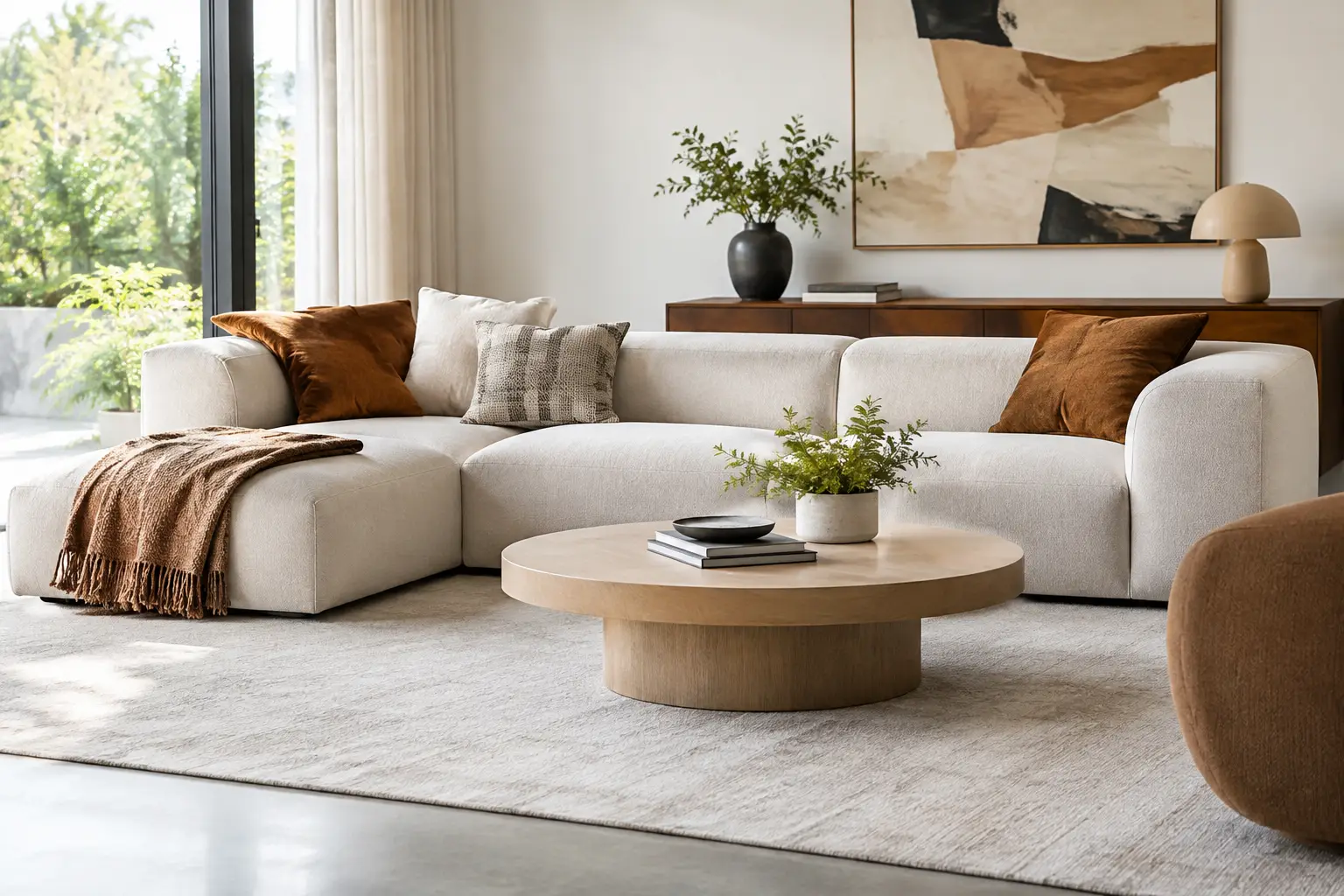
Coffee tables are one of the most common proportion mistakes. A table that is substantially taller than the sofa seat can feel awkward and obstructive, especially with a deep, lounge-oriented design. In most settings, select a table that sits at or just below the seat cushion height. This keeps drinks and books within easy reach while maintaining the sofa’s quiet horizontal line.
Low sofas also suit substantial coffee tables better than delicate, overly small ones. A broad oval, rounded rectangle, or pair of nesting tables can provide useful surface area without introducing sharp visual interruption. For families, a softly rounded table in wood, stone, or upholstered finish can be both elegant and easier to live with.
Leave approximately 35 to 45 centimetres between the sofa and coffee table. This gives people enough clearance to move comfortably while keeping the table functional. In a compact condo, choosing a table with open space beneath it can help the room feel lighter.
Let the rug do the anchoring
A properly sized rug is essential around low seating because it creates the footprint the sofa itself may not provide. The front legs of the sofa and adjacent chairs should sit on the rug whenever possible. A rug that only reaches the coffee table often makes the arrangement look fragmented, particularly in a larger living room.
Texture matters as much as size. Wool, wool blends, tactile flatweaves, and refined high-low pile rugs add depth beneath a clean-lined sofa. If the upholstery is pale and tailored, a textured rug can bring warmth without relying on a busy pattern. If the sofa is upholstered in a deep charcoal, forest green, or cognac leather, a lighter rug can prevent the seating area from feeling heavy.
In an open-plan layout, the rug also performs a practical role: it signals where the living zone begins and ends. This is valuable when a low sectional faces away from the dining area and needs to hold its own as a defined composition.
Add one or two pieces with height
A floor lamp with a slender, sculptural form can introduce verticality without making the room feel formal. Tall branches in a ceramic vessel, a large-scale artwork, or full-height drapery can achieve the same effect. These elements draw the eye upward and make the sofa feel deliberately low, rather than merely short.
Artwork should usually relate to the sofa’s width. One large piece, or a thoughtfully spaced pair, often has more impact than several small frames floating too high above the back. In rooms with generous ceilings, aim to create a visual relationship between the sofa and the art rather than treating the wall as a separate project.
Build Comfort Into a Low-Profile Look
Low seating should look relaxed because it is relaxed. That means considering how the sofa will be used at 8 p.m., not only how it appears in a daytime photograph. Seat depth, cushion fill, arm height, and back support all matter.
A deep, low sofa is ideal for reading, movie nights, and informal entertaining, but it may not suit everyone as the primary seating choice. Some people find a higher, firmer seat easier to get in and out of, particularly when guests of different ages use the room. A balanced solution is to pair the sofa with one or two occasional chairs that have a slightly higher seat and more upright support. The contrast adds visual dimension while making the room more accommodating.
Pillows should reinforce comfort without burying the sofa’s silhouette. Start with a small number of generous, high-quality cushions in complementary textures: linen with wool, velvet with bouclé, or leather with a soft woven textile. A lumbar pillow can make a deep seat more comfortable for everyday conversation. Instead of matching every pillow precisely, work within a restrained palette of two or three tones drawn from the rug, art, or curtains.
A throw is most effective when it feels casually placed but intentional in material. Consider brushed wool, fine cotton, or a substantial knit for the Canadian cooler months. The objective is warmth and texture, not clutter.
Match Materials to the Sofa’s Character
The material palette around a low sofa determines whether it feels airy, architectural, warm, or dramatic. Pale oak, travertine-inspired stone, smoked glass, and brushed metal all work well with contemporary European forms, but they create distinctly different moods.
For a soft Scandinavian-influenced room, pair a light neutral fabric sofa with natural wood, matte ceramics, and a woven rug. For a more metropolitan interior, consider a dark-stained table, bronze or blackened metal details, and an upholstered sofa in taupe, graphite, or deep brown. Leather can bring welcome structure to a low silhouette, particularly in a living room that needs to withstand frequent use.
Avoid treating every finish as an exact match. Repeating the same wood tone across the sofa legs, coffee table, media unit, and dining furniture can look flat. A more considered room uses related undertones and varied textures: warm oak beside creamy stone, for example, or walnut balanced by a pale textured upholstery.
Plan the Layout Before Committing
Low sofas often look best when they float slightly within the room rather than being pushed automatically against a wall. In an open living space, placing a sectional on a rug with a console behind it can create a polished division between lounge and dining areas. A sofa facing a fireplace, media wall, or view can become the room’s natural centre without requiring excessive furniture.
That said, wall placement can be the right choice in a narrow condo living room. The priority is preserving a comfortable circulation path, typically at least 75 to 90 centimetres through the main route. Measure door swings, balcony access, and the reach of a reclining or extendable component before finalizing a configuration.
Customization is especially valuable here. Adjusting a chaise direction, sectional length, arm profile, fabric, or leg finish can turn a sofa that is merely attractive into one that suits the architecture and rhythm of your home. Seeing seat depth, fabric texture, and true colour in person is equally useful. At Levida Furniture’s Markham showroom, this hands-on comparison helps clients judge proportions in a way a screen rarely can.
A low sofa rewards careful editing. Give it a generous rug, a table designed for its height, and a few vertical elements that frame rather than compete with it. The result is a living room that feels composed from every angle, yet remains ready for the ordinary, comfortable moments that make a home feel lived in.