A sofa that looks impeccable in a showroom but occupies every inch of a condo living room is not a luxury. Neither is a beautiful dining table that cannot accommodate the people who gather around it. Modern Canadian living is defined by this balance: interiors should feel considered and distinctive while supporting the way we actually live, host, work, rest, and adapt at home.
For many Canadian households, that means looking beyond a single statement piece. A successful interior connects proportion, comfort, material quality, storage, and visual continuity from one room to the next. European design and Scandinavian simplicity offer a useful starting point, but the final result should be personal, practical, and made for the realities of the space.
What Modern Canadian Living Asks of a Home
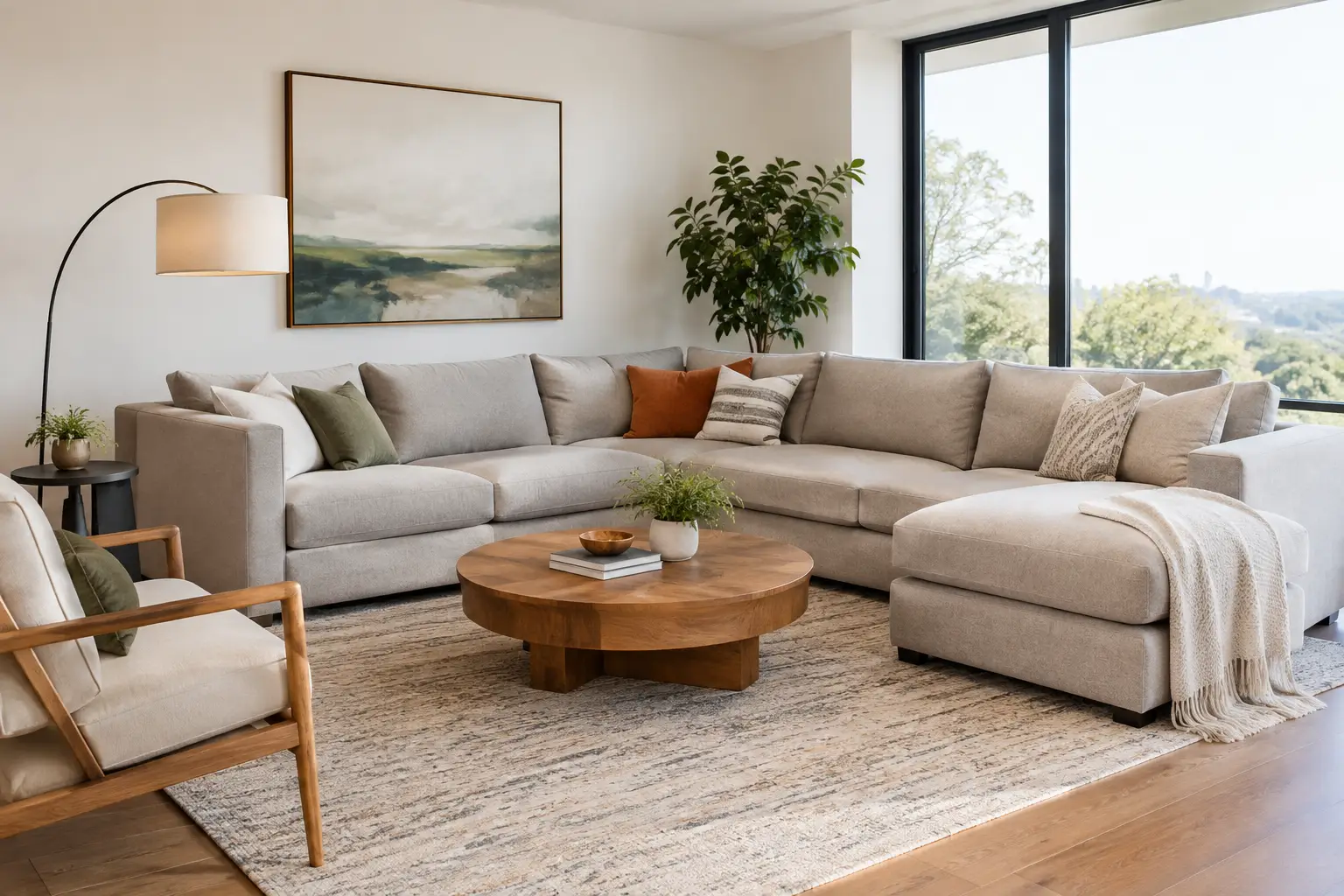
Contemporary Canadian homes vary widely. A downtown Toronto condo may need a compact sectional with a chaise that does not obstruct the balcony door. A family home in Markham may need a generous dining table, durable upholstery, and enough seating for long weekend meals. A rental may call for flexible pieces that can move easily to the next address without losing their relevance.
The common thread is purposeful design. Clean lines remain appealing because they bring calm to busy rooms, but minimalism should never become austerity. The strongest modern interiors use a restrained architectural framework, then introduce warmth through texture, considered colour, tactile fabrics, natural wood, stone-like surfaces, and soft lighting.
This is where contemporary European furniture is especially compelling. Its proportions are often designed with everyday efficiency in mind, while refined details – a slim metal base, a softly curved arm, a tailored seam, a carefully matched veneer – make the room feel finished. The goal is not to make a home look like a catalogue. It is to give daily life a more beautiful setting.
Start with the Life of the Room
Before selecting finishes or deciding whether a room should be warm white, charcoal, oak, or walnut, consider its true use. The best layout is not always the most symmetrical one. It is the one that creates easy movement and lets the room perform without friction.
Living rooms need comfort with structure
A living room often carries the most demands. It may be where children play, friends gather, a laptop opens after dinner, and a quiet evening begins. Select seating according to how it will be used, not only how it appears from the doorway. Deep, low-profile seating can create a relaxed lounge atmosphere, while a more upright sofa may better suit frequent conversation and smaller spaces.
Scale is decisive. In a compact room, a sofa raised on slender legs can preserve visual lightness, while an overly bulky arm profile can make the same room feel crowded. A modular sectional is valuable when flexibility matters, but it should be configured around circulation, not simply chosen because it offers the most seats. Leave enough space to walk comfortably around a coffee table and avoid placing every piece against the wall by default.
Dining rooms should invite people to stay
Modern dining is rarely formal in only one way. The same table may hold a weekday meal, a school project, a casual work session, or a dinner party. An extendable dining table can be an elegant answer for condo owners and households that entertain occasionally, while a fixed statement table suits a dedicated dining room with generous clearance.
Consider the chairs with equal care. They should provide enough support for a long evening, tuck beneath the table comfortably, and complement the table without creating a matched-set effect. Upholstered chairs add softness and comfort; wood, leather, or easy-clean performance fabrics may be the better choice where daily wear is a concern.
Design for Canadian Light and Seasons
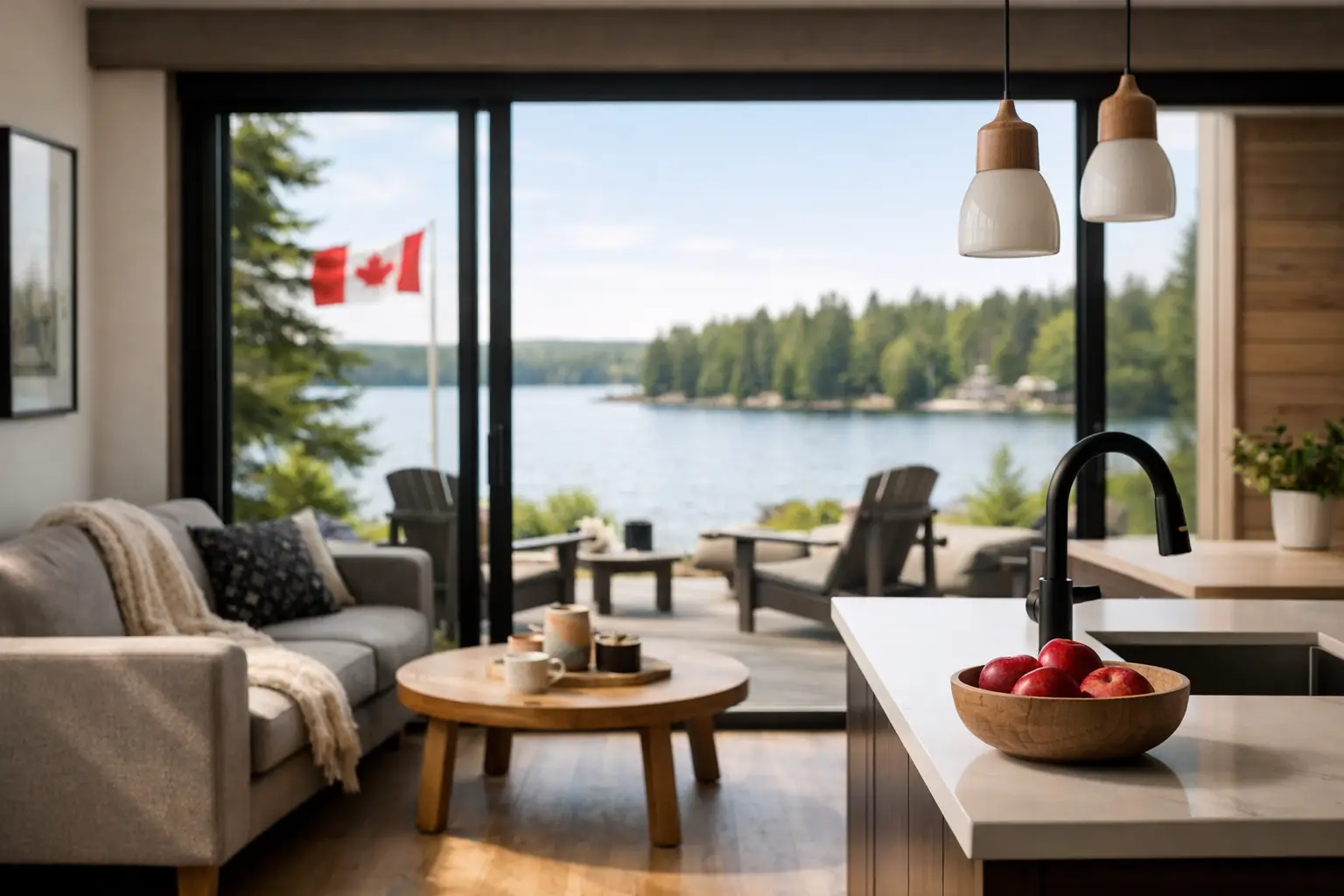
Canadian interiors experience dramatic shifts in daylight. A room that feels bright and open in June may feel entirely different during a darker winter afternoon. Rather than relying on one overhead fixture, use layered lighting to bring depth to the space. Ambient light establishes the overall mood, task lighting supports reading or dining, and accent lighting gives form to art, shelving, or an architectural corner.
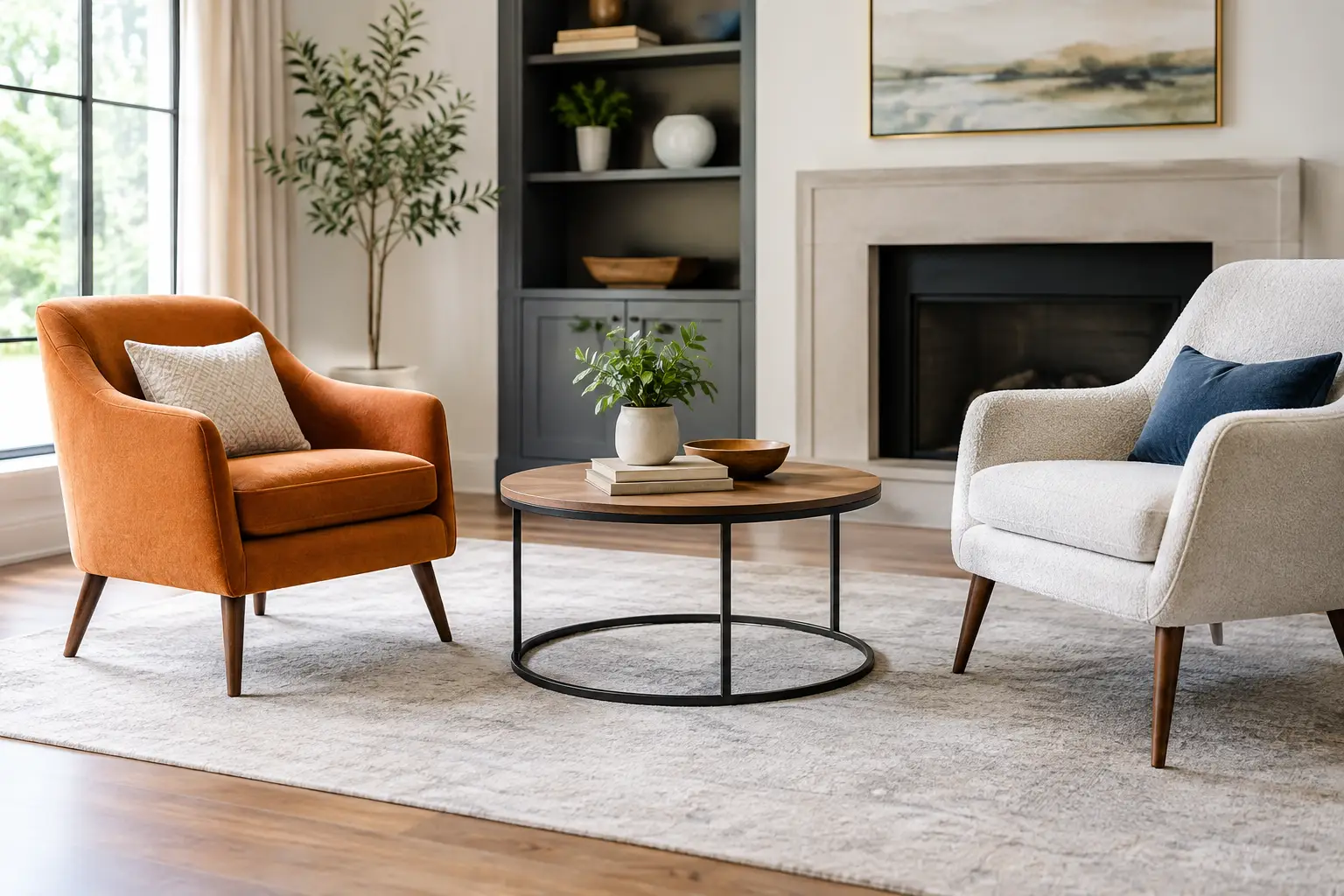
Material choices matter in every season as well. Bouclé, wool-blend fabrics, textured rugs, and upholstered headboards bring welcome softness in winter. Oak, pale stone finishes, smoked glass, and streamlined metal can keep the same space visually fresh in brighter months. Contrast is useful here: a sleek dining table becomes more inviting with tactile chairs, while a generously upholstered sofa benefits from the crispness of a slim side table or sculptural floor lamp.
There is no need to follow a strict palette of pale woods and white walls to achieve a contemporary Canadian look. Darker finishes can feel elegant and restful, particularly in rooms with ample natural light. Rich walnut, charcoal upholstery, deep green, and warm taupe can create a more enveloping atmosphere. It depends on the room’s exposure, ceiling height, and the feeling you want when the day ends.
Choose Materials for the Long Term
Luxury is most convincing when it remains beautiful after years of use. That calls for materials selected with both appearance and maintenance in mind. A delicate fabric may be appropriate for a low-traffic formal sitting room, but a household with pets, children, or frequent guests may benefit more from a durable, cleanable upholstery with a soft hand and subtle texture.
Natural materials gain character over time, though each has its own needs. Leather can develop a rich patina, while wood veneers and solid wood surfaces introduce warmth that synthetics rarely replicate. Stone, ceramic, and sintered surfaces offer different advantages at the dining table, from visual drama to easier care. There is no universally correct choice. The right material reflects how often the piece will be used, how much maintenance is realistic, and whether the room needs to feel relaxed, polished, or both.
Customization can make this decision far more precise. Selecting a sofa in the right width, a sectional in the right orientation, or dining chairs in a fabric that relates to the surrounding finishes turns a collection of furniture into an interior with intention. It also prevents the common compromise of purchasing a nearly suitable piece and trying to make it work through accessories.
Let Cohesion Matter More Than Matching
A polished home does not require every surface to be identical or every room to follow the same colour exactly. In fact, too much matching can make an interior feel flat. Cohesion comes from recurring cues: a shared timber tone, a repeated curve, a restrained metal finish, or a consistent balance between soft and structured forms.
In an open-concept space, these relationships are especially important. The living, dining, and kitchen areas should speak to one another without becoming visually repetitive. A warm wood dining table might connect to a walnut media unit, while cream seating and a neutral rug keep the overall composition light. A black accent can appear in lighting, chair bases, and a mirror frame to add definition.
Storage deserves the same attention. Sideboards, display units, and media consoles are not only practical solutions for everyday clutter. They establish visual order, create a place for art and objects, and help a space feel calmer. Choose storage that is proportionate to the wall and sufficient for what it needs to contain. A low, extended console can make a room feel wider, while a taller cabinet may use limited floor area more effectively.
Make Space for Personal Direction
The most memorable modern homes are not built from trends alone. They reflect the people who live in them: the books they keep, the art they choose, the way they entertain, and the colours that make them feel at ease. Furniture creates the foundation, but a room becomes individual through the tension between a refined base and personal layers.
This is also why seeing pieces in person has real value. Fabric can look cooler or warmer than it does on a screen. The depth of a seat, the grain of a wood finish, and the scale of a table are easier to judge when experienced firsthand. A visit to the Levida showroom can help translate a floor plan, inspiration image, or unfinished room into confident choices around comfort, configuration, and material.
Modern Canadian living is not about owning less for the sake of restraint or choosing more for the sake of impact. It is about choosing well: furniture that suits the room, materials that welcome real life, and details that make coming home feel considered every day.