A mattress can look exceptional in a showroom and still be wrong for the way you sleep. The best luxury mattresses earn their place through quieter details: support that remains stable through the night, materials that regulate temperature, and construction designed to feel as considered in year five as it did on the first evening. For a contemporary Canadian bedroom, that combination matters as much as the bed frame, lighting, or linens surrounding it.
A premium mattress is not simply a softer mattress or one with a higher price. It is a carefully engineered sleep surface that balances pressure relief, alignment, airflow, and durability. The right choice should make the bedroom feel more restorative, not more complicated.
What Defines Luxury Mattresses?
Luxury begins with the materials you cannot always identify at first glance. Natural latex, high-density foams, individually pocketed coils, breathable fibres, and finely quilted covers each play a role in how a mattress responds to the body. Better materials tend to recover more reliably, retain less heat, and resist the premature sagging that can change the feel of an inexpensive mattress within a few years.
Construction is equally important. A well-made mattress uses layers with distinct purposes rather than adding softness indiscriminately. The comfort layer cushions shoulders and hips. The support core keeps the spine in a more neutral position. Transition layers prevent the body from sinking too abruptly into the mattress. When these elements are properly calibrated, the result feels inviting without becoming unstable.
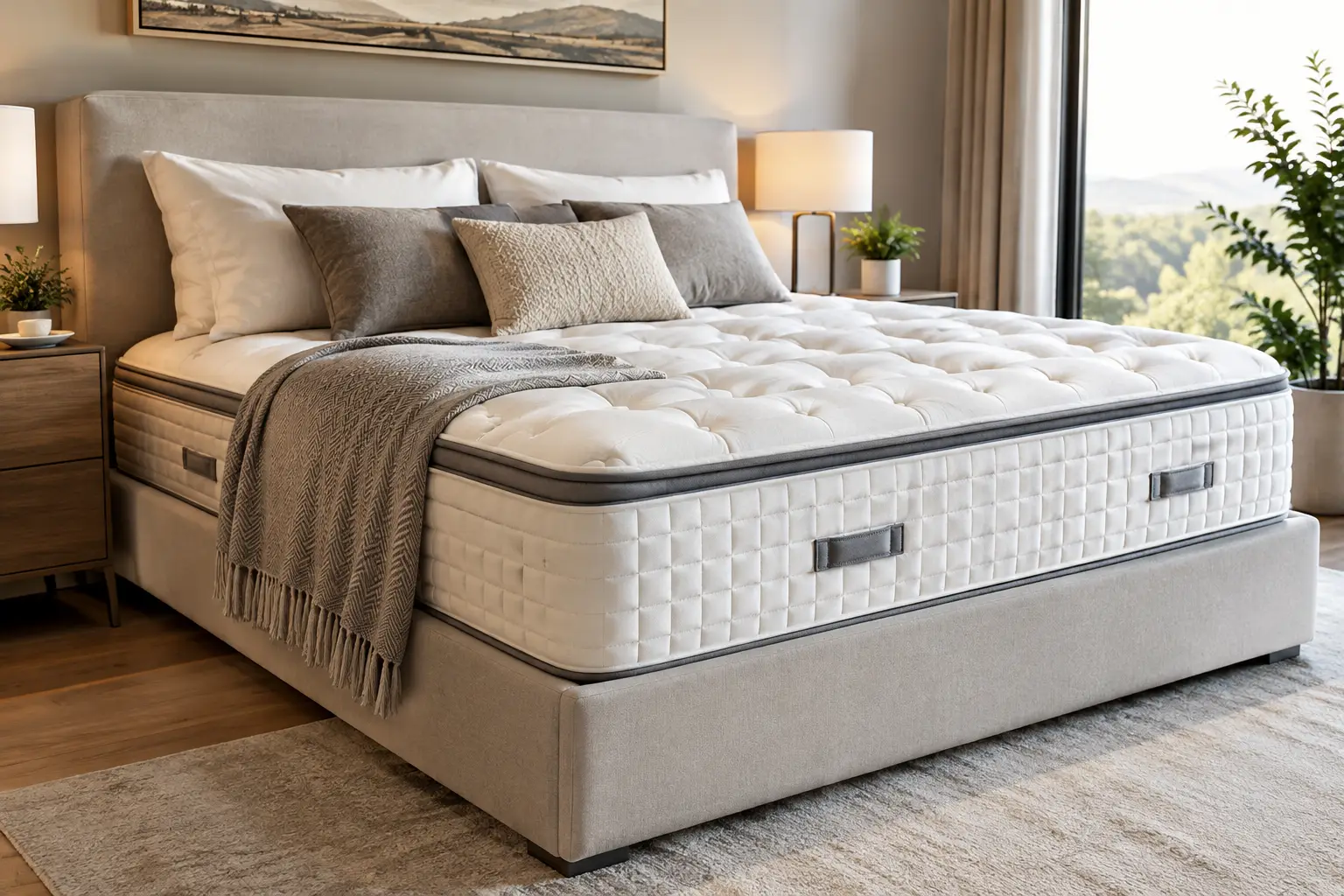
There is also a visual and tactile difference. A premium mattress often has a tailored finish, a substantial edge, and a cover that feels considered rather than purely functional. In a bedroom built around calm, European-inspired design, these details reinforce the sense that every component has been selected with care.
Support Is More Personal Than Firmness
“Firm” and “supportive” are often treated as the same thing, but they are not. Firmness describes the immediate sensation when you lie down. Support refers to how effectively the mattress holds your body in alignment over several hours. A plush mattress can be highly supportive, while a very firm one may create pressure points or leave gaps beneath the waist.
Your sleep position provides a useful starting point. Side sleepers commonly benefit from more pressure relief around the shoulder and hip, paired with enough underlying support to prevent the torso from dipping. Back sleepers often prefer a balanced medium to medium-firm feel that supports the lower back without feeling rigid. Stomach sleepers generally need a flatter, more stable surface, though individual comfort still matters.
Body shape and shared sleep habits change the equation. A mattress that feels ideal to one partner may feel too yielding or too firm to the other. In these situations, pocketed coils can be especially valuable because they respond independently to movement and can limit the transfer of motion across the bed. Some premium designs also offer distinct comfort zones, providing more targeted support through the lumbar area while allowing gentler cushioning at the shoulders.
Why edge support deserves attention
Edge support is easy to overlook during a quick test, yet it influences daily comfort. Strong edges make it easier to sit while dressing, help the usable sleep surface feel larger, and reduce the sensation of rolling outward when sharing a bed. This is particularly useful in condo bedrooms, where a queen mattress may be the practical maximum and every inch of sleep space counts.
Materials That Change the Sleeping Experience
There is no universally superior mattress material. The best choice depends on whether you prioritize buoyant support, contouring, cooling, responsiveness, or natural fibres. Understanding the trade-offs makes the selection process far more productive.
Pocketed coils
Individually wrapped coils are a hallmark of many luxury mattresses because they provide responsive support while allowing airflow through the mattress. They can adapt well to different body areas and are often a strong option for couples due to their motion isolation. The quality of the coil system, the zoning, and the materials above it matter more than coil count alone.
Natural latex
Latex offers a gently buoyant, responsive feel. It cushions without the slow sink associated with some foams, and its open-cell structure can help with breathability. It is an appealing choice for sleepers who want pressure relief but dislike feeling enveloped by the mattress. Latex can feel firmer and more resilient than memory foam, so it is worth testing in person rather than choosing by description alone.
High-quality foam
Premium foam can create excellent contouring and reduce pressure at the shoulders, hips, and knees. Modern formulations may also incorporate ventilation channels or phase-change materials to address heat retention. Density matters here: higher-quality foam is generally more likely to maintain its shape and performance. For warm sleepers, ask how the foam is layered and whether the mattress has a breathable cover and ventilated support system beneath it.
Natural fibres and breathable covers
Wool, cotton, silk blends, and other breathable textiles can improve moisture management and create a more comfortable surface across changing seasons. In Ontario, where bedrooms can be dry and warm in winter and humid in summer, temperature regulation is not a minor luxury. It can be the difference between falling asleep easily and waking repeatedly through the night.
How to Choose a Mattress for Your Bedroom
Start with the room, not only the mattress. Measure your bedroom, map the clearance around the bed, and consider the scale of the frame, nightstands, and storage pieces. A king mattress can be deeply comfortable, but it should not make the room feel crowded or restrict how you move through it. A well-proportioned queen with an upholstered bed and generous bedside surfaces may create a more relaxed, elegant result in a smaller suite.
Then consider the foundation. Many contemporary bed frames are designed to work with specific support systems, such as slats with appropriate spacing or a platform base. A mattress needs consistent support underneath it to perform as intended and to protect its longevity. The height of the complete bed also deserves attention. A deeper luxury mattress paired with a tall frame can become inconvenient if the finished height is too high for comfortable entry and exit.
If you are furnishing a primary bedroom, treat the mattress as part of the wider composition. The upholstery on the bed, the warmth of the wood finish, the texture of the rug, and the softness of the window coverings all influence how restful the room feels. A sleep space should be refined, but it should also be practical enough for a rushed weekday morning and quiet enough for an unhurried weekend.
Test Before You Commit
A few minutes of sitting on the edge is not enough to judge a mattress. Lie in your usual sleep position for several minutes, ideally with the pillow height you use at home. Notice whether your shoulders feel compressed, whether your lower back feels unsupported, and whether your hips settle too deeply. Change positions. If you share the bed, test it together.
This is where an in-person showroom experience is especially useful. You can compare comfort levels directly, assess fabrics and finishes, and discuss how a mattress will work with your chosen bed frame. At Levida Furniture, the conversation can also extend beyond sleep comfort to the scale, materials, and overall character of the bedroom, helping create a space that feels cohesive rather than assembled piece by piece.
The Value Is in Long-Term Comfort
Luxury mattresses cost more because their materials, construction, and finishing are intended to deliver a more consistent experience over time. That does not mean the most expensive option is automatically the right one. A highly specialized ultra-plush mattress may be less suitable than a balanced hybrid if you sleep warm, change positions frequently, or need stronger lumbar support.
Look for honest details about the support system, foam density, cover materials, edge construction, and care requirements. Rotate the mattress if the manufacturer recommends it, use a suitable protector, and ensure the base remains level and supportive. These small decisions preserve both hygiene and performance.
The most rewarding mattress choice is the one that disappears from your attention. It supports your body, suits your room, and lets the rest of the bedroom do what it should: provide a calm, beautifully considered place to end the day and begin again.