A bedroom can look beautifully furnished on paper and still feel wrong the moment you live in it. A bed that overwhelms the room, a nightstand with nowhere for a book, or a glossy finish that shows every fingerprint can make a carefully chosen space less restful. This contemporary bedroom furniture guide focuses on the decisions that create a composed, comfortable room – one that feels considered in the morning and practical at the end of a long day.
Begin with the room, not the bed
The bed is naturally the visual centre of a bedroom, but it should not be the first measurement you make. Start with the room’s dimensions, window placement, door swing, closet access, radiators, and any architectural features worth preserving. In a condo bedroom especially, circulation matters as much as appearance.
Aim for clear passage around the bed where possible. About 60 to 75 centimetres at the sides and foot of the bed creates a more comfortable approach, though tighter rooms may require a more selective layout. If a king bed leaves no practical route to the closet, a queen with generous bedside storage will often feel more luxurious in daily use.
Scale is also about visual weight. A low platform bed can make a room with modest ceilings feel more open, while an upholstered headboard adds softness and presence to a larger primary bedroom. Taller, slimmer legs reveal more floor and lend a lighter impression. A fully upholstered or solid-base bed can feel grounded and substantial, particularly in a spacious room with high ceilings.
Choose a bed frame for comfort and character
Contemporary European bedroom furniture is often defined by clean geometry, restrained detailing, and materials that reward a closer look. That does not mean every piece needs to be stark. The most inviting contemporary rooms balance tailored lines with tactile surfaces: a softly padded headboard, natural wood grain, textured fabric, brushed metal, or a matte lacquer in a warm neutral tone.
An upholstered bed is a strong choice for readers, late-night television watchers, and anyone who values a softer visual finish. Consider a performance fabric or tightly woven textile for an active household, particularly if children or pets occasionally claim the room. Leather can bring a more architectural look and is simple to wipe clean, although it may feel cooler to the touch and can develop a natural patina over time.
Wood beds introduce warmth and depth. Oak, walnut, and stained veneers work especially well when a bedroom needs contrast against pale walls or stone-like flooring. Veneer is not automatically a lesser choice than solid wood. In premium furniture, a well-executed veneer can provide exceptional consistency, stability, and a refined grain pattern across larger surfaces. What matters is the quality of the construction, edge treatment, and finish.
Before committing, consider the mattress as part of the bed’s total height. A low-profile frame paired with a deep mattress may sit higher than expected. Conversely, a tall headboard can be elegant, but it should not compete awkwardly with a low window or wall-mounted art.
Headboards set the room’s mood
A headboard is more than a backdrop. Wide, channel-tufted upholstery can create a hotel-inspired sense of comfort, while a slim wood or leather panel feels quieter and more architectural. If the room is narrow, a headboard that extends beyond the mattress can make the wall feel wider, but it may leave little room for functional nightstands. This is one of those choices where proportion should lead the decision, not a showroom image alone.
Build useful storage without making the room heavy
Bedroom storage should make routines easier while preserving a sense of calm. The right solution depends on what your closet already handles. A spacious walk-in may only need two nightstands and a low dresser. A compact condo bedroom may need a storage bed, tall chest, or wardrobe system to avoid visual clutter elsewhere in the home.
A storage bed is valuable when floor area is limited, but assess how it opens. Lift-up platforms offer significant concealed capacity, while drawer bases need enough clearance beside the bed to operate properly. They are ideal for seasonal bedding and less frequently used items, not the things you reach for every morning.
Dressers are best selected by both capacity and top-surface purpose. A low, wide dresser can anchor a wall beneath art or a mirror and provide a useful landing place for jewellery, fragrance, or a small lamp. A tall chest uses vertical space efficiently and can be a better answer in a narrow room. Mixing a low dresser with a tall wardrobe may be unnecessary if the result makes the room feel boxed in. Often, one well-proportioned storage piece is more effective than several smaller ones.
Nightstands deserve more attention
Nightstands are small but highly functional. Their height should sit close to the top of the mattress, generally within a few centimetres, so a glass of water or phone is easy to reach. Choose drawers if you prefer a visually quiet room, or an open shelf if you like books and essentials close at hand.
Matching nightstands offer a polished, symmetrical look, particularly with a centred bed and paired lamps. They are not mandatory. In an asymmetric room, two coordinating pieces in different widths can solve practical problems without looking accidental, provided they share a finish, shape, or material language.
Select materials and finishes for real life
A refined bedroom does not need to be precious. The most successful material palette is one you will enjoy touching and maintaining for years. Matte finishes tend to soften reflected light and conceal minor marks better than high gloss, making them particularly suited to bedrooms with abundant daylight. High-gloss lacquer has a crisp, distinctly contemporary character, but it asks for more regular care and may show fingerprints more readily.
For a serene, Scandinavian-inspired direction, pair pale oak or ash tones with warm white, mushroom, taupe, or soft grey upholstery. For greater drama, introduce walnut, smoked glass, charcoal textiles, or dark bronze metal in measured amounts. Dark furniture can feel sophisticated in a bright room, but in a small bedroom with limited natural light, it is usually best balanced with lighter walls, bedding, and floor coverings.
Try to limit the room to two or three principal finishes. A walnut bed, stone-look nightstands, black metal lighting, chrome hardware, and a grey oak dresser may each be attractive, yet together they can dilute the calm a bedroom needs. Repeating one material or undertone creates cohesion without making the space feel overly matched.
Layer the room after the essential pieces are in place
Once the bed and storage are resolved, lighting and textiles make the room feel personal. Bedside lamps should provide comfortable reading light without dominating the nightstand. Wall-mounted sconces free surface space in tight rooms, though they require planning before installation. A dimmable ceiling fixture gives useful ambient light, while a floor lamp can soften an unused corner.
Area rugs bring warmth underfoot and visually connect the furniture. In a larger bedroom, a rug can sit beneath the lower two-thirds of the bed and extend beyond the sides. In a smaller room, two runners may be more practical, especially when furniture placement leaves little room at the foot of the bed.
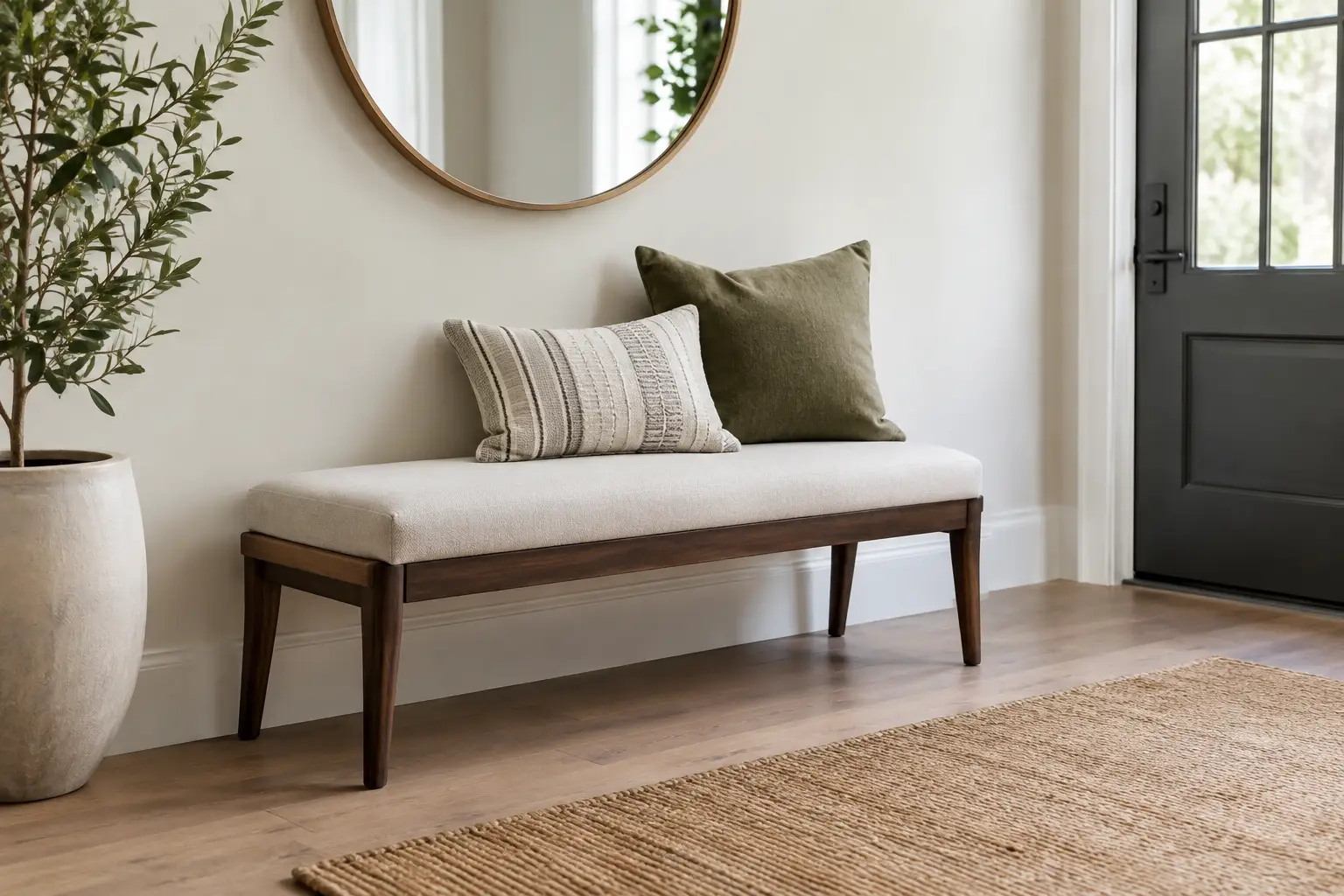
Keep decorative elements intentional. A mirror can reflect light and make a compact room feel more generous. A bench at the foot of the bed is useful for dressing, but only when it does not restrict movement. Art, linens, and cushions should add texture and personality rather than introduce another competing colour story.
A contemporary bedroom furniture guide for confident decisions
The best contemporary bedroom furniture is not chosen as a collection of isolated objects. It is selected as a complete experience: the height of the bed, the ease of opening a drawer, the warmth of a finish at night, and the amount of floor space left for moving comfortably.
Customization can make a meaningful difference when standard dimensions or finishes do not suit the room. Adjusting a headboard width, choosing a more durable fabric, or selecting a finish that relates to existing flooring can turn a good furnishing plan into one that feels genuinely tailored. Seeing materials and proportions in person is equally valuable, which is why a visit to Levida Furniture’s Markham showroom can help homeowners compare comfort, craftsmanship, and finishes before making a long-term decision.
Choose fewer, better pieces, give each one enough room to perform, and let the bedroom support the quieter rhythms of home.