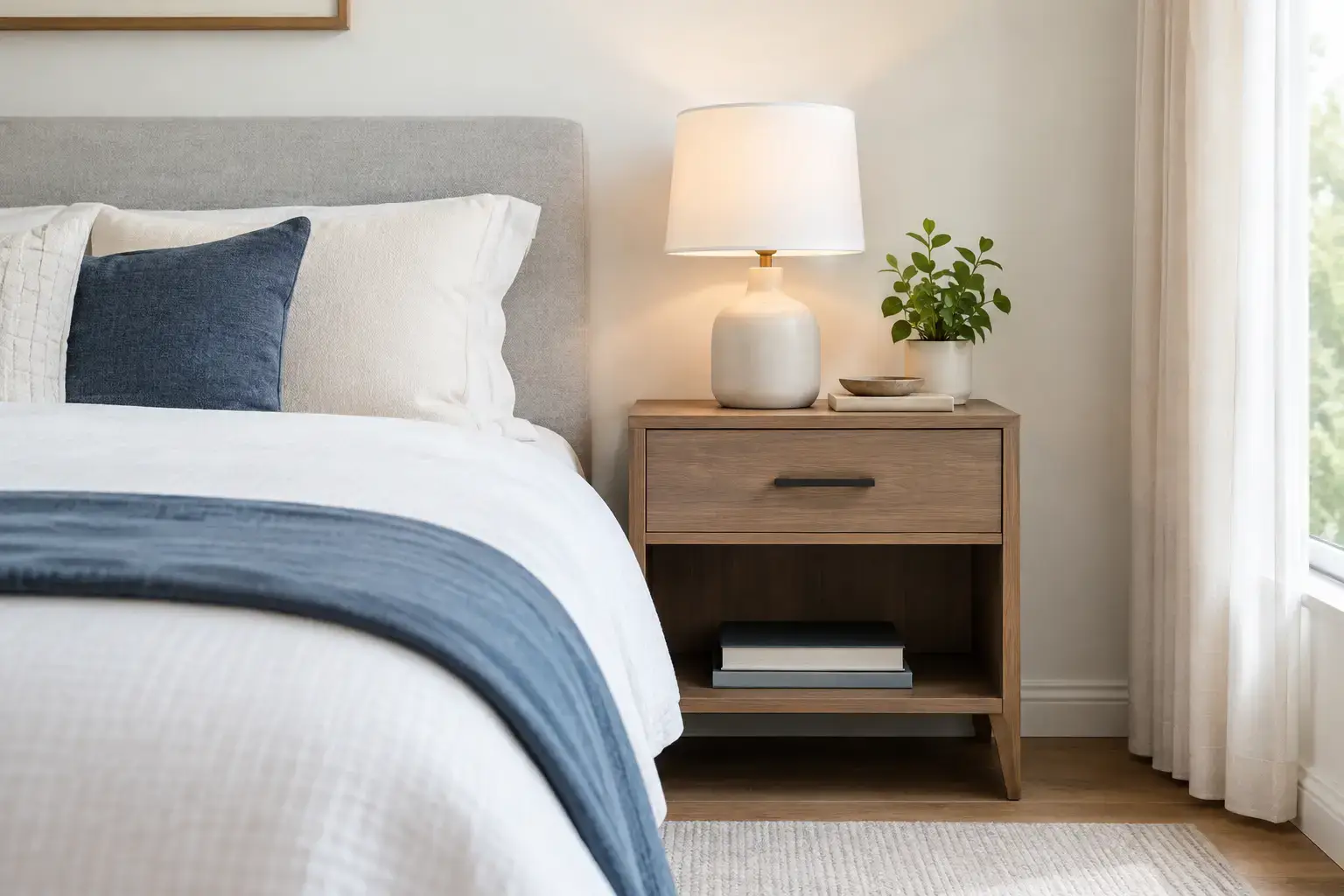
A nightstand that is too narrow can make a generously scaled bed feel unfinished. One that is too wide can crowd the room, interrupt circulation, and make even a refined bedroom feel heavy. So, how wide should nightstands be? For most bedrooms, a width of 18 to 30 inches is the useful starting range, but the right choice depends on the bed, the room’s proportions, and how you live beside it.
The best nightstands do more than hold a lamp and a glass of water. They create visual balance around the bed, offer a practical landing place at the end of the day, and contribute to the calm, considered feeling that makes a bedroom restorative.
How Wide Should Nightstands Be Beside Your Bed?
As a general rule, choose a nightstand that is at least 18 inches wide. This gives you enough surface for the essentials without looking undersized beside an adult bed. Widths between 22 and 28 inches suit many queen beds particularly well, while king beds often benefit from nightstands that are 24 to 30 inches wide or more.
There is no single correct measurement because a bedside table should relate to the full composition, not just the mattress. An upholstered bed with a wide, low headboard can carry more substantial nightstands than a slim wood-frame bed. Likewise, a compact condo bedroom may call for a narrower profile even when the bed itself is generously sized.
Use these ranges as an initial guide:
| Bed size | Typical nightstand width | When to size up or down | |—|—:|—| | Twin or double | 16 to 22 inches | Choose the narrower end in children’s rooms, guest rooms, or compact layouts. | | Queen | 20 to 28 inches | A 24-inch width is a versatile choice for many contemporary bedrooms. | | King | 24 to 32 inches | Consider 30 inches or more with a broad headboard or a large primary bedroom. | | California king | 24 to 32 inches | Match the nightstand to the headboard scale and available wall width. |
These dimensions are not limits. A pair of 36-inch bedside chests can be striking in a spacious primary suite, especially when they provide needed drawer storage. In a smaller room, however, the same choice may leave too little clearance to move comfortably around the bed.
Start With the Space Around the Bed
Before selecting a nightstand, measure the wall behind the bed and the clear floor space on each side. The question is not simply whether a table fits. It is whether the room still feels easy to enter, make the bed in, and move through every day.
Aim for roughly 24 to 30 inches of clear passage where someone needs to walk beside the bed. In tighter urban bedrooms, 18 inches may be workable, particularly on the less frequently used side, but it will feel more constrained. If a door, closet, ensuite entrance, or radiator sits nearby, account for its full swing and access requirements rather than measuring only the empty floor area.
A useful method is to mark the proposed nightstand footprint on the floor with painter’s tape. Live with the outline for a day or two. You may find that a 26-inch table looks ideal in plan but makes opening a drawer or passing the foot of the bed less comfortable than expected.
For a polished result, avoid forcing identical large nightstands into an asymmetrical room. If one side of the bed is constrained by a window, wardrobe, or door, a slimmer table or a wall-mounted bedside shelf can be a more intentional solution. Matching finishes, lamps, or hardware can preserve a cohesive look even when the pieces are not the same width.
Let Bed Scale, Not Just Bed Size, Guide You
Mattress size is a helpful benchmark, but the headboard often determines the visual scale of the bedside area. A queen mattress is 60 inches wide, yet a queen bed with an extended upholstered headboard may span 100 inches or more. Small 16-inch nightstands beside it can appear incidental rather than integrated.
Consider the bed’s visual weight. Beds with deep upholstery, channel tufting, wide timber rails, or a substantial platform base generally look best with nightstands that have enough width and presence to hold their own. A delicate Scandinavian-inspired frame, by contrast, may suit a lighter 18- to 22-inch table with raised legs and a slimmer silhouette.
Height matters just as much. Ideally, the top of the nightstand should sit level with the mattress top or within about two inches above or below it. A slightly taller bedside table is often practical for reading and reaching a lamp, while a low platform bed may benefit from a lower-profile design. A correctly scaled width can still look awkward if the table is dramatically too tall or too short.
Decide What the Surface Needs to Hold
A narrow 18-inch nightstand can work beautifully when your bedside needs are minimal: a small lamp, phone, book, and water glass. If you use a larger table lamp, keep reading glasses and medications close, charge devices, or like to display a small tray or object, 24 inches provides noticeably more comfort.
Depth deserves equal attention. Most nightstands are 16 to 20 inches deep, which is enough for common bedside items without projecting too far into the room. A shallow 12- to 15-inch option can be effective in a narrow bedroom, but check that it can safely support the lamp base and any charging accessories you use.
Storage changes the equation. A single open shelf maintains a light, architectural look and suits a guest room or minimalist interior. Two or three drawers are more useful in a primary bedroom where visual calm depends on keeping cords, books, hand cream, and everyday items out of sight. When selecting a wider piece for storage, confirm that the drawer extension will not obstruct passage.
Create Balance Without Making Everything Match
Two matching nightstands remain a classic choice because they frame the bed with clarity and symmetry. This approach works especially well in contemporary interiors, where repetition of material, proportion, and line brings a restful sense of order.
Still, symmetry does not require identical pieces. A larger chest on one side and a smaller nightstand on the other may suit a room with different functional needs. This can look considered rather than improvised when the pieces share a finish, colour family, height, or design language. For example, a warm oak bedside table can sit comfortably opposite a similarly proportioned lacquered drawer unit if both complement the bed and surrounding palette.
Lamps also influence how wide a nightstand appears. An oversized sculptural lamp can overwhelm a narrow table, while a slim wall sconce can free up valuable surface space in a condo bedroom. If you are considering pendant lights or sconces, plan their placement early so the bedside furniture and lighting feel like one composition.
Common Sizing Mistakes to Avoid
The most common mistake is choosing nightstands as an afterthought. A bed is usually purchased first, then bedside tables are selected from what happens to fit. This often results in pieces that are too small for the headboard, too deep for the room, or too low for the mattress.
Another misstep is measuring only the width of the available gap. A 30-inch opening does not automatically mean a 30-inch nightstand is appropriate. You still need breathing room around the furniture, as well as enough space to access drawers and make the bed comfortably.
Finally, do not overlook the role of materials. A 28-inch nightstand in pale oak, light-toned lacquer, or glass may feel visually lighter than a 22-inch piece in dark, solid timber with a heavy plinth base. European and Scandinavian-inspired bedrooms often rely on this balance of scale and visual lightness: practical storage, clean lines, and materials that allow the room to breathe.
When proportions are difficult to judge from measurements alone, bring your room dimensions, bed details, and a few photographs into the showroom. Seeing finishes, drawer mechanisms, heights, and scale in person can make the choice far clearer. The right nightstand width is the one that gives your bed presence while leaving the rest of the room comfortable enough to enjoy every day.