A room divider can do far more than separate one area from another. In a downtown condo, it can give a work-from-home desk its own sense of place. In an open-concept house, it can create intimacy around a dining setting without interrupting the flow of the room. The best room divider styles balance those practical needs with the light, proportion, and material character that make a contemporary interior feel considered.
The right choice depends on what the divider needs to accomplish. Some homes need genuine visual privacy, while others only need a subtle change in rhythm between the living and dining areas. Before selecting a style, consider sightlines, ceiling height, natural light, circulation, and whether the divider should feel architectural or flexible enough to move as life changes.
Best Room Divider Styles for Contemporary Interiors
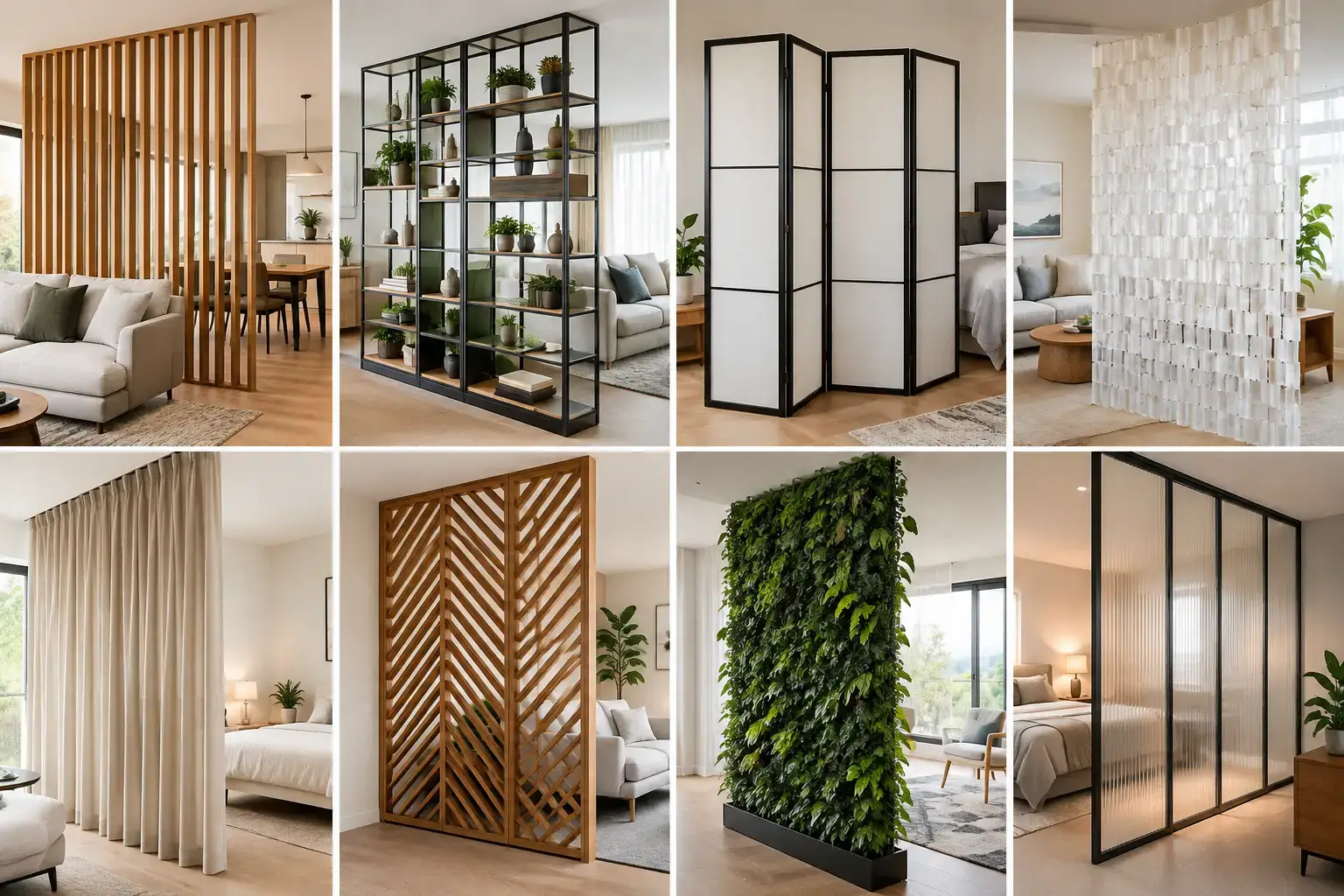
1. Open slatted wood dividers
Vertical timber slats are a natural fit for contemporary Canadian homes because they define space without creating a hard visual stop. The narrow gaps preserve daylight and allow the eye to travel through the room, making this style particularly effective in condos where every square foot needs to feel open.
A slatted divider can be floor-to-ceiling for a more architectural effect, or installed as a partial-height screen behind a sofa or adjacent to an entry. Oak, walnut, and smoked finishes bring warmth to interiors with stone, glass, or pale upholstery. Keep the spacing consistent and the profile slim for a Scandinavian-inspired result that feels calm rather than decorative.
This option is less suited to spaces where complete privacy is essential. It offers definition, not sound control or concealment. That is often precisely its strength in a living area, where connection between zones still matters.
2. Fluted glass partitions
For homes that need separation without sacrificing brightness, fluted or reeded glass offers an elegant middle ground. Its textured surface softens views and disperses light, giving a work area, dressing space, or dining zone a sense of enclosure while avoiding the heaviness of a solid wall.
Black or bronze metal framing creates a tailored European look, especially when repeated in lighting, hardware, or dining chair details. Softer metallic finishes can feel equally refined in warmer interiors. In a condo bedroom, a framed glass partition can define a sleeping area while allowing borrowed light to reach the rest of the suite.
Fluted glass is more forgiving than clear glass, but it is not opaque. Consider what will sit behind it. A well-organized office or a composed reading corner works beautifully; open storage and everyday clutter will still register as shadow and movement.
3. Freestanding upholstered screens
An upholstered screen introduces softness where a room has many hard surfaces. Think of it as a movable piece of furniture rather than a permanent construction element. It can separate a lounge area from a desk, create a private corner in a primary bedroom, or add a layer of comfort near an entry.
Choose a fabric that relates to the larger scheme, not necessarily an exact match. A textured bouclé, tailored wool blend, or quiet geometric weave can add depth beside a leather sectional or lacquered dining table. Folding screens are especially practical for renters and for households that want the option to reconfigure a room for guests, children, or entertaining.
The trade-off is scale. A lightweight screen can look temporary in a large room, while an oversized one may overwhelm a compact condo. It should be tall enough to do its job, yet leave enough visual breathing room above and around it.
4. Storage-led dividers
A shelving unit positioned perpendicular to a wall is one of the most useful ways to divide an open-plan room. It establishes separate zones while providing a home for books, objects, baskets, and decorative lighting. For families, it can also keep play items or media accessories contained without adding another large cabinet.
Open shelving works best when it is styled with restraint. Leave some compartments open, vary the height of objects, and avoid filling every shelf. A composition of books, ceramics, and a few sculptural pieces will feel more intentional than a fully packed unit. For a quieter appearance, select a design with closed base storage and open upper shelving.
This style needs attention to both sides. Unlike a bookcase against a wall, a room divider is visible from multiple angles. A finished back, quality joinery, and a proportion that suits the ceiling height make a significant difference. In smaller rooms, a shallow unit can offer definition without consuming valuable floor area.
5. Sliding panel dividers
Sliding panels are an excellent choice when a room must shift between open and private throughout the day. They can close off a home office during a meeting, conceal a guest sleeping area, or make a large living space feel more intimate in the evening. When open, they stack neatly or disappear into a wall pocket, preserving the original openness of the plan.
Fabric panels lend softness and acoustic comfort, while wood veneer, lacquer, or framed glass creates a more architectural statement. Japanese-inspired panel systems work particularly well in serene, minimal interiors, where clean horizontal lines and natural materials lead the design.
Installation is more involved than a freestanding screen, and ceiling structure matters. For a polished result, plan the track early if you are renovating. The investment is worthwhile when flexibility is central to how the room functions.
6. Metal screens with sculptural detail
A metal divider can be delicate and expressive rather than industrial. Laser-cut patterns, curved forms, and finely proportioned metal rods offer a sense of artistry while maintaining openness. This approach suits an entryway where a screen can create a first impression, or a dining room that benefits from a focal point beyond the table.
Choose the finish carefully. Matte black gives contrast to pale interiors, while brushed brass, bronze, or warm champagne metal can bring a more luxurious tone. The pattern should complement the architecture and furnishings rather than compete with them. In a room already rich with veined stone, dramatic lighting, and patterned textiles, a simpler screen will usually have more impact.
Because metal screens are often visually light, they are effective where you want a divider to read as a design feature instead of a barrier. They provide little acoustic or visual privacy, so use them for zoning and atmosphere rather than concealment.
7. Low consoles and back-to-back seating
Not every divider needs to stand upright. A low console behind a sofa can establish a living room boundary within an open plan while creating a surface for table lamps, books, or art objects. Similarly, two sofas placed back-to-back can separate conversation and dining zones with confidence.
This is one of the most understated approaches to spatial planning. It preserves uninterrupted views across the room and keeps natural light moving freely. A low, long cabinet is especially helpful in modern interiors where concealed storage is needed but a tall partition would make the room feel compressed.
Pay attention to circulation. Leave a comfortable passage around the furniture and ensure doors, balcony access, and dining chairs can operate easily. A divider that improves zoning but creates an awkward route through the room is not a successful solution.
8. Living dividers with planters
For a softer, more organic division, integrated planters or a substantial row of sculptural greenery can create separation without formal construction. This style brings texture and life to a room, particularly one with neutral upholstery, clean-lined cabinetry, and abundant daylight.
A built-in planter can feel architectural when finished in the same veneer or stone as nearby millwork. Freestanding planters are more adaptable and allow seasonal changes. Choose plants with a tidy vertical habit if floor space is limited, and make sure the divider remains attractive from every angle.
This approach requires ongoing care and adequate light. It is best for homeowners who enjoy maintaining greenery or are prepared to select high-quality artificial botanicals for lower-maintenance impact.
How to Choose the Right Divider for Your Space
Begin with the level of separation you truly need. For visual zoning, an open shelf, metal screen, or low console may be enough. For privacy, consider sliding panels, upholstered screens, or textured glass. If sound management is a priority, soft materials and more substantial construction will perform better than open slats or decorative metalwork.
Then consider scale. In a compact condo, a divider should create order without shrinking the room. Transparent materials, open shelving, and vertical slats tend to feel lighter. In a larger home, a broader storage unit or floor-to-ceiling partition can anchor the layout and give expansive rooms a more comfortable human scale.
Material continuity is equally valuable. Repeat a timber tone from the dining table, a metal finish from the lighting, or a fabric colour from the seating. This is what allows a divider to feel integrated rather than added as an afterthought. For a more personalized solution, visiting a showroom to compare finishes, dimensions, and upholstery samples in person can clarify choices that are difficult to judge from a screen.
A well-chosen room divider should make the home work better while appearing as though it always belonged there. Let it frame a daily ritual, soften an open plan, or bring purpose to an unused corner – then give the rest of the room space to breathe.