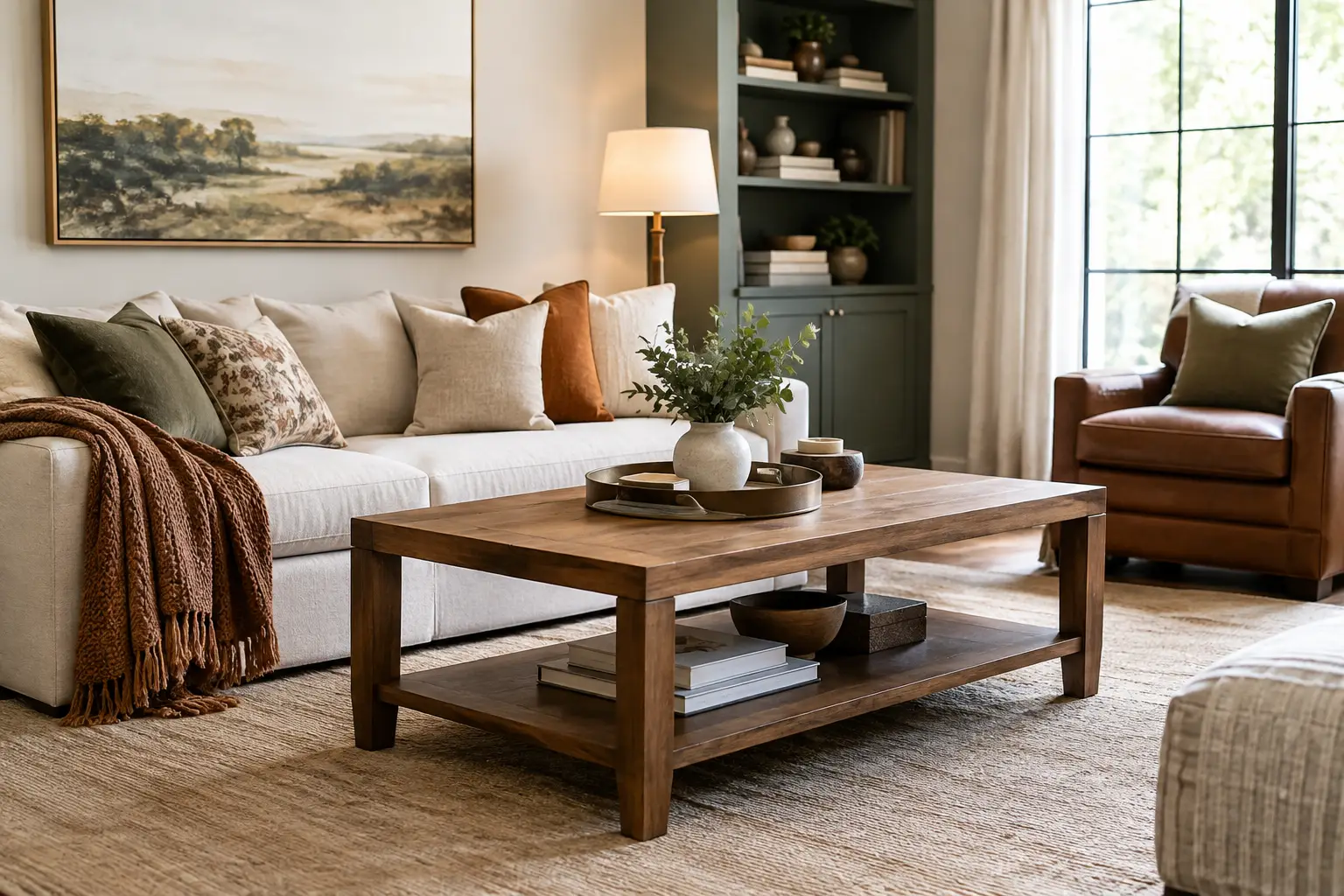
A beautifully layered living room rarely comes from buying more. It comes from choosing each element with enough intention that the room feels composed from every seat, in every season. To create a layered living room, begin by thinking beyond a matching sofa-and-coffee-table set. Consider how scale, texture, light, colour and personal objects can work together to make a contemporary Canadian home feel settled, warm and distinctly yours.
Layering is especially valuable in condos and newer open-plan homes, where clean architecture can sometimes feel visually spare. The aim is not to fill every surface. It is to build depth gradually, so the room retains its calm while gaining comfort and character.
Begin with a Strong Furniture Foundation
The largest pieces establish the room’s visual weight. A well-proportioned sofa, sectional or pair of lounge chairs should be the foundation, chosen first for comfort and scale, then for appearance. In a compact condo, a slim-profile sofa with raised legs can preserve sightlines and make the floor area feel more open. In a larger family room, a generous sectional may be the piece that creates the right sense of invitation.
Avoid treating every furniture item as part of one coordinated set. A layered room benefits from considered contrast. A low, structured Italian-inspired sofa might sit comfortably beside a warmer timber occasional chair or an upholstered swivel chair with a softer silhouette. The pieces should share an underlying language, perhaps through warm neutrals, refined proportions or a repeated metal finish, without looking identical.
Let the rug define the conversation area
A substantial area rug gives the furniture somewhere to belong. One of the most common reasons a living room feels incomplete is an undersized rug floating beneath only the coffee table. Ideally, the front legs of the sofa and chairs should rest on the rug, creating a clear and generous seating zone.
Texture matters as much as size. A handwoven wool rug brings softness beneath a leather sofa, while a low-pile rug may be more practical for households with children, pets or frequent entertaining. If your existing rug is small but meaningful, it can still work layered over a larger natural-fibre base, provided the combination does not create a tripping edge.
Build Depth Through Material Contrast
A room with one finish repeated everywhere can feel flat, even when every individual piece is beautiful. Contrast creates dimension: smooth against tactile, pale against dark, matte against a restrained amount of sheen.
Start with the dominant finish already in the space. If your floors are oak, introduce upholstery in bouclé, linen-blend fabric or velvet, then add a coffee table in stone, smoked glass or lacquered wood. If your sofa is upholstered in a rich fabric, a leather accent chair or a travertine side table can give the composition clarity.
The key is balance. Too many highly textured surfaces can make a room feel busy, while too much polished glass and metal can feel cold. For most contemporary interiors, two or three principal material families are enough, supported by smaller accents. A creamy boucle sofa, walnut tables and brushed brass lighting, for example, creates variation without visual noise.
Use colour in measured layers
Neutral does not have to mean one shade of beige. A sophisticated palette often relies on tonal variation: warm white walls, taupe upholstery, mushroom-coloured drapery and a deeper brown or charcoal accent. These related tones create a quiet background that lets form and texture stand out.
Then introduce one or two accent colours with purpose. Forest green, oxblood, muted blue or terracotta can appear in cushions, artwork and a single occasional chair. Repeating the accent at least twice helps it feel integrated rather than accidental. In a small room, keep the deepest colour lower in the space, through a rug, ottoman or chair, to ground the layout.
Layer the Lighting, Not Just the Décor
Overhead lighting alone is rarely flattering, especially after a long Canadian winter day. A layered living room needs different sources of light at different heights. Ambient lighting provides general illumination, task lighting supports reading or conversation, and accent lighting draws attention to art, a textured wall or a sculptural object.
A ceiling fixture can provide the room’s central glow, but it should be joined by a floor lamp near a lounge chair and at least one table lamp on a console or side table. This arrangement brings the eye around the room and makes the space feel more intimate at night.
Choose bulbs with a warm colour temperature, generally around 2700K, and use dimmers where possible. This small technical decision has an outsized effect on atmosphere. A carefully selected lamp loses much of its appeal if its light is harsh, blue or overly bright.
Add Textiles That Invite You to Stay
Textiles are where a polished room becomes genuinely livable. They soften hard architectural edges, improve acoustic comfort and allow the space to change subtly from season to season. Rather than placing several identical cushions across the sofa, mix different sizes and tactile qualities within a restrained colour palette.
A larger square cushion can sit behind a smaller lumbar pillow. A nubby wool throw may complement a smooth velvet cushion, while linen adds an easy, relaxed note. The goal is enough variation to feel collected, not so much that the sofa becomes impractical to sit on.
Window treatments deserve the same attention. Full-height drapery, mounted close to the ceiling and extending beyond the window frame, can make a room feel taller and more finished. Sheer panels soften daylight in high-rise homes, while lined drapery adds privacy and warmth. For a clean contemporary look, choose a fabric with movement and texture rather than a heavy, overly formal treatment.
Create Layers at Different Heights
A successful room gives the eye places to travel horizontally and vertically. The sofa and coffee table occupy the lower plane, but a room also needs mid-level and higher-level interest. This may come from a tall floor lamp, art above the sofa, a large mirror, an open shelving unit or a statement plant.
Artwork is often more effective when it is scaled generously. One substantial piece above a sofa can feel more confident than several small frames scattered across the wall. If creating a gallery arrangement, keep a visual connection between the works through frame finishes, colour or subject matter.
Mirrors are useful where daylight is limited, but they should reflect something worth seeing. Position one opposite a window, a textured wall or a considered vignette, rather than directly facing visual clutter. A mirror with an architectural frame can also provide contrast to the soft lines of upholstered furniture.
Style Surfaces Without Losing Function
Coffee tables, consoles and sideboards are opportunities for personality, but they must still work for daily life. Leave a clear place for a drink, remote control or book. A low tray is a useful anchor for smaller objects, containing a candle, sculptural vessel and a small stack of design books without making the surface feel crowded.
On a console, combine objects of different heights and finishes. A table lamp, a ceramic piece and a framed photograph can create an appealing arrangement when spaced with some breathing room. Personal objects matter here. A room becomes memorable when it includes art collected over time, a travel find or a book that actually belongs to the people who live there.
Know When to Edit
Layering is not a licence to add endlessly. If the room feels crowded, remove the smallest decorative pieces first and assess what remains. The best interiors often have a sense of restraint: a few substantial choices, enough negative space and details that reward a closer look.
This is also where seeing furniture and finishes in person can make a difference. At Levida Furniture’s Markham showroom, comparing fabric textures, wood tones and comfort levels together can help turn an appealing idea into a room that works at full scale. Custom dimensions and configurations can be particularly valuable when a condo layout or family room has limitations that standard pieces do not address.
The final layer should be one that changes with your life: a new book on the coffee table, fresh branches in a vase, a throw brought out for cooler evenings. Leave room for those small adjustments. They are what keep a refined living room from feeling staged, and make it feel like home.