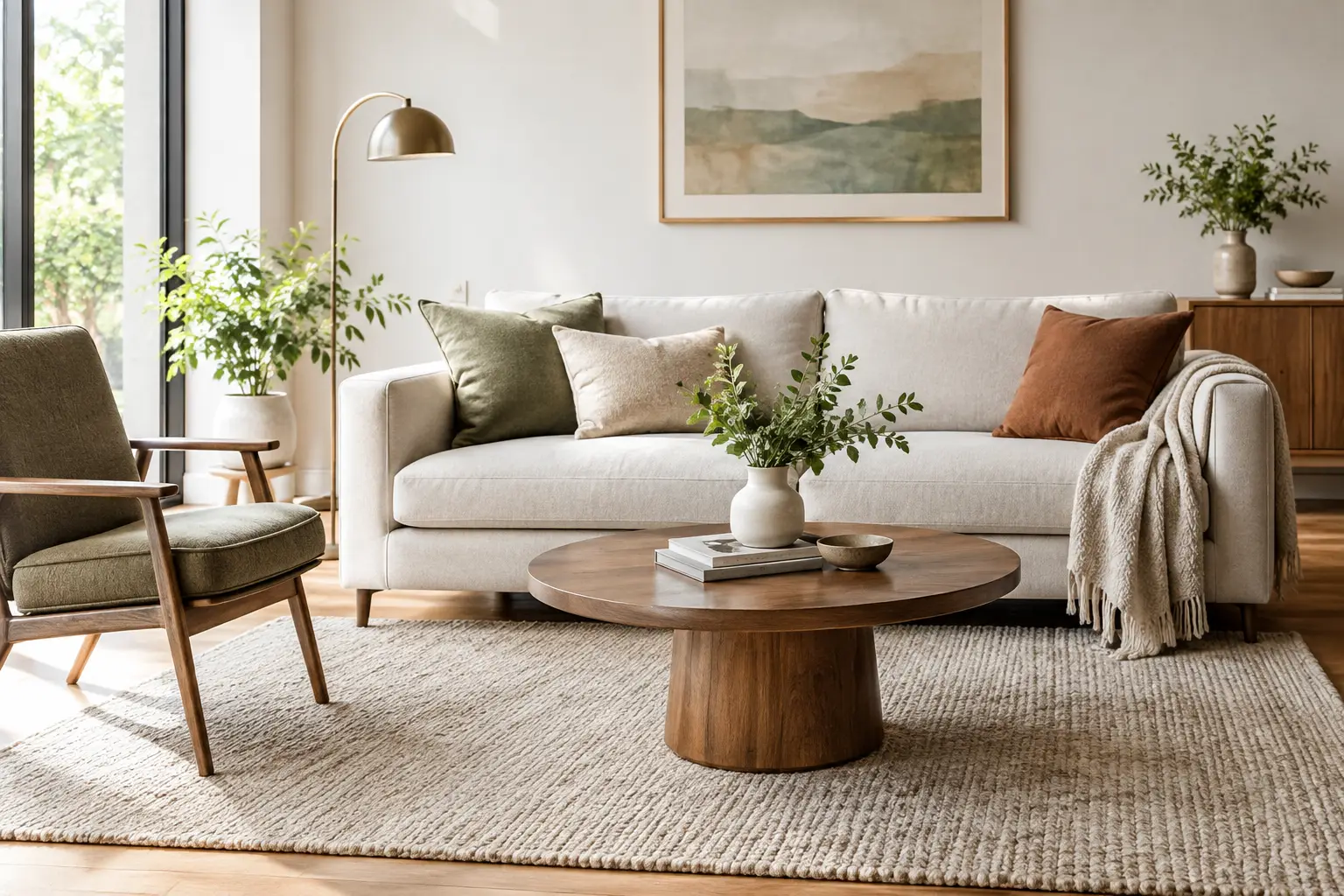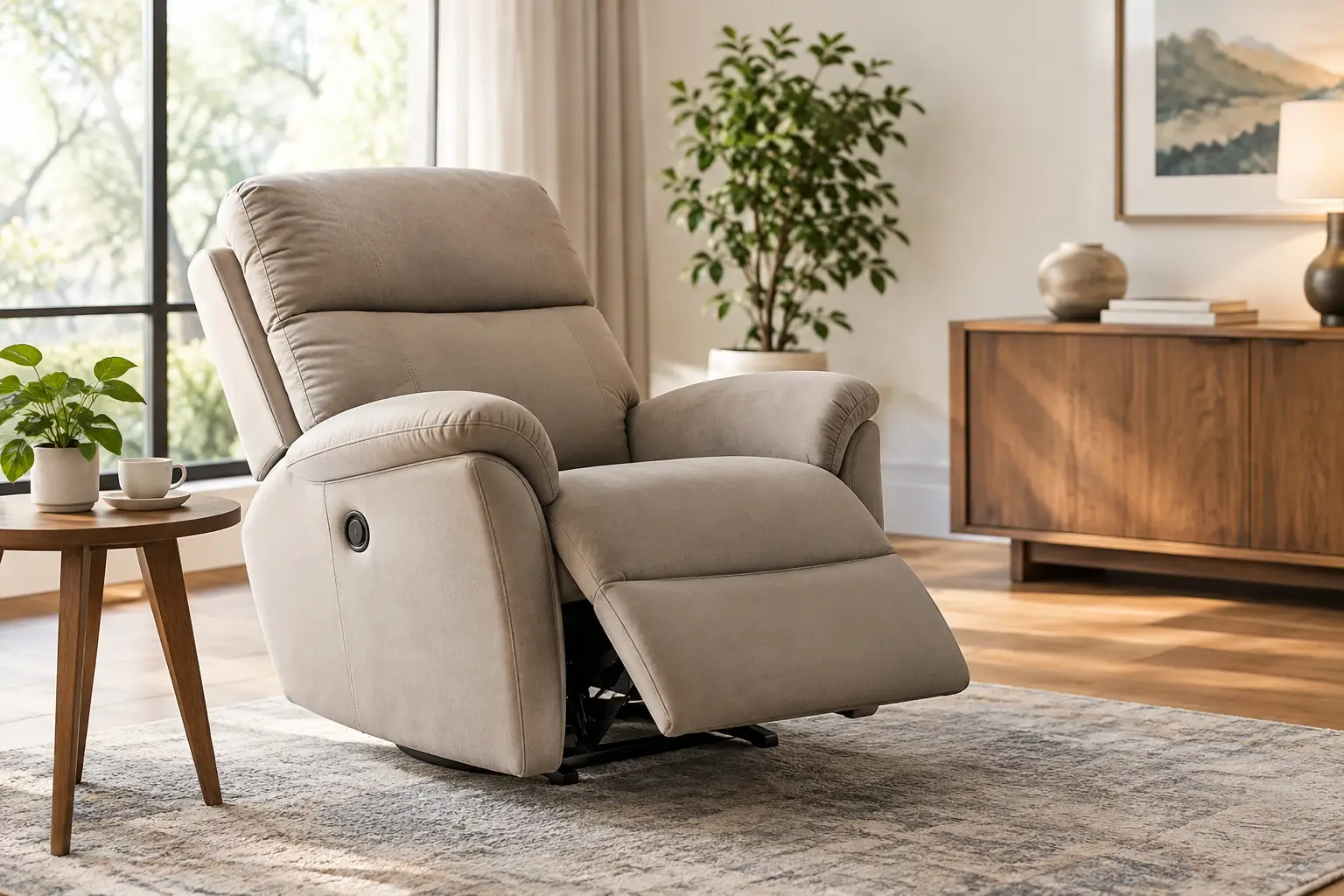
A recliner should feel like the most inviting seat in the room without looking as though it belongs in a different room entirely. This recliner chair buying guide is designed for homeowners and condo dwellers who want genuine comfort alongside the clean proportions, considered materials, and visual calm of a contemporary interior.
The right piece can become the place you read, recover after a long day, feed a newborn, or settle into for a film. The wrong one can dominate a carefully planned living room, crowd circulation, or reveal its limitations after a few months of daily use. Choosing well comes down to more than softness. It requires an honest look at scale, mechanism, support, upholstery, and how the chair will live within your home.
Start With the Room, Not the Reclining Mechanism
It is tempting to begin with features – manual or power, swivel or stationary, massage or lumbar support. Start with the room instead. A recliner has two footprints: its upright footprint and its fully reclined footprint. Both need to work without blocking a walkway, striking a coffee table, or pressing uncomfortably close to a wall.
Measure the available width and depth, then note the chair’s required clearance when open. Wall-hugger designs need less space behind them, which can make them especially useful in a condo living room or a more compact family room. That said, a chair with a very shallow recline may not offer the same full-body rest as a larger model. The best choice depends on whether you want occasional relaxation or a chair that will be used every evening.
Also consider visual weight. High backs, broad arms, deep cushions, and exposed mechanisms can make a chair appear much larger than its measurements suggest. In a tailored contemporary setting, slimmer arms, a discreet base, and a well-resolved side profile often allow a recliner to sit comfortably beside a sofa without becoming the room’s sole focal point.
Plan for circulation and sightlines
Leave enough room to move naturally around the chair when it is closed and open. In an open-concept space, think about what the recliner looks like from the kitchen or dining area, not only from directly in front of it. A refined upholstery choice and a silhouette that looks finished from every angle matter more in these highly visible rooms.
Choose Support That Suits Your Body
Comfort is personal, and sitting in a recliner is the only reliable way to assess it. In a showroom, spend more than a few seconds in the chair. Sit upright as you would for conversation, then recline fully. Notice where your lower back lands, whether your neck is supported, and whether your feet rest comfortably without your knees being pushed too high.
Seat depth is one of the most overlooked details. A deeper seat can feel luxurious for a taller person, but it may leave a shorter user unable to reach the back cushion comfortably. Conversely, a shallower seat can be more supportive for everyday sitting but may feel restrictive if you prefer to curl up with a book.
Look for a balance of cushioning and structure. Plush fibre fill delivers an immediately soft feel, while high-quality foam and supportive suspension help the chair retain its shape over time. A recliner that feels exceptionally soft on day one is not automatically the better long-term choice. For daily use, supportive comfort usually ages more gracefully than excessive sink-in softness.
Test the headrest, lumbar area, and footrest
A well-positioned headrest should support your neck rather than force your chin toward your chest. Adjustable headrests can be valuable in households where more than one person will use the chair. Integrated lumbar support is equally worth considering, particularly if you often sit for long stretches.
Extend the footrest fully and pay attention to the support under your calves and ankles. Some designs stop short of supporting taller users, while others offer an extended footrest for a more complete lounge position. If the footrest edge presses into the back of your legs, keep looking.
Manual or Power: Select the Experience You Will Use
Manual recliners remain a considered choice for many interiors. They are straightforward, require no nearby outlet, and often maintain a cleaner visual profile. A well-made manual mechanism should open smoothly, lock securely, and feel stable as you shift your weight.
Power recliners offer more precise positioning and are particularly appealing when comfort needs vary throughout the day. You can stop the back and footrest at a preferred angle rather than choosing between a few fixed positions. Some models include adjustable headrests, lumbar support, USB charging, or memory settings.
The trade-off is practical as much as aesthetic. Power chairs need access to electricity, and their controls, cords, and additional components should be planned carefully. In a polished living room, ensure power sources are positioned discreetly and that the control panel feels intuitive rather than intrusive. If a power interruption would be a concern, ask how the chair functions when electricity is unavailable.
Match the Upholstery to Real Life
Material selection shapes the chair’s appearance, maintenance needs, and longevity. Leather has a natural sophistication that works beautifully in modern and European-inspired interiors. It develops character over time, is relatively easy to wipe clean, and can be an excellent choice for homes that want a tailored, enduring finish. Full-grain and top-grain leathers offer a more authentic feel and age differently from corrected or heavily finished options, so it is worth comparing them in person.
Fabric offers greater flexibility in colour, texture, and softness. A finely woven performance fabric can be a practical option for active households, especially when selected in a mid-tone or heathered colour that is more forgiving of everyday life. Bouclé, velvet, and textured weaves bring depth to a room, but each has different cleaning and wear characteristics. Ask for fabric samples and view them in your home at different times of day before committing.
For homes with children or pets, durability should not mean settling for an overly casual look. Consider stain-resistant fabrics, tightly woven textiles, or protected leather in a tone that complements your broader palette. Pale upholstery can still work beautifully, but it asks for more attentive care and may be better suited to a quieter sitting area than the household’s most heavily used chair.
Consider Scale, Style, and the Rest of the Collection
A recliner does not need to match your sofa exactly. In fact, a complementary material or shape can make the room feel more layered and intentional. The key is to establish a relationship through colour temperature, leg finish, proportion, or design language.
For Scandinavian-influenced rooms, look for restrained profiles, warm wood details, soft neutral textiles, and uncluttered forms. In more sculptural contemporary spaces, a swivel recliner with a refined pedestal base may provide comfort while preserving the room’s architectural feel. For a warmer, more layered interior, leather paired with a textured rug and a generous floor lamp can create a composed reading corner.
Pay close attention to arm height relative to your sofa and side tables. A chair can be individually beautiful yet feel disconnected if its arms sit dramatically higher or lower than neighbouring seating. Similarly, the base matters. Exposed metal, wood legs, and concealed swivel mechanisms each create a different level of formality and visual lightness.
Look Beyond the Surface Construction
A premium recliner should feel composed in motion. Open and close it several times. Listen for squeaking, feel for wobble, and observe whether the mechanism moves evenly. The chair should not shift forward, twist, or feel unstable when you sit down or stand up.
Ask about the internal frame, suspension, cushion composition, upholstery specifications, and warranty coverage. Quality construction is less visible than a beautiful fabric, but it is what keeps the chair comfortable and dependable through years of use. Removable or replaceable components can also be valuable, particularly for power models with more complex mechanisms.
If you are furnishing a complete room, bring your floor plan, photographs, and finish samples to the showroom. At Levida Furniture, seeing proportions, fabrics, and reclining motion in person can make the decision far clearer than comparing images on a screen.
A Final Check Before You Commit
Before ordering, sit in the chair one more time and picture an ordinary evening rather than a quick showroom visit. Can you rise from it easily? Does it support the way you actually relax? Will it still look balanced once the room is furnished around it?
The finest recliner is not the one with the longest feature list. It is the one that quietly earns its place: comfortable enough to use every day, refined enough to belong in the room, and well made enough to remain a favourite long after the newness has passed.