The best contemporary entryway benches do more than offer a convenient place to sit while putting on shoes. They establish the first feeling of home: composed, welcoming, and considered. In a downtown Toronto condo, that may mean a slim upholstered bench that keeps the passage clear. In a family home, it may be a generously proportioned piece with practical storage and a durable finish that stands up to everyday arrivals.
The right choice is rarely the largest bench or the one with the most features. It is the bench that gives your entry a sense of intention while responding gracefully to the dimensions, traffic, and materials already present in the space.
What Makes a Contemporary Entryway Bench Work
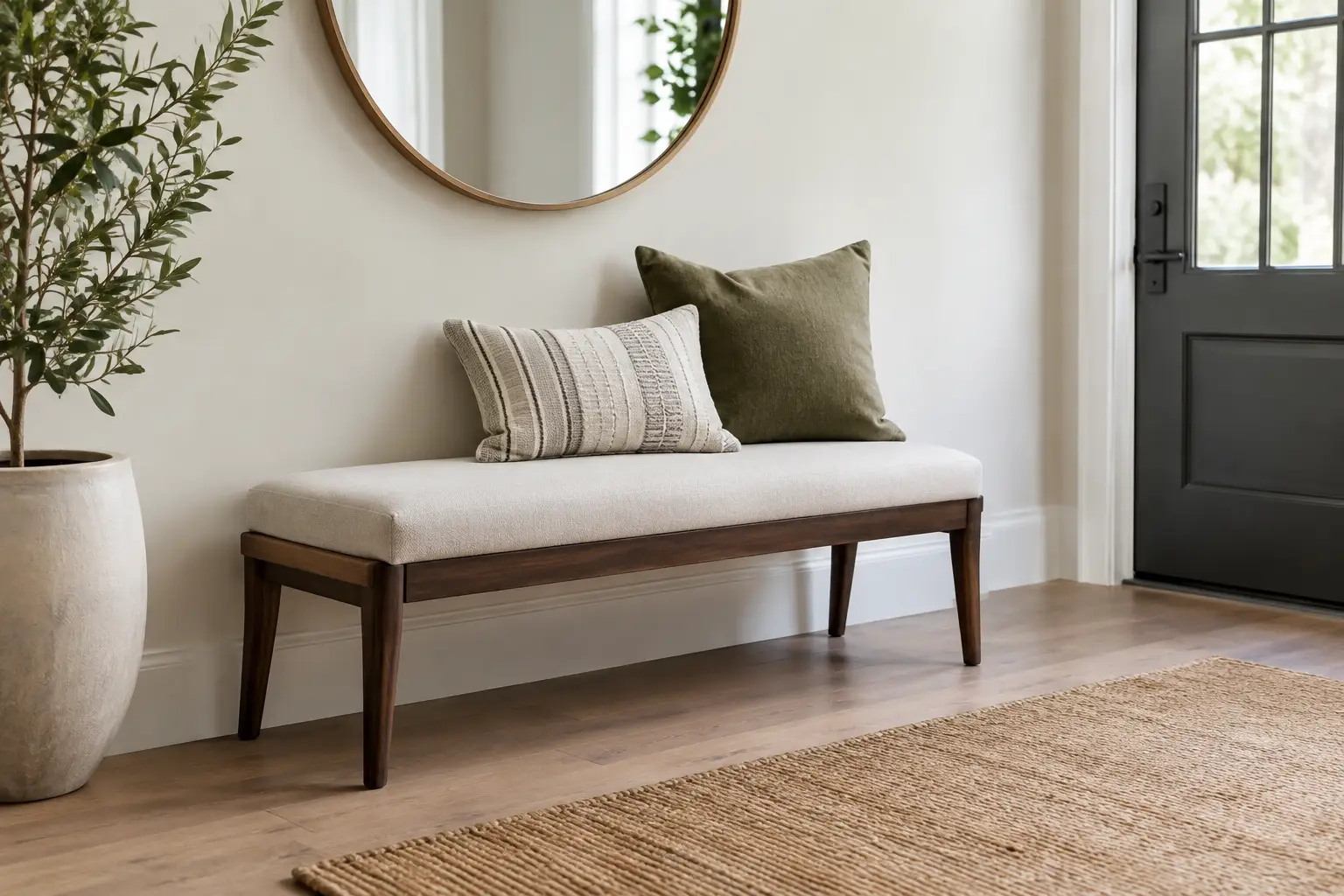
Contemporary design is often described as clean-lined, but that is only part of the story. A well-chosen entryway bench balances a quiet visual profile with genuine comfort. Its silhouette may be streamlined, yet the upholstery should feel inviting. Its base may appear light and architectural, yet the construction must feel stable when someone sits down with bags, boots, or children nearby.
European and Scandinavian-inspired benches tend to do this particularly well. Look for softened corners, considered proportions, tactile upholstery, and details such as slim metal legs, warm wood elements, or tailored seams. These characteristics bring refinement without making an entry feel overly formal.
The bench also needs to belong to the wider interior. A sculptural boucle seat can beautifully echo a soft contemporary living room, while a bench in oak veneer or walnut-toned wood may create continuity with a dining table, console, or flooring. The entry is a transition space, but it should not feel disconnected from the rooms beyond it.
How to Choose the Best Contemporary Entryway Benches
Before focusing on colour or upholstery, begin with scale. Measure the wall where the bench will sit, then account for door swings, closet access, radiators, and the route people take through the room. A bench that appears suitably compact in a showroom can feel oversized if it narrows an already busy vestibule.
As a useful starting point, leave enough clearance to pass comfortably without turning sideways. In tighter condo entries, a depth of roughly 35 to 40 centimetres is often more practical than a deep lounge-style seat. Larger foyers can accommodate deeper upholstery or a longer bench that anchors a broad wall.
Prioritize the right seat height
Most comfortable entry benches sit near standard chair height, generally around 43 to 48 centimetres. This makes shoes easier to put on and take off, particularly for households with children, older family members, or guests. Lower, lounge-like benches can look elegant, but they are better suited to an entry that functions primarily as a visual reception area rather than a daily departure zone.
A lightly cushioned seat offers the best balance for most homes. It provides comfort without appearing bulky, and it preserves the tailored look associated with contemporary interiors. Deeply tufted upholstery can be appealing, though it introduces a more decorative character that may compete with a minimal setting.
Decide whether storage is essential
An open bench creates visual breathing room and makes a compact entry feel less enclosed. It is an excellent option when you already have a nearby closet or credenza for shoes, scarves, and bags. The open space beneath can also hold a few neatly placed baskets, though this only works if everyone in the household is willing to keep them orderly.
Storage benches are a stronger choice when the entry must work hard. Concealed compartments can manage seasonal accessories, while shelving below keeps footwear within reach. There is a trade-off: more storage usually means a heavier visual presence. In a narrow foyer, choose a low-profile design with integrated storage rather than a large, box-like unit that dominates the wall.
For active family entrances, consider where wet boots and winter gear will go before selecting upholstery. A beautiful bench should not become the only place to drop everything at the door. Pairing it with a durable mat, closed storage, and a nearby wall-mounted solution for coats creates a calmer routine.
Materials That Suit Canadian Entries
Canadian entryways experience snow, rain, salt, and frequent temperature changes, especially in Ontario. Material selection should acknowledge that reality without compromising the room’s polish.
Performance fabric is a thoughtful choice for an upholstered bench in a high-use entrance. It can offer a soft, residential look while being easier to maintain than delicate natural fibres. Textured weaves in stone, taupe, charcoal, or warm grey are forgiving of day-to-day use and work well with the layered neutrals common in contemporary homes.
Leather and leather-look upholstery bring a more tailored, streamlined character. They are easy to wipe clean, although genuine leather will develop a patina over time and can show marks in a way that some homeowners appreciate and others do not. For a household with pets or young children, ask about the specific finish rather than assuming every leather will perform the same way.
Wood introduces warmth, particularly against pale walls, large-format tile, and matte black hardware. Veneered or solid wood benches should have a durable finish, while metal bases benefit from a powder-coated surface that resists scuffs. If the entry receives strong sunlight, consider how a fabric or wood finish may change over time.
Styling a Bench Without Making the Entry Feel Busy
A contemporary entry bench is most effective when it has room to be seen. Avoid treating it as an isolated piece pushed beneath a crowded collection of hooks, artwork, and storage. Instead, build a restrained composition around it.
Above a long bench, a large mirror can add light and provide a practical last look before leaving. Choose a shape that echoes the bench: a rounded mirror can soften a linear seat, while a clean rectangular mirror reinforces an architectural arrangement. Where a mirror is not needed, one substantial piece of art often feels more assured than several smaller frames.
A slim rug can define the zone, but it should be scaled so the bench does not sit awkwardly half on and half off it. In a larger foyer, placing the front legs of the bench on the rug creates a cohesive arrangement. In a narrow corridor, a runner may be all the definition the space needs.
Keep accessories purposeful. A sculptural cushion or two can introduce colour and comfort, while a small tray on an adjacent console gives keys and sunglasses a proper home. Too many decorative objects make an entry less usable, not more luxurious.
Common Mistakes to Avoid
The first is choosing a bench solely from a photograph. Online images rarely communicate seat firmness, fabric texture, construction quality, or the true depth of a piece. These details matter in a space you use several times a day.
The second is matching every finish exactly. A walnut bench beside a walnut console can be beautiful, but only if the undertones are compatible. When finishes are almost, but not quite, the same, the effect can feel accidental. Either coordinate them carefully or create deliberate contrast with upholstery, metal, or a lighter wood tone.
The third is overlooking the view from adjacent rooms. Many open-concept homes allow the entry to be seen from the living or dining area. A bench with a considered back, elegant legs, and upholstery that relates to the wider palette will make that sightline feel complete.
See the Proportions and Materials in Person
For furniture that sits at the threshold of the home, touch and proportion matter. Visiting a showroom allows you to test seat height, compare fabric performance, assess wood tones in natural light, and see how a piece feels alongside mirrors, consoles, and other contemporary furnishings. At Levida Furniture in Markham, personalized guidance can also help narrow options according to your entry dimensions and the character of the rest of your home.
Choose a bench that makes the everyday pause at the door feel easier: a comfortable place to sit, a durable material you will not worry over, and a design with enough presence to welcome you home.