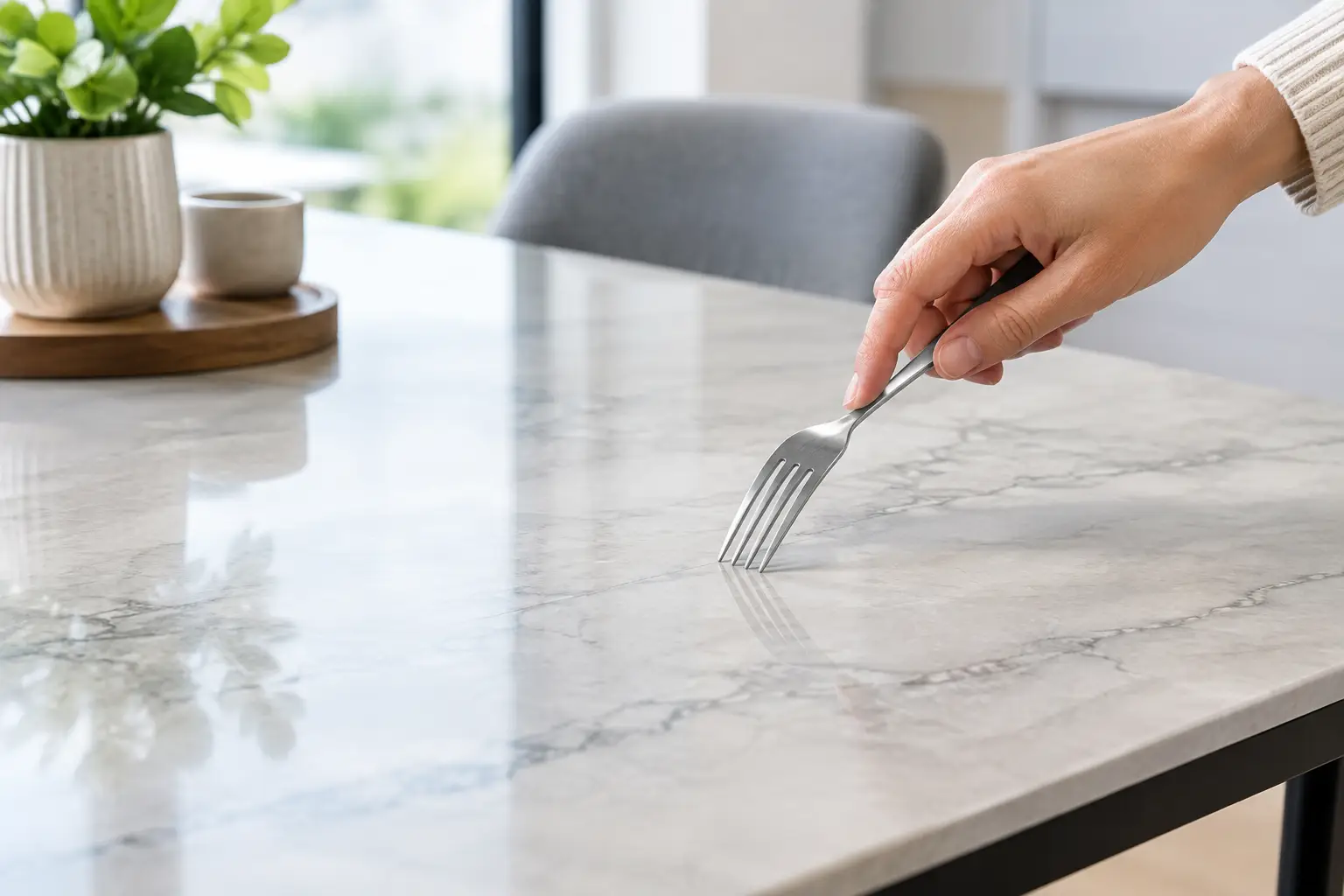
A dining table can look immaculate in a showroom, then meet the realities of home within a week: laptop workdays, serving platters, children’s art projects, moving chairs, and the occasional set of keys placed down without much thought. So, can ceramic tables resist scratches? In most everyday situations, yes – exceptionally well. But scratch resistance is not the same as being impossible to damage, and understanding that distinction helps you choose a table you will enjoy living with for years.
For contemporary Canadian homes, ceramic is one of the most practical premium table surfaces available. It offers a refined, architectural appearance while handling the daily demands that can make natural stone, glass, or high-gloss finishes feel more precious.
Can ceramic tables resist scratches in daily use?
Ceramic table tops are typically made from a dense, high-performance material created under intense heat and pressure. Many premium tables use porcelain ceramic slabs, sometimes paired with a glass backing for added structural support. The resulting surface is hard, non-porous, and highly resistant to abrasion.
That means everyday contact with dinnerware, serving pieces, laptops, and most household objects is unlikely to leave visible marks. A ceramic dining table is generally far more scratch-resistant than a lacquered wood top, softer natural stone, or glass surface. It is especially well suited to households that want a clean-lined European look without having to treat the dining room as a formal, off-limits space.
The finish matters, however. A softly textured, matte ceramic can be particularly forgiving because it diffuses light and disguises fingerprints or minor surface evidence. A polished ceramic finish may have the same underlying durability, but its reflective appearance can make dust, streaks, and residue more apparent. This is a visual consideration, not necessarily a weakness in the material.
Scratch-resistant does not mean indestructible
Ceramic is impressively hard, but it still deserves sensible care. The biggest risk is not usually a plate sliding across the table. It is abrasive grit trapped beneath an object, a sharp impact on an exposed edge, or dragging rough materials across the surface with pressure.
A grain of sand under a decorative tray can act like sandpaper when the tray is moved. Unglazed ceramic bases, rough metal accessories, or stoneware with a coarse underside can also create friction over time. These situations are easy to avoid: lift rather than drag heavy décor, use felt pads beneath centrepieces, and wipe the top before placing down large serving boards or laptops.
Chipping is a separate concern from scratching. While the flat surface is highly resilient, a hard, concentrated blow to the edge or corner can cause damage, particularly if a heavy pan or solid object is dropped. Tables with thoughtfully engineered edge profiles and quality bases are designed for real use, but no premium material is entirely immune to impact.
For families, this is reassuring rather than restrictive. Ceramic can comfortably accommodate everyday meals, homework, crafts with supervision, and entertaining. It simply benefits from the same level of care you would give any well-made furniture piece.
How ceramic compares with other table materials
Every table material brings a different balance of warmth, maintenance, and performance. Ceramic stands out when resistance to scratches, stains, and heat is a priority.
Wood has an enduring softness and character that many interiors need. It can show scratches more readily, though some homeowners appreciate the patina that develops over time. Wood is also more easily refinished than ceramic, making it a compelling choice for those who value a surface that evolves.
Natural marble and other stones create a luxurious, one-of-a-kind effect, but they are more porous and can be vulnerable to etching from acidic foods and drinks. A ceramic top can offer the visual depth of veining or limestone-inspired texture with considerably less maintenance anxiety.
Glass creates a light, open feeling, which is valuable in a condo dining area or a smaller kitchen. Yet it can show fingerprints, streaks, and fine scratches sooner than ceramic. High-gloss lacquer has a similarly polished presence, but requires more caution around sharp objects and abrasive cleaning tools.
Ceramic offers a practical middle ground for homeowners who want a substantial, design-led finish without constant protection. It is not trying to replace the warmth of timber or the individuality of real marble. It is a distinct material choice for a more relaxed, high-performance way of living.
Choosing the right ceramic table for your space
A scratch-resistant surface is only one part of a successful table purchase. Proportion, base design, edge detail, and finish all shape how the piece functions in your home.
For a compact Toronto condo or an open-plan dining space, an extendable ceramic table can be an especially considered option. It keeps the room visually composed for everyday use, then expands when friends or family come over. Look closely at how the extension mechanism operates and whether the leaves preserve the continuity of the ceramic pattern. A well-designed mechanism should feel intuitive and stable, not like an inconvenient compromise.
The base also affects daily comfort. Pedestal bases make it easier to fit extra chairs around the table and can soften the footprint of a round or oval shape. Four-leg designs often feel more traditional in layout, but ensure the legs do not interfere with seating at the corners. In a smaller room, slimmer metal bases can provide visual lightness while retaining a strong, contemporary presence.
Colour deserves practical thought as well. Pale stone-look ceramics feel airy and pair naturally with oak, cream upholstery, and Scandinavian-inspired interiors. Charcoal, black, or deep mineral finishes create stronger contrast and can anchor a larger dining room. Mid-tone taupes and warm greys are often the most forgiving choice where crumbs, fingerprints, or dust are a concern.
When possible, view the slab in person. Ceramic patterns can look quite different under showroom lighting, morning light, or the warmer illumination used for evening dining. Seeing the scale of the veining and feeling the finish firsthand makes it easier to select a surface that works with your flooring, cabinetry, and chairs.
Caring for a ceramic tabletop without overthinking it
One of ceramic’s greatest advantages is that its care routine is straightforward. For everyday cleaning, use a soft cloth with warm water and a mild, non-abrasive cleaner. Then dry the surface to prevent streaking, especially on darker or more polished finishes.
Avoid scouring pads, steel wool, and powdered abrasive cleaners. They may not easily scratch the ceramic itself, but they can dull the appearance of a finish over time or leave residue in textured areas. Strong chemical products are also unnecessary for regular care.
Use trivets for extremely hot cookware, even though ceramic is generally highly heat-resistant. This is less about fearing immediate damage and more about protecting the complete table assembly, including seams, extension mechanisms, and surrounding finishes. Likewise, avoid cutting directly on the top. A cutting board protects both the table and your knives, and prevents food residue from collecting in a textured surface.
If something unusual happens – a dark mark, metal transfer, or a stubborn spill – start gently. A damp microfiber cloth and mild cleaner often resolve the issue. Do not reach immediately for harsh products or abrasive tools. For a premium table, the manufacturer’s care guidance should always take priority, since ceramic compositions and supporting materials can vary.
A refined surface made for real living
Ceramic tables earn their place in sophisticated, hardworking interiors because they make daily life feel less fragile. They bring the visual calm of stone, the clean precision of contemporary European design, and a level of scratch resistance that suits busy dining rooms, condos, and family homes alike.
The best choice is still personal: choose wood if you want warmth and evolving character, natural stone if you value singular material variation, and ceramic when you want an elevated surface that can meet everyday life with quiet confidence. A visit to the Levida Furniture showroom can make that decision more tangible, letting you compare finishes, scale, and table mechanisms in the context of a complete room. Select the table that invites you to use it often – beautifully, comfortably, and without hesitation.