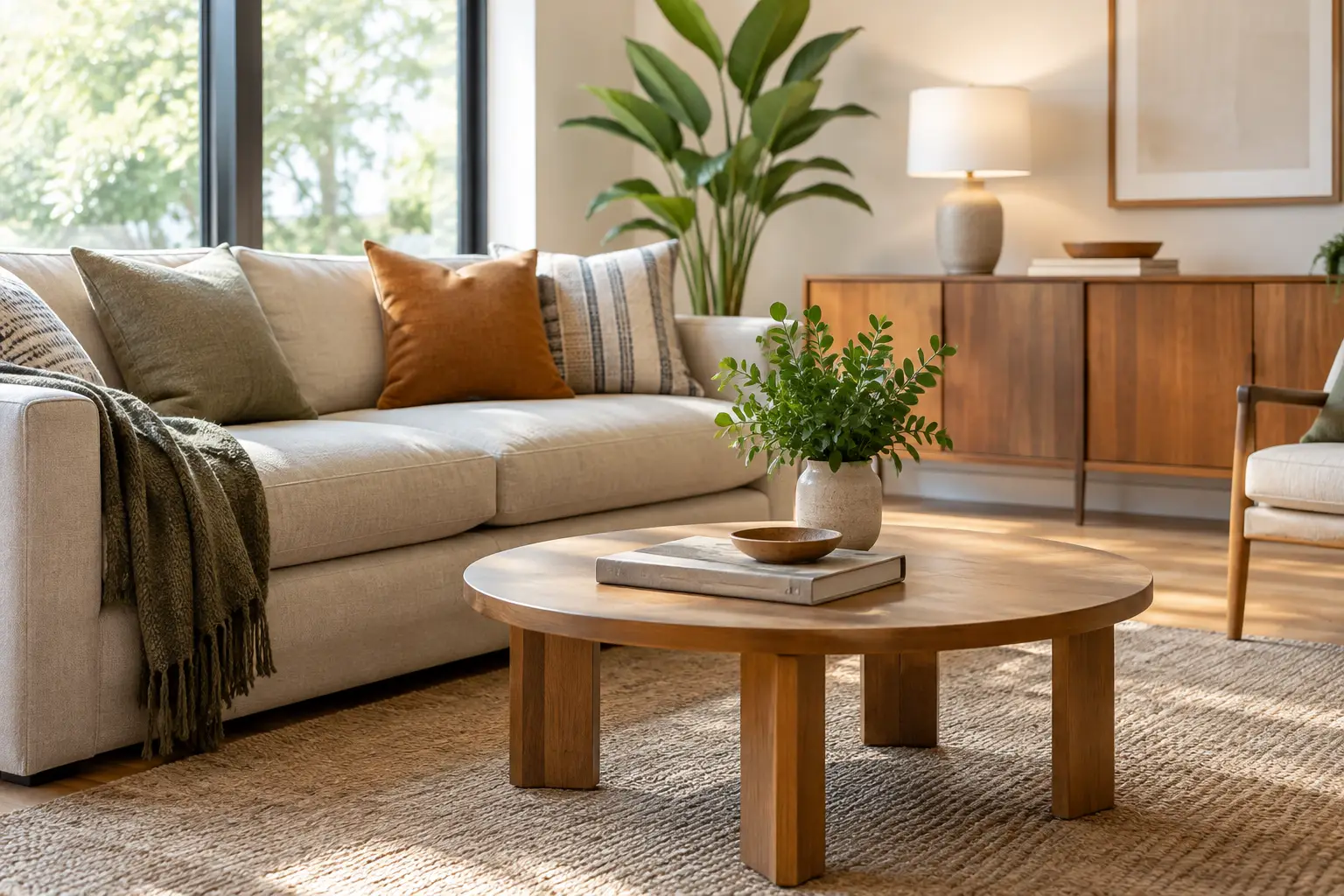
A credenza earns its place by doing more than holding what has nowhere else to go. It can settle a dining room, give a living room a stronger focal point, or make an entry feel considered from the first step inside. This contemporary credenza guide focuses on the decisions that make the difference: proportion, storage, materials, placement, and the quieter details that let a useful piece feel integral to the room.
For Canadian homes, especially condos and urban spaces where every surface works hard, a credenza should offer visual calm as well as capacity. The best choice is rarely the largest option or the most dramatic finish. It is the one that fits the architecture, supports daily routines, and creates a natural connection with the furniture around it.
Start With the Room, Not the Credenza
A contemporary credenza is often chosen late in a furnishing plan, yet its scale can influence the entire room. Before considering colour or door style, measure the wall and map out circulation. You need enough open space in front of the piece to comfortably pass through, pull out dining chairs, or open cabinet doors without interruption.
In a dining room, the credenza should generally feel substantial enough to anchor the wall without competing with the table. A long, low silhouette works beautifully alongside an extended dining table, particularly when the table has a light base or sculptural profile. In a compact condo dining area, a narrower piece with generous internal organization may provide more value than a deep cabinet that constricts the room.
Living rooms call for a different approach. A credenza beneath art, a mirror, or a television needs to relate to the width of the wall and nearby seating. If it sits behind a sofa, leave enough clearance for movement and avoid a height that visually crowds the back of the upholstery. Along a media wall, consider cable access, ventilation, and whether the doors allow remote signals to pass through.
The rule is not to match every dimension precisely. A little contrast in scale brings ease. What matters is that the credenza feels deliberately placed rather than squeezed into the last available wall.
Choose Storage Around Real Life
Credenzas are available with drawers, hinged doors, sliding panels, open shelving, and combinations of each. The right configuration depends on what needs to disappear at the end of the day.
For dining rooms, adjustable shelving behind closed doors is especially useful for serving pieces, linens, glassware, and the occasional oversized platter. Drawers keep cutlery, candles, and smaller entertaining essentials within easy reach. If the piece will serve a living area, closed storage is often the more refined choice for chargers, games, electronics, and the everyday objects that can quickly make an open shelf look busy.
Open compartments have their place, particularly when styling books, ceramics, or a small collection of objects. They demand more restraint, though. In a contemporary interior, one or two intentional displays usually have greater impact than filling every shelf. A balanced design might combine concealed storage below with a slim open niche, giving the piece depth without making it feel decorative for its own sake.
Consider how the doors work in the room. Hinged doors need clear floor space, while sliding doors can be more practical in tighter layouts. Push-to-open fronts create a clean, uninterrupted facade, but integrated pulls can offer a more tactile experience and may be easier for families to use every day.
Materials and Finishes Set the Mood
A credenza occupies a broad horizontal plane, which means its finish carries real visual weight. Wood veneer brings warmth and grain variation, softening interiors with stone, glass, or polished metal. European oak, walnut, and smoked wood tones are particularly effective when a room needs depth without darkness.
Lacquered finishes offer a more tailored, architectural look. Matte white, warm grey, taupe, charcoal, and muted earth tones can blend elegantly into contemporary Canadian interiors, especially where walls are pale and natural light is generous. A matte surface feels understated and forgiving, while a glossy finish reflects light and can add energy to a more formal setting. Neither is automatically better. Gloss needs a cleaner visual environment, while matte often suits relaxed, layered rooms.
Stone or ceramic tops introduce a more luxurious note and can be practical in a dining space where drinks and serving dishes are regularly placed down. They also add contrast to timber cabinetry. Look closely at the edge detail, base construction, and how materials meet at corners. These are the details that distinguish a credenza with genuine presence from one that simply occupies space.
Metal legs can lighten a larger cabinet and reveal more flooring, which is helpful in condos. A plinth base or floor-level design feels more grounded and monolithic. Choose the latter when you want the credenza to read as part of the architecture; choose raised legs when visual airiness is the priority.
A Contemporary Credenza Guide to Proportion
Height affects function as much as appearance. A lower credenza can create a calm, gallery-like line beneath artwork or a television. A taller sideboard provides a more convenient serving surface and more usable volume, making it well suited to dining rooms and entertaining spaces.
Depth deserves equal attention. Many homeowners focus on width, then discover that a deep cabinet compromises a walkway. Measure from the wall into the room and account for chair movement, rug edges, and door swings. In a narrow dining room, a slimmer credenza can still offer meaningful storage while preserving the sense of space that makes meals and gatherings more comfortable.
The surrounding furniture should inform its visual mass. A delicate glass dining table may benefit from a credenza with a solid wood body or stone detail. Conversely, a substantial upholstered sectional may look more balanced with a slimmer, legged cabinet rather than another heavy volume. Repetition can be beautiful, but contrast is often what gives a room composure.
Place It With Intention
The classic dining-room placement is only one possibility. In an entry, a credenza creates a polished landing zone for keys, mail, and seasonal accessories, especially when paired with a mirror or artwork above. In a bedroom, it can replace a conventional dresser when folded clothing, linens, or accessories need discreet storage. In an open-concept plan, it can also define a dining zone without adding a full-height divider.
Styling should support the piece rather than conceal it. Leave breathing room on the top surface, then use a considered composition: a table lamp and artwork, or a sculptural vase with a low tray. A long credenza does not require many objects. It needs variation in height, texture, and negative space.
If artwork is hung above, centre it to the credenza rather than automatically to the wall. This small decision makes the arrangement feel cohesive, particularly when the cabinet is intentionally offset to accommodate a doorway or architectural feature.
Consider Customization Before Compromising
Standard dimensions work well in many rooms, but a distinctive wall, a tight condo layout, or a particular dining-table height can make customization worthwhile. The ability to adjust width, finish, interior fittings, handles, or base style can turn a good fit into a lasting one.
This is also where material samples matter. Wood, lacquer, fabric, and stone can look dramatically different under showroom lighting, daylight, and evening lamps. Viewing finishes beside flooring, paint swatches, and upholstery helps prevent a piece that is beautiful on its own from feeling slightly disconnected at home.
At Levida Furniture’s Markham showroom, seeing proportions and finishes in person can clarify decisions that are difficult to make from a screen alone. Open the doors, assess the hardware, compare wood tones, and imagine the cabinet as part of the full room rather than as an isolated purchase.
A well-chosen credenza should make a home feel easier to live in and more resolved to look at. Give it the space, materials, and storage purpose it deserves, and it will quietly hold the room together for years.