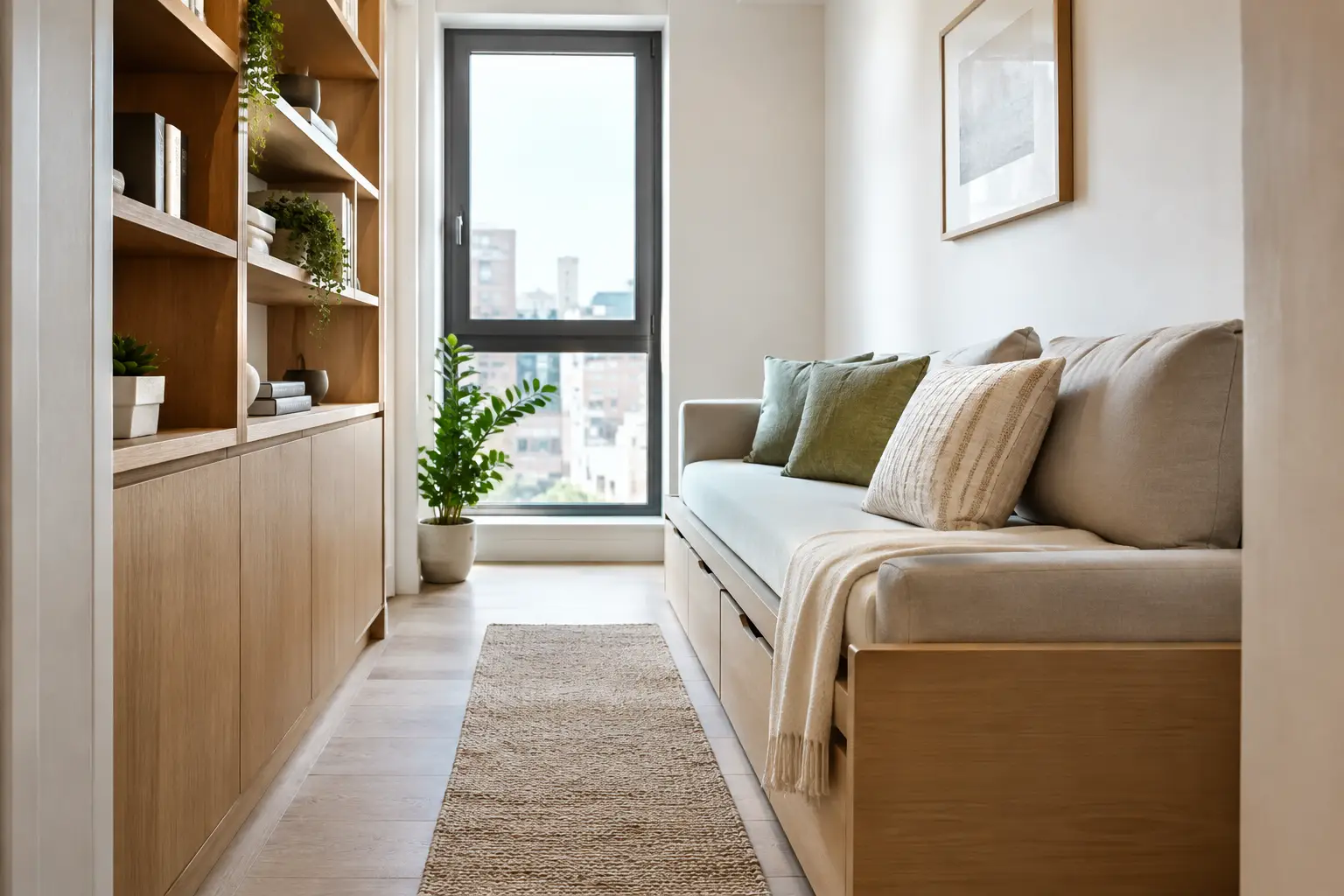
A walnut dining table beside pale oak flooring can look considered, calm, and distinctly contemporary. Add a third wood tone without a plan, however, and the room can begin to feel accidental. The key to mix furniture wood finishes successfully is not making every piece match. It is giving each finish a clear role within an overall composition.
For contemporary Canadian homes, this approach is especially useful. Open-concept layouts often place the dining area, living room, and kitchen in one visual frame, while condo spaces ask each piece to work harder. Thoughtful variation brings warmth and depth to clean-lined interiors without compromising the sense of order that makes a space feel restful.
Start with the undertone, not the wood name
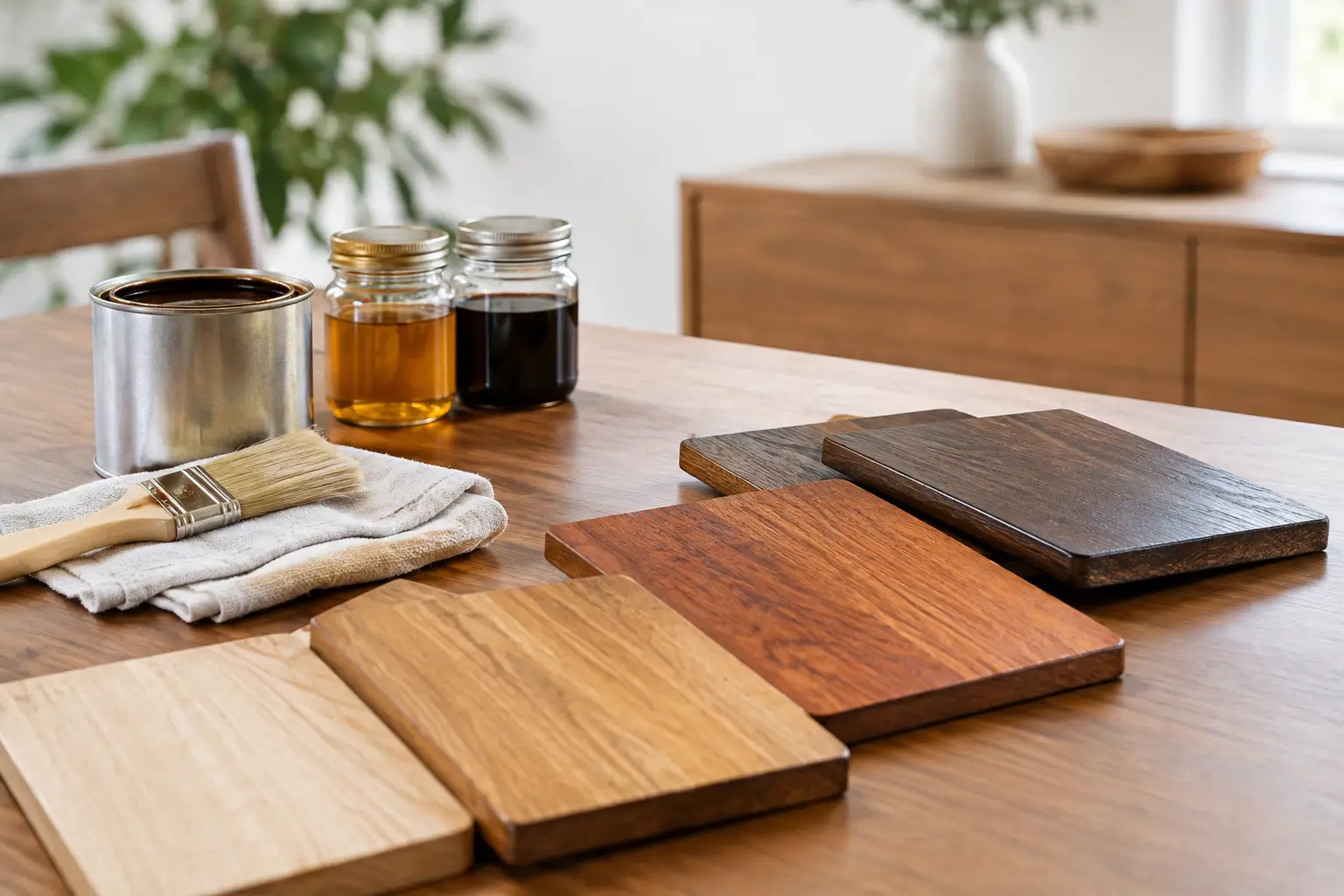
Oak, walnut, ash, teak, and elm are useful descriptions, but they do not tell the whole story. Two oak pieces can look entirely different: one may be pale and neutral, another honeyed or distinctly golden. Walnut can lean richly brown, nearly black, or reveal red and violet notes depending on its stain and sheen.
Look beneath the surface colour for the undertone. In broad terms, wood finishes tend to read as warm, cool, or neutral. Warm finishes carry honey, amber, red, or orange notes. Cool finishes may appear greyed, smoked, or espresso-dark. Neutral finishes sit comfortably between the two, often with soft brown, taupe, or natural oak character.
A room does not need one undertone only. It does need a dominant direction. If your floors are a warm white oak, a warm walnut dining table will usually feel naturally connected. A smoked oak sideboard can still work, particularly when upholstery, stone, or a rug repeats a muted grey-brown note elsewhere. The result is contrast with intention rather than a clash.
Choose one finish to lead the room
The easiest way to mix furniture wood finishes is to identify the visual anchor first. This is often the largest or most permanent wooden element: flooring, kitchen cabinetry, a dining table, a bed frame, or built-in storage.
In a dining room, the table commonly deserves that role. A beautifully grained walnut table has enough presence to lead the composition, allowing dining chairs, a sideboard, and occasional furniture to be lighter, darker, or more discreet. In a bedroom, the bed may become the anchor, while night tables and a dresser provide a complementary finish rather than a perfect set.
Matching every wood surface can make a room feel flat, particularly when the furniture has similar scale and silhouettes. A controlled mix gives the eye places to rest. Think of the leading finish as the main note, with one supporting finish adding dimension and a smaller accent appearing sparingly.
For most homes, two to three visible wood tones in one connected area is enough. More can work in collected interiors with architectural character, but it requires stronger repetition and more visual restraint elsewhere.
Use contrast deliberately
Contrast is not the problem. Unrelated contrast is. Pale oak and deep walnut are a classic pairing because their difference is obvious and easy to read. The lighter finish creates airiness; the darker one adds weight and definition. This can be particularly effective in a bright Toronto condo where a darker dining table or media unit grounds an otherwise light palette.
Subtle contrast asks for more care. A medium brown oak cabinet beside a slightly red-brown table may look like an unsuccessful attempt to match. When finishes are close but not quite the same, the difference can draw more attention than a confident light-dark pairing.
If you are choosing between near matches and distinct finishes, choose distinction. Pair a natural oak table with black-stained ash chairs, for example, or place a deep walnut console against pale oak flooring. The visual relationship is clear from across the room.
Sheen matters here as much as colour. A matte, open-grain finish feels relaxed and contemporary, while a polished or high-gloss surface reflects light and reads more formal. They can coexist, but a high-shine wood piece needs space around it to feel intentional. In a family room designed for everyday use, low-sheen finishes are often the more forgiving choice for fingerprints, minor scratches, and changing light.
Connect finishes through repetition
A mixed-wood room feels cohesive when each finish appears more than once, even if the repetition is subtle. A walnut dining table might relate to the walnut frame of a mirror, the legs of an accent chair, or a small detail in a coffee table. This does not mean buying a matching collection. It means creating a visual echo.
The repeat can also come from materials that sit between the woods. A warm cream bouclé chair, cognac leather, bronze lighting, or veined stone can bridge natural oak and walnut beautifully. Conversely, black metal, charcoal textiles, and honed grey stone can help a smoked oak finish live comfortably with darker espresso tones.
Rugs are particularly useful in open-concept homes. A rug with beige, brown, charcoal, or muted rust notes can soften the transition from wood floor to furniture and define a distinct zone without adding another hard surface. In smaller rooms, this layer can make varied finishes feel composed rather than crowded.
Let scale and placement do some of the work
The largest wooden piece will carry the most visual weight, regardless of its colour. A dark sideboard, for instance, can feel elegant against a light wall but overly heavy when paired with a dark dining table, dark flooring, and dark dining chairs. The solution may be as simple as introducing lighter upholstery, a pale rug, or a table with a more open base.
Placement matters too. Rather than clustering every dark finish on one side of the room, distribute visual weight across the space. A walnut coffee table can be balanced by a darker-framed artwork or a small wood accent on the opposite wall. This creates rhythm without making the room feel staged.
In compact condos, raised legs and open silhouettes are especially helpful. A darker wood finish on a slim, elevated piece can still feel light, while a pale finish on a bulky storage unit may feel more substantial than expected. Finish and form should always be considered together.
Mix furniture wood finishes from room to room
A cohesive home does not require the same wood finish in every room. In fact, forcing that consistency can make furnishing feel restrictive. What matters is that adjacent spaces share a language: similar undertones, recurring materials, or a consistent balance of light and dark.
You might use natural oak in the dining area, walnut in the living room, and smoked oak in the bedroom, then connect them with warm white walls, black accents, and soft neutral textiles throughout. In a more Scandinavian-inspired interior, pale oak can lead while black-stained wood appears in occasional tables, lighting, and shelving for definition.
Bedrooms offer the freedom to become slightly quieter or more intimate than the public areas of the home. A darker bed frame can feel inviting when paired with lighter night tables, provided there is a shared element such as matching hardware, similarly matte finishes, or a common upholstered fabric. The goal is a relationship, not replication.
Know when a match is the better choice
There are times when matched finishes are exactly right. A small dining room may benefit from a coordinated table and sideboard because it reduces visual noise. A highly architectural interior with strong stone, metal, or patterned surfaces may also need fewer competing wood notes.
Similarly, if a treasured antique or a dramatic statement piece has a distinctive red, orange, or yellow undertone, give it room to stand apart. Surround it with quieter, more neutral finishes rather than trying to force a close companion. Good design is not about following a fixed formula. It is about recognizing what the room already needs.
Before making a final decision, view samples together in the actual space. Daylight, evening lighting, wall colour, flooring, and upholstery all change how a finish reads. At Levida Furniture’s Markham showroom, comparing materials in person can make these relationships much easier to see, especially when selecting customized finishes for several rooms.
A home becomes more personal when every piece does not arrive from the same collection. Let the woods vary, keep the undertones and proportions in conversation, and choose finishes that make everyday living feel considered from the moment you walk in.