A sofa can make a beautifully finished room feel either effortlessly composed or unexpectedly cramped. The choice between a modular sectional versus traditional sofa is not simply about how many seats you need. It affects circulation, sightlines, daily comfort, entertaining, and how easily your home can adapt as life changes. For contemporary Canadian homes, especially condos and open-plan spaces, the right answer begins with how you truly live in the room.
Modular sectional versus traditional sofa: the essential difference
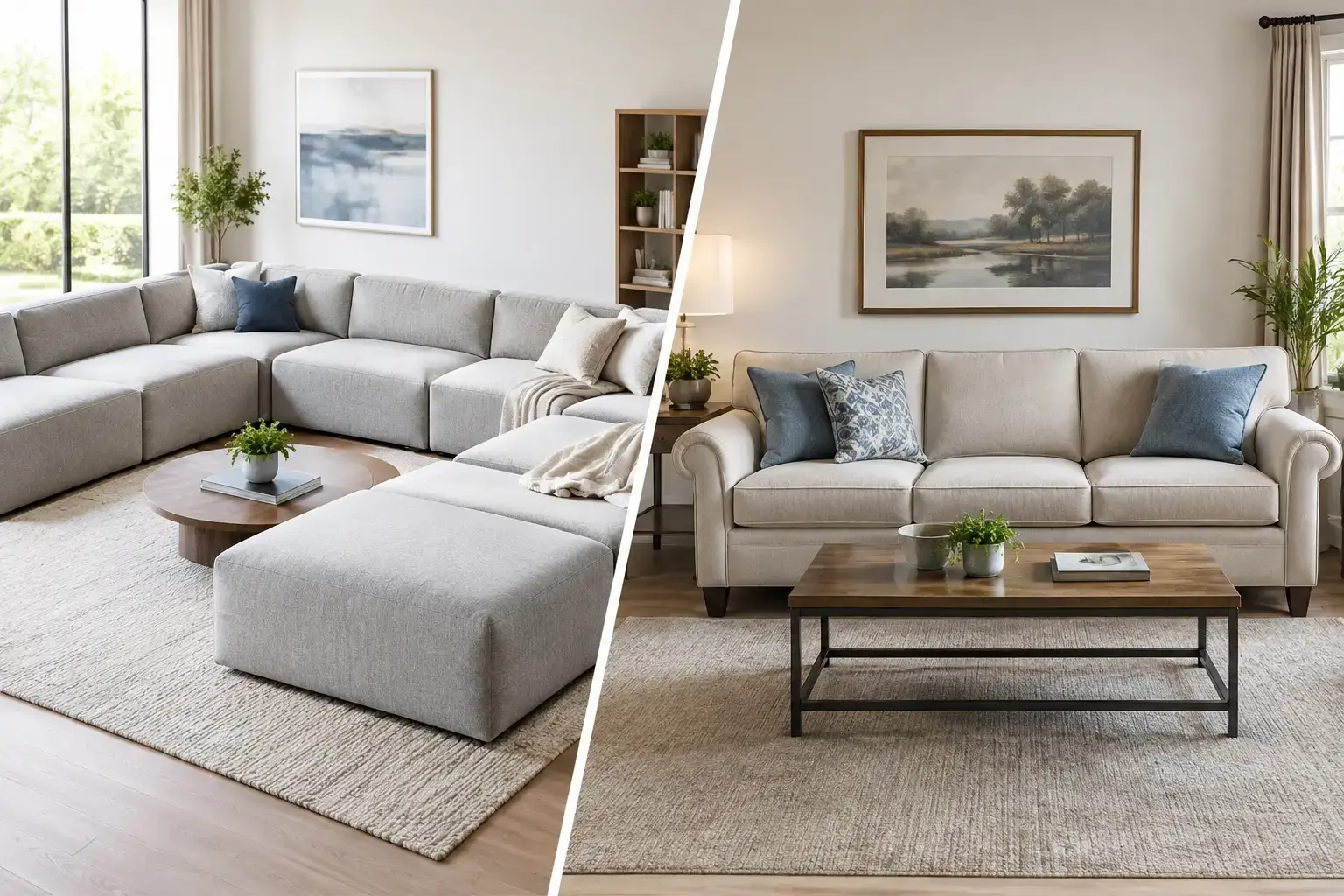
A traditional sofa is a single, fixed piece, typically designed for two or three people. Its silhouette is established from the moment it arrives: a classic three-seat profile, a streamlined apartment sofa, or a deeper contemporary design with generously proportioned cushions. It offers visual certainty and often gives a room a strong, elegant anchor.
A modular sectional is composed of individual units that connect to create a larger seating arrangement. A corner module, armless chair, chaise, ottoman, and end piece can be combined in different ways depending on the collection. Some configurations remain in place for years; others can be rearranged when you move, host guests, or reconsider the layout.
That flexibility is compelling, but it is not automatically the better choice. A modular design asks for more planning, while a traditional sofa can be the more refined solution in a compact or highly structured room. The most successful choice is one that gives the room enough presence without interrupting the way people move through it.
When a modular sectional makes sense
A modular sectional is particularly well suited to homes where the living room has to work hard. In an open-concept condominium, it can define the lounge area without the need for walls. Positioned with its back toward a dining space, it creates a clear boundary while preserving an open, airy feeling.
For families, modular seating offers room to stretch out together without relying on a separate chaise or occasional chair. It is also practical for entertaining. A generous L-shaped configuration naturally encourages conversation, while an ottoman module can become extra seating, a footrest, or a relaxed coffee-table alternative with the addition of a tray.
The long-term advantage is adaptability. A couple may begin with a compact two-piece sectional, then add a chaise or additional armless module after moving to a larger home. In a new space, the chaise may shift from left to right, or an ottoman may become a standalone accent piece. This makes a well-made modular sofa especially valuable for homeowners who expect their needs to evolve.
The scale question matters more than the configuration
The risk with sectionals is not style. Contemporary European and Scandinavian-inspired modular designs can feel remarkably light, tailored, and architectural. The risk is overfilling the room.
Before choosing a configuration, map its footprint on the floor with painter’s tape. Account for the depth of the back, the projection of the chaise, and the clearance required around a coffee table. Aim for approximately 76 to 91 centimetres of comfortable walking space along active pathways whenever the floor plan allows. A sectional that appears appropriately sized in a large showroom can feel dominant in a condo if its return blocks access to a balcony door, dining area, or hallway.
Also consider visual weight. Low backs, raised legs, slim arms, and a more open base can make a substantial sectional feel less imposing. A soft neutral textile may recede gracefully, while a dark, densely upholstered profile can become a deliberate focal point. Neither approach is wrong, but each changes the room’s balance.
Modular does not always mean casual
Some buyers associate modular furniture with oversized, informal lounging. That can be true of deep, low-slung designs, but it is far from the full picture. The best contemporary modular collections pair clean proportions with supportive cushions, precise upholstery, and carefully finished details.
If your home leans polished rather than relaxed, look for modules with consistent seat heights, tailored seams, structured arms, and a fabric that holds its shape. Bouclé, textured wovens, fine performance textiles, and supple leathers each create a different expression. A modular sectional can feel as considered as a tailored suit when its configuration and materials are selected with restraint.
When a traditional sofa is the stronger choice
A traditional sofa is often the better choice when a room benefits from clarity and breathing room. In a narrow living room, one beautifully proportioned sofa paired with two accent chairs can create better circulation than a sectional extending into the centre of the space. It also allows more freedom to adjust the room over time, whether you introduce a reading chair, a sculptural side table, or a larger area rug.
Traditional sofas are especially effective in formal living rooms, reception areas, and spaces where you want a balanced, symmetrical composition. Two matching sofas facing one another can create a calm, conversational arrangement. One sofa placed opposite a pair of lounge chairs can feel equally inviting, with a lighter and more layered result than a large sectional.
A fixed sofa can also be easier to assess. You know precisely what you are buying: one overall width, depth, seat height, and silhouette. This simplicity is useful when furnishing a first condo or making a confident design decision on a shorter timeline.
Use chairs to add flexibility
Choosing a traditional sofa does not mean sacrificing adaptable seating. A sofa with one or two movable lounge chairs can offer more versatility than a sectional in certain rooms. Chairs can face the sofa during conversation, angle toward a view, or move closer together for a more intimate arrangement.
This approach is particularly successful when the room serves more than one purpose. In a condominium where the living area occasionally becomes a work zone or guest space, movable seating can make the layout feel less permanent. It also creates opportunities to introduce contrast through a complementary leather, timber frame, or accent fabric.
Comfort is personal, not a specification sheet
Dimensions tell only part of the story. A 102-centimetre-deep sofa may sound luxurious, but it can feel too reclined for someone who prefers to sit upright with a coffee, work from a laptop, or host long dinners that continue in the living room. Conversely, a shallow, upright sofa may look impeccably tailored but disappoint anyone who wants to settle in for a film.
Consider who uses the room and how. Families often appreciate resilient, supportive cushions that recover their shape after daily use. Taller households may need a deeper seat or higher back. For older guests, a slightly higher seat and firmer cushion can make sitting and standing more comfortable.
This is where experiencing furniture in person has real value. Sit as you would at home. Lean back, put your feet up, and notice whether the arm height feels natural. Ask about cushion construction, suspension, fabric durability, and the care each material requires. Premium furniture should offer beauty that holds up to ordinary life, not demand that life be arranged around it.
Fabric, leather, and the reality of Canadian homes
Material choice should support both the architecture of the piece and your household. A soft woven fabric can bring warmth to sleek condominium interiors, soften hard surfaces, and make a large sectional feel more inviting. Performance fabrics are worth considering for homes with children, pets, or frequent guests, particularly in pale or textured tones.
Leather offers a more sculptural, enduring presence and is often appealing in spaces with natural stone, wood, or metal finishes. It develops character over time, but it also responds differently to temperature and light. Placement near direct sun, radiators, or strong heat sources deserves consideration, especially in bright south-facing rooms.
With either sofa type, request fabric or leather samples when possible. View them in morning and evening light, against your flooring, wall colour, and rug. A grey that feels warm in a showroom may appear cooler beside your home’s existing finishes. Customization is most valuable when it helps the furniture belong to the room rather than merely match a trend.
Plan the room before committing
Start with the room’s non-negotiables: doors, windows, radiators, vents, balcony access, television placement, and natural traffic routes. Then determine where conversation should happen and what the sofa needs to face. The view, fireplace, media wall, or a carefully composed feature wall may guide the layout.
For a sectional, decide whether the chaise should open toward the room or sit against a wall. For a traditional sofa, consider whether the missing seats are better supplied by chairs, a bench, or occasional stools. Do not forget delivery access. Measure elevators, stairwells, entry doors, and tight turns, particularly in GTA condos where a beautifully chosen piece must still reach the living room.
At Levida Furniture’s Markham showroom, seeing configurations, seat depths, fabrics, and finishes together can make this decision far more tangible. Bring room measurements and photographs so the conversation can move beyond preference to proportion.
The best sofa is the one that supports the way your home feels on an ordinary Tuesday night as much as it impresses on a Saturday when friends arrive. Choose the configuration that leaves space to move, invites you to stay awhile, and gives your room a sense of quiet intention.