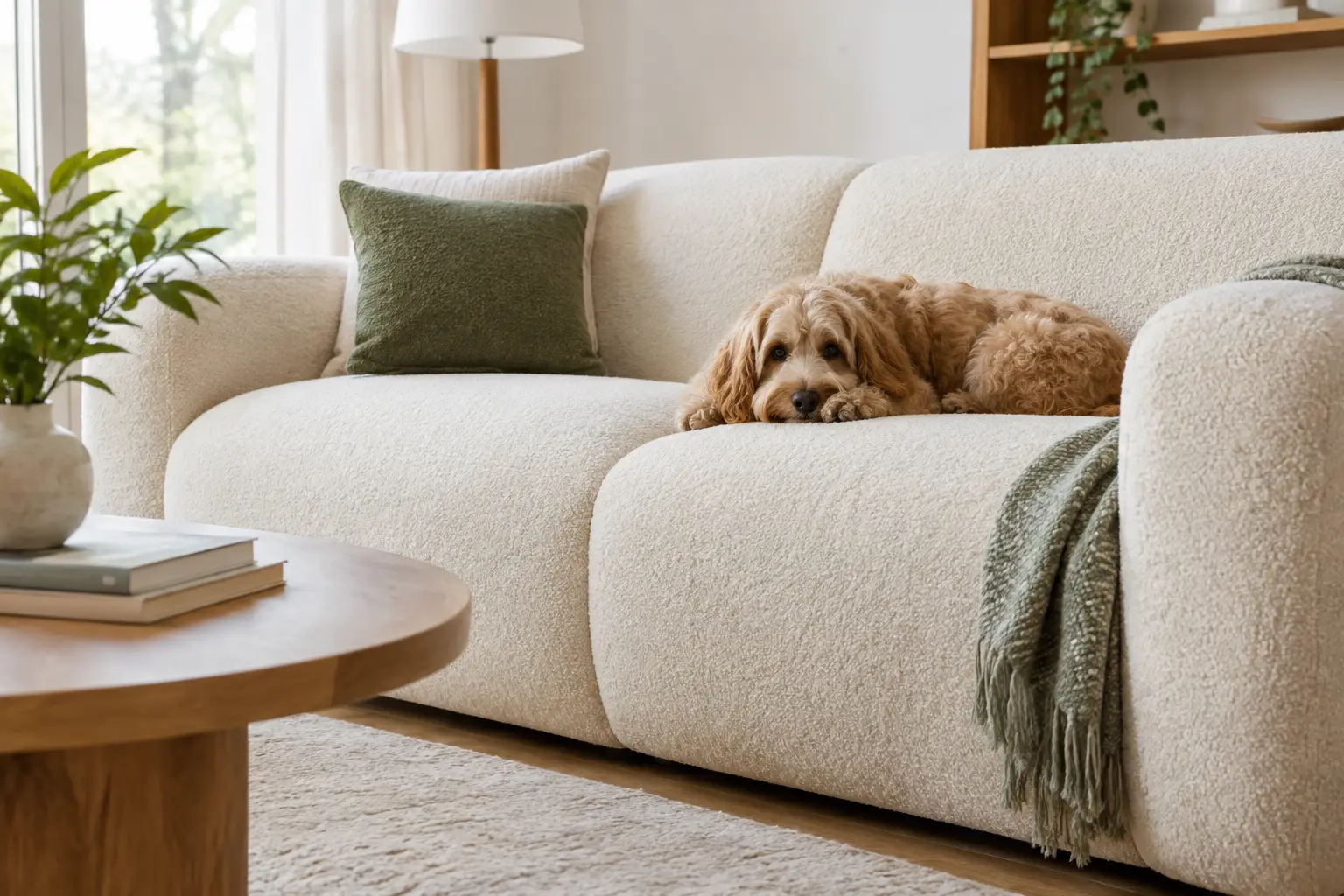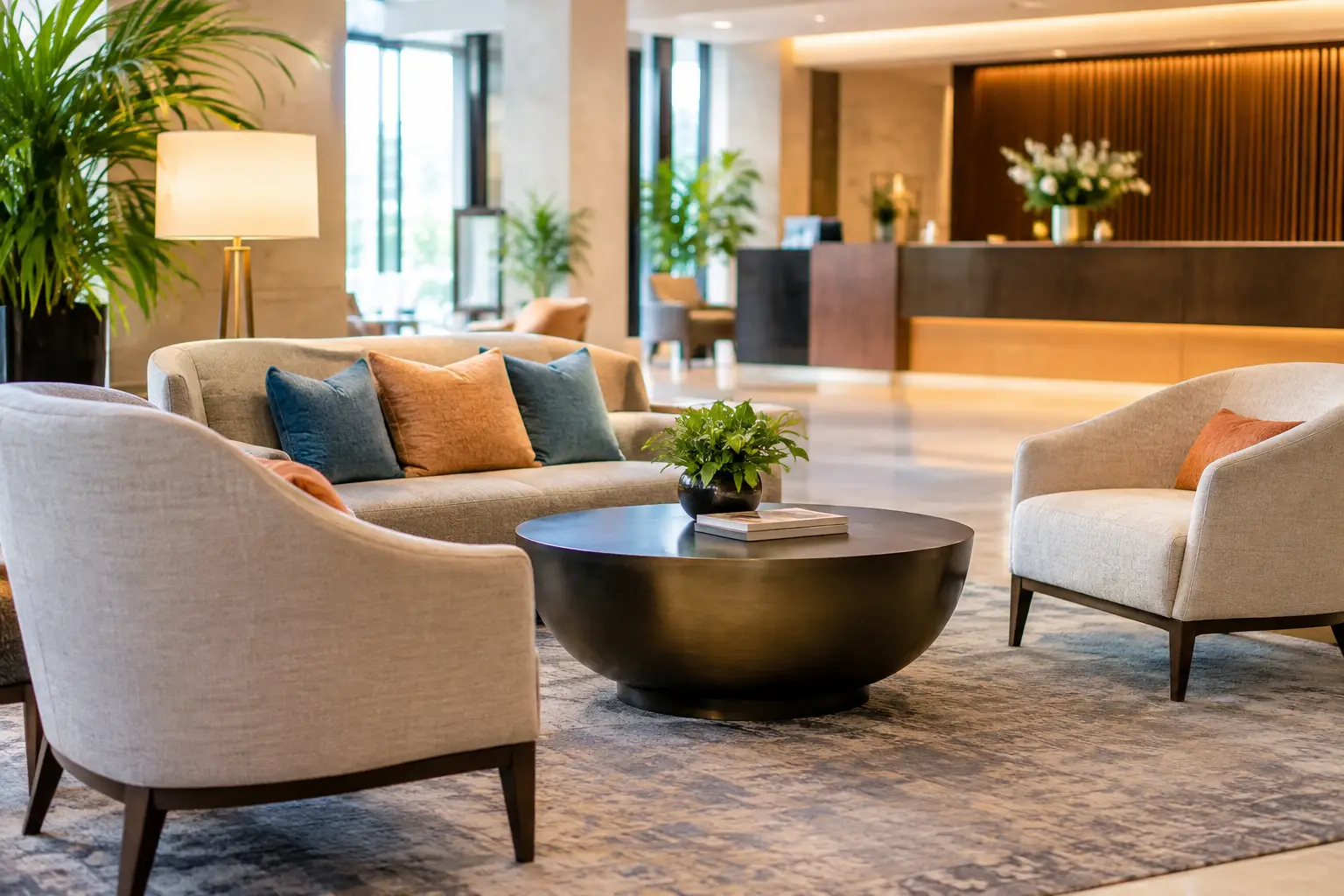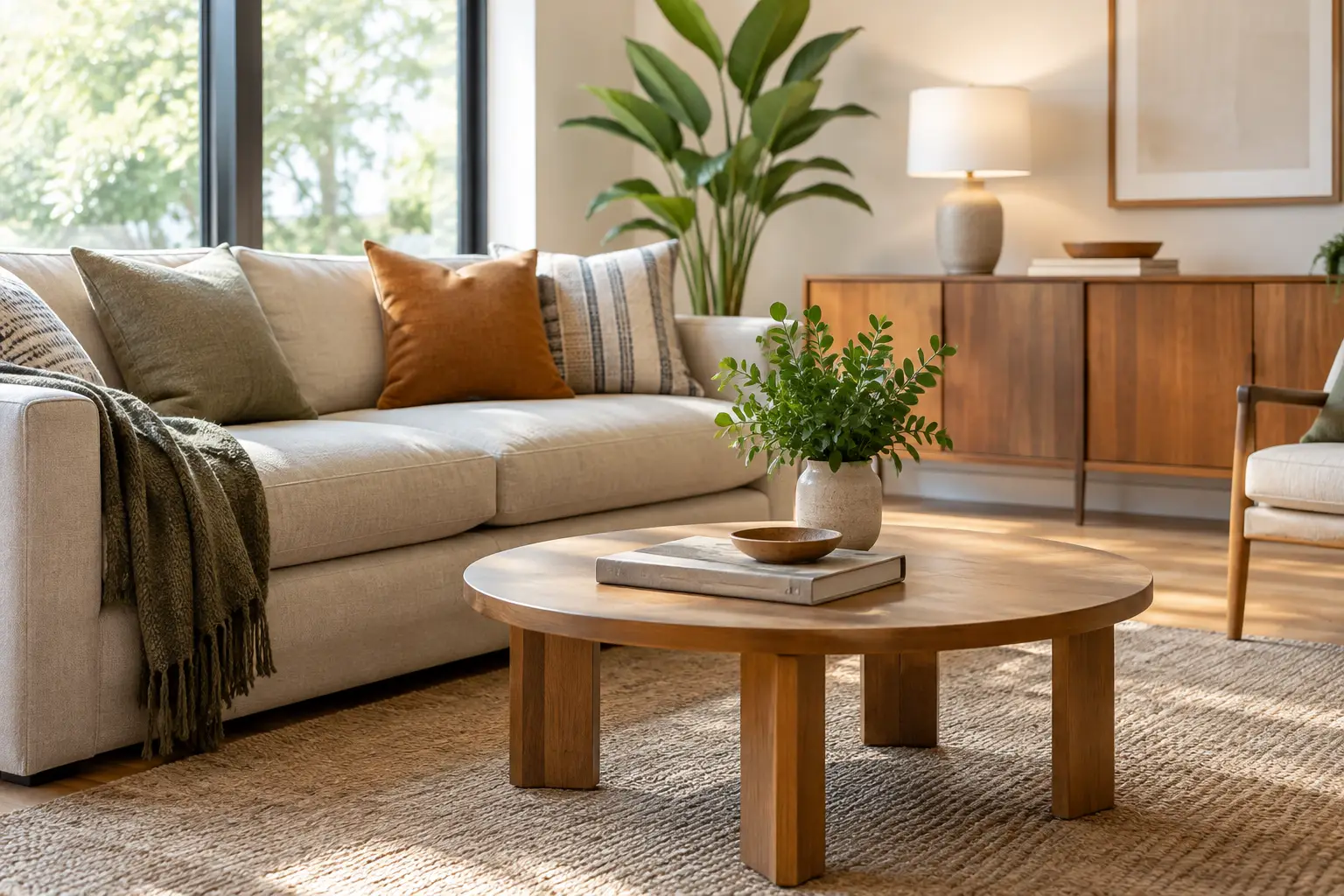
A beautifully furnished home should not feel like a showroom display that no one is allowed to use. The most compelling interior trends are moving away from stark, short-lived statements and toward rooms with warmth, character, and genuine everyday comfort. For Canadian homeowners and condo dwellers, that means choosing pieces that look considered from the front door yet work just as well for slow weekends, family dinners, and evenings spent at home.
Interior Trends Are Becoming More Personal
For several years, contemporary interiors were defined by restraint: pale walls, slim silhouettes, neutral upholstery, and open surfaces. Those elements still have a place, particularly in smaller urban homes where visual calm can make a room feel more generous. What is changing is the expectation that minimalism must feel cool or empty.
Today’s refined interiors balance clean European lines with tactile materials, softer shapes, and details that reveal the personality of the people who live there. A tailored sectional can still have a low, architectural profile, but it may be upholstered in a textured bouclé, a rich woven fabric, or a warm leather. A dining table can feel sculptural while remaining large enough for a real dinner party. The goal is not to fill every corner. It is to make each selection feel intentional.
This is particularly relevant in the Greater Toronto Area, where many homes need to perform several roles at once. A condo living room may be a reading area, entertaining space, home office, and place to unwind at the end of the day. The furniture that earns its place is adaptable, comfortable, and proportioned for the room rather than chosen for a passing trend.
Warm minimalism replaces stark simplicity
Warm minimalism is one of the most enduring directions in contemporary design. It keeps the clarity of modern interiors but introduces softness through oak, walnut, brushed metal, natural stone, wool, linen, and textured ceramics. Instead of a room built entirely around white and grey, consider a quieter palette of cream, sand, mushroom, tobacco, olive, or deep brown.
The effect comes from layering materials rather than adding visual clutter. A light-toned sofa can be grounded by a timber coffee table, a wool rug, and a pair of lounge chairs with curved backs. In a dining room, upholstered dining chairs soften the presence of a stone or ceramic-topped table. These contrasts make a space feel composed and inviting.
There is a practical advantage, too. A room with variation in texture tends to be more forgiving in daily life than one dependent on a single pristine finish. For families, pet owners, and anyone who wants a home to feel lived in, performance fabrics and durable finishes allow a relaxed look without giving up refinement.
The Interior Trends Shaping Furniture Choices
The strongest design shifts are not about replacing an entire room every season. They are influencing the shapes, finishes, and functions people look for when investing in furniture. A few considered choices can refresh an interior while keeping its foundation intact.
Softer silhouettes bring balance
Curved furniture continues to have staying power because it changes how a room feels, not simply how it photographs. Rounded sofas, crescent-shaped sectionals, barrel chairs, oval tables, and softened edges create a more welcoming rhythm than a room made entirely of straight lines.
This does not mean every piece needs to be curved. In fact, a balanced mix usually works best. Pair a rounded sofa with a rectilinear media unit, or introduce an oval dining table in a room with clean-lined cabinetry. The contrast gives the space definition while preventing it from feeling rigid.
Scale matters here. In a compact condo, a deeply curved sofa may take up more floor area than expected. A chair with a gently rounded back or an oval coffee table may deliver the same visual softness while preserving circulation around the room.
Natural materials feel more considered
Materials are becoming a central part of the design conversation. Travertine-inspired stone, marble, ceramic, smoked glass, natural wood veneer, and brushed metal all bring depth that cannot be achieved through colour alone. The appeal lies in their variation: veining, grain, patina, and a surface that changes subtly in different light.
A natural material does require the right expectations. Marble and certain porous stones need more care than engineered surfaces. Wood develops character over time, but it can be affected by direct sunlight and humidity. Ceramic table tops are often highly practical for busy households, though their appearance can feel cooler than a richly grained wood surface.
The right choice depends on how you live. A family dining room may benefit from an easy-care ceramic top and upholstered chairs in a cleanable fabric. A formal entertaining space may be the ideal setting for a statement stone table with a more delicate finish. Quality is not only about appearance; it is about selecting a material that suits the demands placed on it.
Rich neutrals are replacing flat grey
Neutral interiors remain popular, but the palette has gained more depth. Warm taupe, clay, caramel, cocoa, putty, and muted green are appearing in upholstery, rugs, wall treatments, and accent furniture. These tones make modern spaces feel grounded, especially alongside pale oak, walnut, blackened metal, or creamy stone.
Rather than treating neutral as a single colour, think in families of tones. A cream sofa can sit comfortably with mushroom dining chairs and a taupe rug if the undertones relate. This approach creates cohesion without making every item match exactly.
For those who prefer a lighter home, colour can arrive through a single upholstered accent chair, a rug with an understated pattern, or smoked-glass accessories. A restrained base leaves room for change later, while one or two distinctive pieces give the room its point of view.
Design for Real Canadian Living
A home can look impeccably composed and still fall short if it does not support daily routines. The most successful contemporary interiors begin with layout, storage, and comfort before decorative finishing touches.
Choose proportion before style
Before selecting a sectional, dining table, or bed, measure the room and map the walking paths around it. A sofa should not force people to turn sideways to reach the balcony. Dining chairs need enough room to pull back comfortably. A bed should leave practical clearance at the sides and foot, even in a smaller bedroom.
Visual weight matters as much as dimensions. A sofa raised on slim legs can feel lighter in a compact room, while a low, grounded sectional may suit a larger open-plan space. Glass, open bases, and wall-mounted storage can preserve a sense of openness, but they may not provide the concealed storage needed for everyday items. There is always a trade-off, and good planning makes it visible early.
Customization makes cohesion easier
Customizable furniture offers a more thoughtful route than trying to make an in-stock piece fit every condition of a room. A sectional can be configured for the correct chaise orientation, a dining table can be selected at a suitable length, and upholstery can be chosen to complement existing flooring or millwork.
It is also an opportunity to consider longevity. A classic silhouette in a durable fabric or timeless finish is often a stronger investment than a highly specific colour chosen only because it is currently popular. That does not require playing it safe. It simply means placing bolder decisions where they can be enjoyed and changed more easily, such as accent seating, art, cushions, or a statement mirror.
At Levida Furniture, seeing proportions, fabrics, comfort levels, and finishes in person can bring useful clarity to these decisions. A material that looks cool on a screen may read warmer under your home’s lighting, and a sofa’s seat depth can only be properly understood when you sit in it.
Let each room have a purpose, not a formula
Cohesion does not mean every room should look identical. The bedroom may call for softer textiles and a quieter palette, while the dining room can carry more contrast through a dramatic table or sculptural lighting. What connects the spaces may be a repeating wood tone, metal finish, or family of neutrals rather than matching furniture sets.
The best interiors leave room for the personal details that cannot be ordered from a catalogue: books collected over time, artwork with meaning, a vintage object, or a beautiful bowl brought home from a trip. Start with furniture that supports the way you live, then allow the room to become more individual as you do.